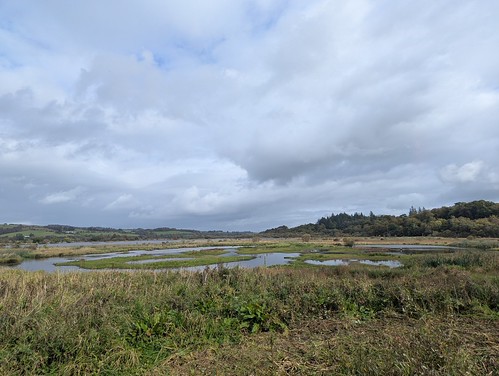
Lochwinnoch flickr photo by NomadWarMachine shared under a Creative Commons (CC BY-NC-SA 4.0) license
Silent Sunday⤴
from NomadWarMachine
view: full | short | titles only
from NomadWarMachine
Lochwinnoch flickr photo by NomadWarMachine shared under a Creative Commons (CC BY-NC-SA 4.0) license
from NomadWarMachine
Today’s TDC says
Make a paper plane and show it to us.
Either make a photo of it, or film it in full flight (extra applause for a plane that flies well).
Straight away I heard the Quo singing in my head, so I found it on YouTube (see bottom of post). Now, I know how to make a paper plane, but I wondered about making a fancy one. I found instructions from the Glasgow Science Centre and followed them … to discover it’s just the basic design I usually make. Oh, well.

Paper plane flickr photo by NomadWarMachine shared under a Creative Commons (CC BY-NC-SA 4.0) license
I decorated it anyway

Paper plane flickr photo by NomadWarMachine shared under a Creative Commons (CC BY-NC-SA 4.0) license

Paper plane flickr photo by NomadWarMachine shared under a Creative Commons (CC BY-NC-SA 4.0) license
from NomadWarMachine
Today’s TDC says
Audrey Watters said, “repetition of the word ‘masses’ in the first 2 lines of Black Sabbath’s War Pigs is the most disappointing failure of imagination in the history of rhyme.”
So let’s give Geezer some help. What else could he have used for the second line? Rhyme on.
Well, actually I don’t mind the repetition – as it reminds me that there is more than one meaning of ‘masses’, but here goes. I tried a couple of my own:
Generals gathered in their masses
Just like witches in dark glassesor
Generals gathered in dark glasses
Just like witches at black masses
And they I asked ChatGPT, which was- um – not great. I asked
can you please rewrite the first two lines of this song so there is no repetition of the word ‘masses’. It gave me:
Option 1 – closest to the original:
Generals gathered in their masses
Just like witches at midnight gatheringsOption 2 – darker:
Generals gathered in their masses
Just like witches at darkened massesOption 3 – more natural:
Generals gathered in their masses
Just like witches at their blackest ritesOption 4 – keeps the “black” imagery:
Generals gathered in their masses
Just like witches at blackened rites
So I said:
please ensure the first two lines still rhyme
And got:
Generals gathered in their massesJust like witches at their darkened passes
Generals gathered in their massesJust like witches casting blackened glasses (more surreal)
Generals gathered in their massesJust like witches practising their classes (less sinister)
Generals gathered in their massesJust like witches in their shadowed passes
Generals gathered in their massesJust like witches at their midnight passes
I think mine are better.
from NomadWarMachine
Today’s TDC says
Canyon Groove is a site that allows you to create songs out of mountains, by imagining those lines as grooves in a vinyl record. The download button didn’t work for us but there is a share button. See what songs are singing in one of the mountains.
I played around with the settinga and recorded my tune using the built in Windows snipping tool and uploaded it to Youtube – it’s a bit quiet, so apologies for that!
from John @ Glow Blog Help
There can be a problem with changing privacy levels on a site with a lot of media (photos, video, audio etc.).
We are planning a change to Glow Blogs to prevent this. In the meantime we have some advice around changing site privacy.
The problem only affects sites with a lot of media.
When you make a privacy change all of the media files are moved. When there is a lot of media this can take some time. If you delete media from the Media Library while this change is taking place the process can become stuck and will need intervention from our developers.
You can avoid this problem by waiting until the media is all moved. You can view progress in the Dashboard setting page where you change privacy. A banner appears explaining that you cannot change privacy until the media has been moved.
Media is currently being moved to/from the public area, so Blog Visibility cannot be changed at the moment.
Revisit the page later or refresh your browser periodically, and wait until the notice disappears before you edit media.
If you are planning to remove media and change the privacy of the site, delete the media first. This will avoid problems and speed up the media move.
It also helps to change the privacy setting as infrequently as possible.
If you are changing privacy to hide a post or page while you do some editing there are simpler and less risky ways to do this:
You can change the status of multiple posts or pages in the Dashboard (Post on the Posts screen, Pages on the Pages screen). Just select them and use the Bulk actions dropdown choose Edit and click Apply.
Tip: When working with multiple posts and pages you can change the number of items on the screen in the screen options at the top of the page.

Expand that section and change Number of items per page: to 200 (The maximum)

And press Apply. You can now edit 200 posts or pages at once.
from NomadWarMachine
from NomadWarMachine
Today’s TDC says
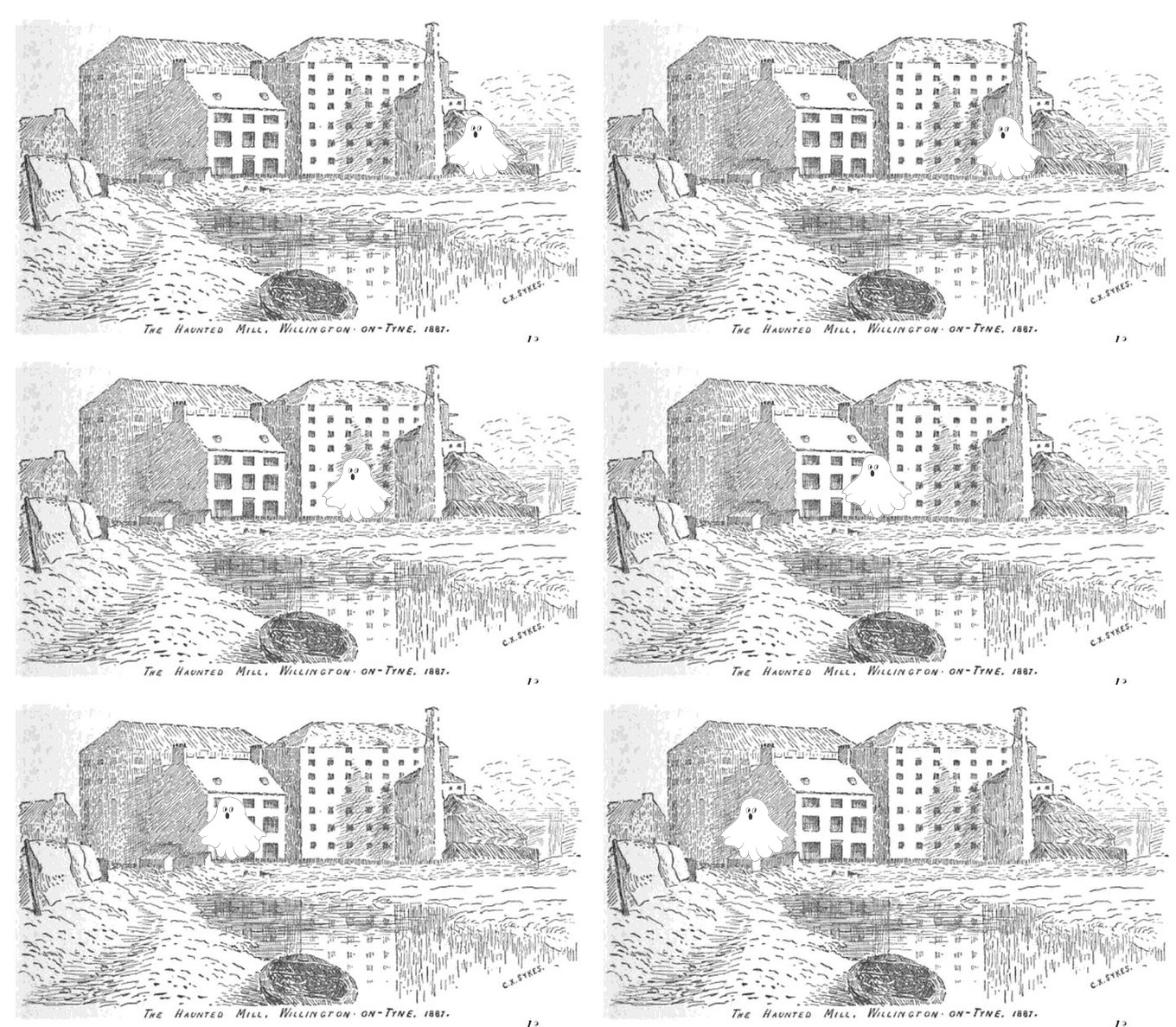
The Strange Company blog describes a series of reports of ghost action in the early 1800s at an old mill.
Talking ghosts? Eerie. Lacking any recently reports create some art – generated imagery, drawing or write a story that describes what modern haunting is happening there (real ghosts don’t just post other images found in google).
I downloaded the image, drew a ghost and added it to make this gif:
from NomadWarMachine
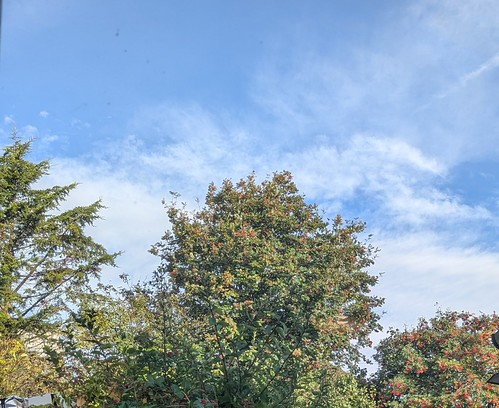
Autumn Morning flickr photo by NomadWarMachine shared under a Creative Commons (CC BY-NC-SA 4.0) license
Today’s TDC says:
Use this random word generator and write a haiku (5, 7, 5 syllables) about the first word you generate!
The word I got was drift:
A crisp autumn day
Clouds drift across the skyline
Trees dance in the breeze
I took a photo through my study window, it’s at the top of this post
Welcome to my 150th post! The status of memory in education seems an appropriate topic, and the title of this post mirrors that of my talk at a recent seminar on memory in education hosted by my department here in Scotland.
I will therefore focus today on an overview of the main ideas I shared at the event.
I began by discussing some of the early origins of how researchers see memory today.
There is much overlap between the views of memory developed by early philosophers and how we now view memory in cognitive psychology. These include Locke’s view of memory as storage, Aristotle’s view that memory and ‘recollection’ (i.e. retrieval) are two separate processes, and Plato’s views on individual differences in memory.
Psychologists began to build on this via the birth of experimental psychology in the 1800s (e.g. the work of Ebbinghaus). In addition, following Darwin’s theories, there was an increased focus on the function and purpose of memory.
The term memory is often associated with last-minute cramming. How often do we hear people say that learning and studying focuses too much on memorisation?
From a psychological point of view, however, memory is not something that only becomes relevant when preparing for exams, and it is not only useful for shallow memorisation. Everything that we learn involves using human memory in some way.

A few of the key points I made in this part of my talk included:
Linking concerns about memory/memorisation among educators to some early memory research that used meaningless stimuli (such as random words) or which oversimplified some aspects of the memory process, presenting it as more computer-like than it actually is.
Possible associations that people make between cramming and behaviourist conditioning techniques (ironically, though, most behaviourists didn’t use the term ‘memory’; Miller, 2003).
I shared a few examples, such as this teacher quoted in the Scottish Government’s Hayward Report …
“… short courses lead to assessments which reward hoopjumping and memorisation and give no time for students to develop deeper knowledge and a love of their subject.”
and the following, from a research paper:
“Learning is not committing a set of facts to memory, but the ability to use resources to find, evaluate, and apply information.” (Lujan & DiCarlo, 2006).
A lot of this, of course, smacks of the idea that generic transferrable skills can be taught without a focus on subject knowledge, which was the focus of the final part of my talk.
I’m interrupting this post to give a quick shoutout to Science Journal for Kids and Teens, an organisation that adapts scientific papers (working directly with the researchers) into school-friendly versions, and provides these and other teaching resources for free. As I have a family member who works for them, I admit to being a little biased, but I think what they do is amazing!! Check out what they have to offer here:
https://www.sciencejournalforkids.org/
If you are impressed by their work, perhaps you could also consider supporting it. As grant funding gets more challenging, a community of passionate science-friendly donors becomes ever more important. Find out more about their fundraising goals here.
I concluded my talk at the memory and education event by outlining how modern psychologists have a much more nuanced view of memory. We recognise that there are many different types of memory underlying a range of functions (from physical skills to habits to meaningful understanding). We also know that memories are interconnected in schemas (see update #59) rather than being separate items, and that memories play a key role in everyday problem solving.
These aspects help to explain memory’s role in educational skills – something I’ve discussed in previous posts, such as: ‘Creativity—What’s the Role of Memory?’ (update #28).
These connections also point towards a more fundamental link between memory and thinking.
Even people who recognise the role of memory in skills, as noted above, may still feel that their phenomenological experience of thinking is somehow separate from using their memory. To put it another way, they may feel that knowledge-based thinking is something their mind does rather than something it is.
This argument becomes a bit stretched when we consider the many ways that the contents of memory can affect basic way that we perceive and think about the world, such as:
The effect of personal (autobiographical) memories;
The availability heuristic – making judgements based on information that comes readily to mind;
Confirmation bias and other thinking biases.
All of this points to a psychology of memory that is deeply integrated with thinking and with our identity.
All the best for the coming week,
Jonathan
Last time: Promise and Pitfalls of Practitioner ‘Action’ Research, Part 3
I hope you are enjoying Memory and Metacognition Updates. Subscribe for free to receive new posts and support my work – and consider sharing it with colleagues!! Thank you!

Please note that my slides and similar materials are shared under a CC BY-NC 4.0 license. This means you can use or adapt them with attribution for non-commercial purposes. If you wish to use my materials for other purposes, feel free to get in touch.
from NomadWarMachine
Today’s TDC says
The Last Museum says it is “the largest search engine for museum art. It uses semantic search, allowing you to search for artworks by theme, style, subject, vibes, or any description you can imagine”.
Visit the Last Museum and have a look around – pretty amazing, huh? Share something that you found with us, or make some art based on what you find and share that.
I spent ages looking around, first at Scottish culture and then searching for specific terms. Amusingly, a search for Findhorn (as we’re just home from holiday there) brought up this picture of Bembridge on the Isle of Wight (in copyright, so not posted here). I don’t have any photos from my time there, we left such a long time ago. But here’s a pic I took last week of Findhorn Bay, with the same sort of composition

Findhorn Bay flickr photo by NomadWarMachine shared under a Creative Commons (CC BY-NC-SA 4.0) license

