Into the Sun⤴

from

Today’s TDC says:

Make a dramatic photo at sunrise or sunset.

I was in the car driving down the A9 at 10am today, so I grabbed this one from Flickr and tooted it. Findhorn Bay earlier this week, as we were walking home.

Findhorn Bay
Findhorn Bay flickr photo by NomadWarMachine shared under a Creative Commons (CC BY-NC-SA 4.0) license

Ada Lovelace Day 2026⤴

from @ Melissa Highton

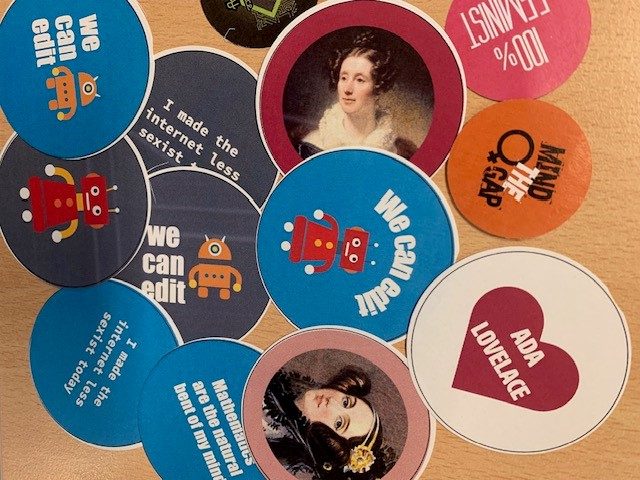
Booking is now open for the University’s Ada Lovelace Day celebrations on Tuesday 13 October, with a programme of workshops, talks and activities celebrating the achievements of women in science, technology, engineering and mathematics. 

Ada Lovelace Day is our annual celebration of the achievements of women in STEM and an opportunity to highlight the contributions of women whose work has helped shape science, technology and society.

This year, #ALD2026 has a particular focus on women in medical sciences, inspired by Edinburgh Medical School’s celebration of 300 Years of Medicine.

A day of activities 

The programme begins at 10.30am in the Main Library with an interactive anatomy workshop led by Dr Jennifer Paxton. Participants will explore the use of 3D modelling and scanning in anatomy and medicine, offering an insight into how digital technologies are changing approaches to teaching, learning and research.

From 11.30am, attendees can enjoy lunch alongside a series of lightning talks from inspiring women working in STEM, sharing their experiences, careers and insights.

The afternoon will feature Visible WikiWomen in STEM, a hands-on Wikipedia Edit-a-thon. Participants will learn how easy and impactful it can be to edit Wikipedia and will have the opportunity to research and create new pages highlighting women in STEM.

Whether you are interested in medicine, digital technologies, Wikipedia, STEM careers or simply want to discover more about the achievements of women in science, there will be something to get involved with. 

Ada Lovelace Day 2026 
Tuesday 13 October 2026 
Main Library 

Find out more about the programme and book your place 

The future classroom is a conversation and it can be extraordinary⤴

from

The future classroom is a conversation and it can be a conversation: Learning now unfolds in dialogue: between teachers and students, people and systems, questions, and responses. The challenge is not control but balance and allowing technology to contribute without letting it speak for us.

This is one of the statements in the Manifesto for Generative AI in Higher Education which has just launched it’s book project. In the book, a range of international authors have responded to each of the manifesto statements, with their own reflections, experiences, views and provocations. The brainchild of Hazel Farrell and Ken McCarthy, the manifesto and now the book have been deliberately designed as a “living reflection” in the every evolving context of GenAI in higher education (and beyond).

I am delighted to be one of the authors included in the book. Along with my “writing buddies” Bill Johnston and Keith  we have addressed statement 30 of the manifesto “the future classroom is a conversation, and it can be extraordinary”  which sits within Theme 3 of the book  – Imagination, Humanity, and the Future.

In the chapter we take the stance that manifestos are in themselves a call to challenge the status quo. We use Freire’s definition of education praxis – “reflection and action directed at the structures to be transformed? “ (Freire, 1970) to discuss how classroom conversations could be structured to challenge the structures surrounding GenAI.  We believe that these types of conversations could be extraordinary and as well as  necessary.  We propose that these conversations  would “require the development of a collective understanding, between learners and educators, of how GenAI systems encode, produce, or reinforce bias, and must include measures to redress imbalances relating to under-represented voices.”

You can access the full chapter directly here, and the whole book is openly licensed , and it is well worth exploring and seeing what conversations and reflections it can stimulate for you, your colleagues and students.

Reflections on 25 Years of the SCQF #scqf25years⤴

from @ Experimental Blog

In 2001, I was leading a range of sector-wide projects across Scottish Further Education for the Scottish Further Education Unit (SFEU). Across colleges, there was a  buzz surrounding the arrival of the Scottish Credit and Qualifications Framework (SCQF). For those of us working on the ground, news of a unified national framework was warmly welcomed.

Before joining SFEU, I had spent 15 years as a Course Team Leader in the college sector. My colleagues and I hit the same wall: a system of fragmented, siloed qualifications that created friction for learners trying to progress. We watched capable students pass college units linked to occupational standards with distinction, only to be told by universities or by professional bodies that their learning "didn't count" or that they had to start from scratch. The lack of proper, systemic recognition was frustrating and unfair. It wasn't just administrative red tape; it was actively hampering human potential. 

One year we lost an established articulation route simply as the academic course team leader who was the gatekeeper at a local university changed and their successor decided to block the articulation pathway. It could be a real lottery. 

So, when the SCQF Arrived in 2001 promising a single, common language for all learning built on the sensible view  that a unit of effort in a college held equal weight to one in a university it felt like a long-overdue revolution.

By 2003, my perspective shifted from curriculum support to national delivery when I moved to the Scottish Qualifications Authority (SQA), looking after half of all vocational awards in Scotland. The nascent SCQF team were along the corridor from me. 

Sitting at the SQA during those formative years was exhilarating we were doing the heavy lifting to make the SCQF work. We undertook the massive task of updating, reviewing, leveling, and credit-rating thousands of vocational awards, Higher National Certificates (HNCs), Higher National Diplomas (HNDs), and SVQs. We were creating the architecture for true "parity of esteem."

Since then, I have worked closely with the SCQF team members over the years (always a pleasure), spent time on the board of SCQF partnership and worked as an auditor for credit and levellng organisations.  

Looking back now, over two decades later, I ask myself: Did the SCQF live up to the promise we felt in 2001?

The answer is a nuanced yes, but.

Where it succeeded:

The SCQF created a transparent, world-leading infrastructure. It allowed colleges to build direct articulation routes into modern universities, saving thousands of students time and money. It gave non-traditional learners a way to see their worth, and it allows workplace learning to be formally valued alongside traditional academic degrees. It's been great to see professional bodies, community learning and other public bodies coming on board. 

 Where the battle continues:

The friction I fought as a Course Team Leader in the 1990s hasn't  disappeared. While the framework provided the language for seamless progression, it couldn't forcibly dismantle institutional culture. We still see universities guarding their gates, forcing HND graduates to repeat learning levels, and public perception clinging to traditional school-exam "gold standards."  

The funding system I think is the only lever left and that should be used very bluntly, to change some behaviours here. Public money should mean national standards. 

It's been a bumpy ride, during College restructuring a lot of experienced credit and levellers left the sector, though capacity is building up again. Universities tend to only credit and level their own provision, and there can still be some confusion in the system around the value of credit and levelling an award and or an awarding body seeking accreditation from the SQA. 

In 2001, we really hoped the SCQF would be a silver bullet. Today, I see it as an essential foundation. It didn't instantly solve every barrier to progression, but it gave us the blueprint to keep fighting for a fairer, more open education system in Scotland. #OpenScot  

In the School sector many of the benefits have still to be cultivated where -  academic subjects, vocational learning, and personal achievements could form an SCQF-levelled profile. We could  eliminate the high-stakes exam treadmill in favor of a balanced, credit-based portrait of a young person’s capabilitities - but that still seems out of reach. 

It is a key part of the Scottish educational landscape that needs to be better understood by everyone across the system. It is still the envy of many global education systems.  

Collectively we can all do more to make the SCQF Framework work for all. 

Happy Birthday SCQF and team members past and present. 
A Track for Olive to Play Rhythm⤴

from

Today’s TDC says

Here’s an image of actress Olive Thomas likely pretending to be a jazz drummer. Share an unlikely song you can imagine her laying down the drum beats too.

Olive Thomas (LOC)
Olive Thomas (LOC) flickr photo by The Library of Congress shared with no copyright restriction (Flickr Commons)

I think this track by AC/DC would be a good one for her to try, actually.

Accidental Photo Art⤴

from

Today’s TDC says

Invariably I take unintended photos when grabbing my phone or those weird compositions featuring a blurred thumb selfie. Can you make/shae art from an accidental or unntended photo?

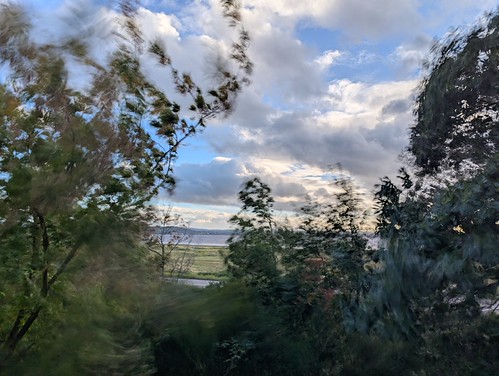
I usually delete any blurry pics I take, but here’s a long exposure one I took at the weekend by mistake. It was very windy!

Windy Findhorn
Windy Findhorn flickr photo by NomadWarMachine shared under a Creative Commons (CC BY-NC-SA 4.0) license

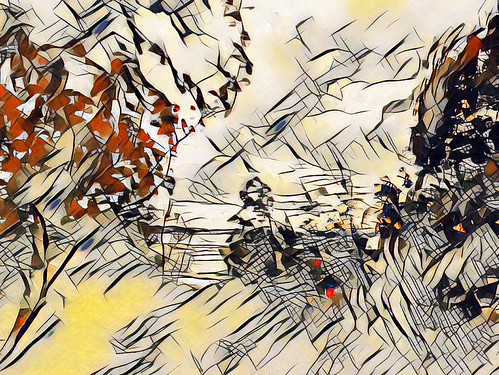
I headed over to Lunapic to artify it

Artified Findhorn
Artified Findhorn flickr photo by NomadWarMachine shared under a Creative Commons (CC BY-NC-SA 4.0) license