Dumgoyne flickr photo by NomadWarMachine shared under a Creative Commons (CC BY-NC-SA 4.0) license
Silent Sunday⤴
from NomadWarMachine
view: full | short | titles only
from NomadWarMachine
Dumgoyne flickr photo by NomadWarMachine shared under a Creative Commons (CC BY-NC-SA 4.0) license
from NomadWarMachine
from NomadWarMachine

Surveillence puffin flickr photo by NomadWarMachine shared under a Creative Commons (CC BY-NC-SA 4.0) license
from NomadWarMachine
from NomadWarMachine
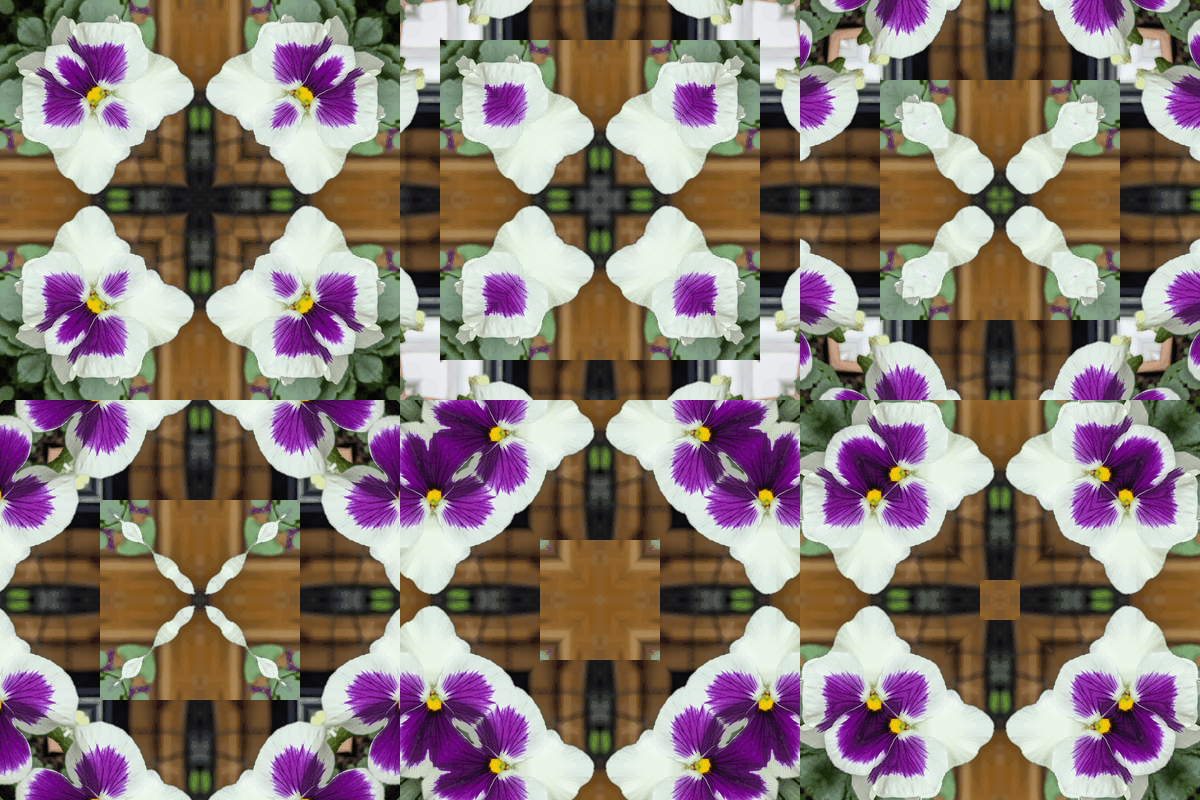
Today’s TDC asks us to make some autumn kigo. I really wanted to get out my pencils and crayons for this one, but I am trying to compress a day’s work into a morning so that I can enjoy the Reclaim conference this afternoon, so I quickly grabbed one of my recent pics of autumn leaves and used LunaPic to add some filters to it. I then dumped these into powerpoint, screenshot the slide and uploaded it to Flickr. Then I used Alan’s flickr cc attribution helper to attribute it.

Kigo flickr photo by NomadWarMachine shared under a Creative Commons (CC BY-NC-SA 4.0) license
from NomadWarMachine

WildDS106 flickr photo by NomadWarMachine shared under a Creative Commons (CC BY-NC-SA 4.0) license
Today’s TDC was written to fit in with the first day of the Reclaim Hosting conference, and in particular to celebrate our new website: Combobulating.
When Mark first offered us the domain name we didn’t think it was a word, but of course others before us had come up with a definition:
To compose (one’s self); to compose, organize, design, or arrange; to reverse the effect of discombobulation.
Well, we can’t promise our website will do that, but it’s given us a lot of joy doing it and, to me, that epitomises what the Daily Create is – it brings me moments of hope and joy when I participate and see what others have devised as their responses.
So here’s to you, my fellow combobulators. Thanks for all the fun, and long may it continue.
And if this has affected you, make your claim for compensation here.
from NomadWarMachine

Creative Bomb flickr photo by NomadWarMachine shared under a Creative Commons (BY-NC-SA 2.0) license
I found out about the Daily Create because I became part of an online community. As I’ve written before, in 2014 I signed up for an online experience organised by Dave Cormier called Rhizomatic Learning – The community is the curriculum which I thought was going to be about Deleuze and Guattari, and even though it wasn’t I met a bunch of great people and am still collaborating with some of them in various ways a decade later. I was also introduced to CLMOOC and found many like-minded remixers and bricoleurs there.
As a result of meeting these people, and particularly thanks to my friend Ron Leunissen, I was introduced to #DS106 and the Daily Create. I dipped in and out of participation at first, only responding if a prompt really piqued my interest, but since November 22nd 2017 I have completed the daily challenge every day, without fail. I’ve also written about how important it is to me on a guest reclaim blog post, and I won’t repeat all I said there about the influence that this daily activity has had for me – but it’s a hugely important part of my daily life. Well, after 2894 days of participation it’s not surprising that it’s very much #4life for me.
from NomadWarMachine
Today’s TDC asks us to talk about creativity and openness. Here’s my response.
One thing I really appreciate about the Daily Create is that, because it is in the open, I have added motivation to complete it. Left to my own devices I would sacrifice my creative urges to the need to do admin, or one of the other multiple tasks that invade my head and push out my creative musings.
Small acts of creativity keep me going through the drudgery of paid work.

Hello :) Today I am going to touch back into a topic that has been discussed many times on these updates – desirable difficulties.
These are pedagogical techniques that can be applied across the curriculum and to independent study. Each technique brings a cost in terms of increased (subjective) challenge and more errors, but improves learning over the long term.
I won’t summarise all of the specific difficulties here; they have been discussed in many previous posts, perhaps most notably update #99, below:
What actually makes a difficulty desirable? This is an important and interesting question!
The main argument advanced by Robert Bjork and colleagues (e.g. Bjork, 1994) is that life is more complex than instruction and training. By simplifying practice in various ways (reducing variability, massing practice, etc), we seek to make things easier for learners, boosting immediate performance.
The trouble is that when gauged over the long term, this actually makes learning worse! There is more forgetting and worse transfer when practice is simplified. Retention and transfer are improved by desirable difficulties, even though learners may struggle and make more errors over the shorter-term.
This is the performance vs. learning distinction that I have written about before (see update #89), which can also be put in these terms: strategies that increase retrieval strength of memories boost short-term performance, but are harmful to long-term learning, in part because when items are easier to retrieve from memory, further practice is less impactful.
This explanation still leaves several questions, however:
Is it always the case that real life is more difficult than educational settings, or could the opposite sometimes be true?
When and how should we (not) combine difficulties? (See update #125)
How do we reconcile this with apparently helpful simplifications that are widely used in education, such as reducing cognitive load, scaffolding, giving clear explanations (rather than vague/bad explanations), or direct instruction (rather than having to figure things out for yourself)? Could reducing these forms of help actually be desirable in some contexts?
More generally, are there any further desirable difficulties?
Bjork and Bjork (2011, p. 58) are clear that not every difficulty is a desirable:
“Many difficulties are undesirable during instruction and forever after. Desirable difficulties, versus the array of undesirable difficulties, are desirable because they trigger encoding and retrieval processes that support learning, comprehension, and remembering. If, however, the learner does not have the background knowledge or skills to respond to them successfully, they become undesirable difficulties.”
It’s a nice quote, but rather a circular argument – the strategies that help learning are the ones that help learning.
However, it does provide the important insight that background knowledge is an important factor. This means that the level of difficulty depends on the learner themselves, which makes sense!
In a more recent publication, Bjork and Bjork (2023) provide further guidance, but still don’t really give us enough to entirely identify or rule out other ‘candidate’ desirable difficulties:
“… forgetting (loss of retrieval strength) can enhance learning (the gain in storage strength), which is why, in the theory, manipulations such as spacing and variation, which reduce retrieval strength, can enhance learning, as measured by performance at a delay …” (p. 21).
While it’s clear enough that things like spacing and retrieval practice are desirable difficulties, it feels like there is room for more theorising of the concept, and perhaps for considering its links (if there are any) to a broader range of pedagogies.
For this reason, as I mentioned a few updates back, I invited educators to explore the idea of ‘ease versus difficulty’ using contexts or theories of their choice.
Details of the resulting academic seminar below!
🎯 This week!! 📆
Educational ease and desirable difficulties (Thursday 6th Nov, 2025)
If you want to come along as a delegate and enjoy a bit of intellectual stimulation, you are be most welcome (no charge for the seminar, and refreshments are provided, though spaces are limited).
Sign up here:
If you can make it, it will be great to see you there and chat about this fascinating and important concept! If not, then perhaps another time 😅
All the best,
Jonathan
Last time: Combining Interleaving and the Spacing Effect, part 2

Please note that my slides and similar materials are shared under a CC BY-NC 4.0 license. This means you can use or adapt them with attribution for non-commercial purposes. If you wish to use my materials for other purposes, feel free to get in touch.
p.s I do not and will never use GenAI to produce these updates. They are human written.
from NomadWarMachine

Cat-frog flickr photo by NomadWarMachine shared under a Creative Commons (CC BY-NC-SA 4.0) license
Today’s TDC asks us to find the least popular challenge and respond to it. I chose this one:
Some of Salvador Dali’s surrealist paintings combined two or more kinds of animals. In the example The Temptation of St. Anthony, we see horses and elephants sporting some gangly insect legs. Tap into your inner-surrealist today and create a critter mash-up with two or more different creature parts. TDC2655