Surveillence puffin flickr photo by NomadWarMachine shared under a Creative Commons (CC BY-NC-SA 4.0) license
Surveillence puffin⤴
from NomadWarMachine
view: full | short | titles only
from NomadWarMachine
Surveillence puffin flickr photo by NomadWarMachine shared under a Creative Commons (CC BY-NC-SA 4.0) license
from lisibo
 I always get excited when people invite me to speak at conferences but I was very excited when Russel Tarr (created Classtools.net and was famously attacked by Gove for using Mr Men to help teach History resulting in a mass Mr Men Twitter avatar protest in solidarity!) asked me if I’d like to speak at a conference he was planning in Toulouse. A trip to France? Don’t mind if I do! And when he told me who else was speaking, I was even more excited and also perhaps a little daunted when I saw who else was speaking!
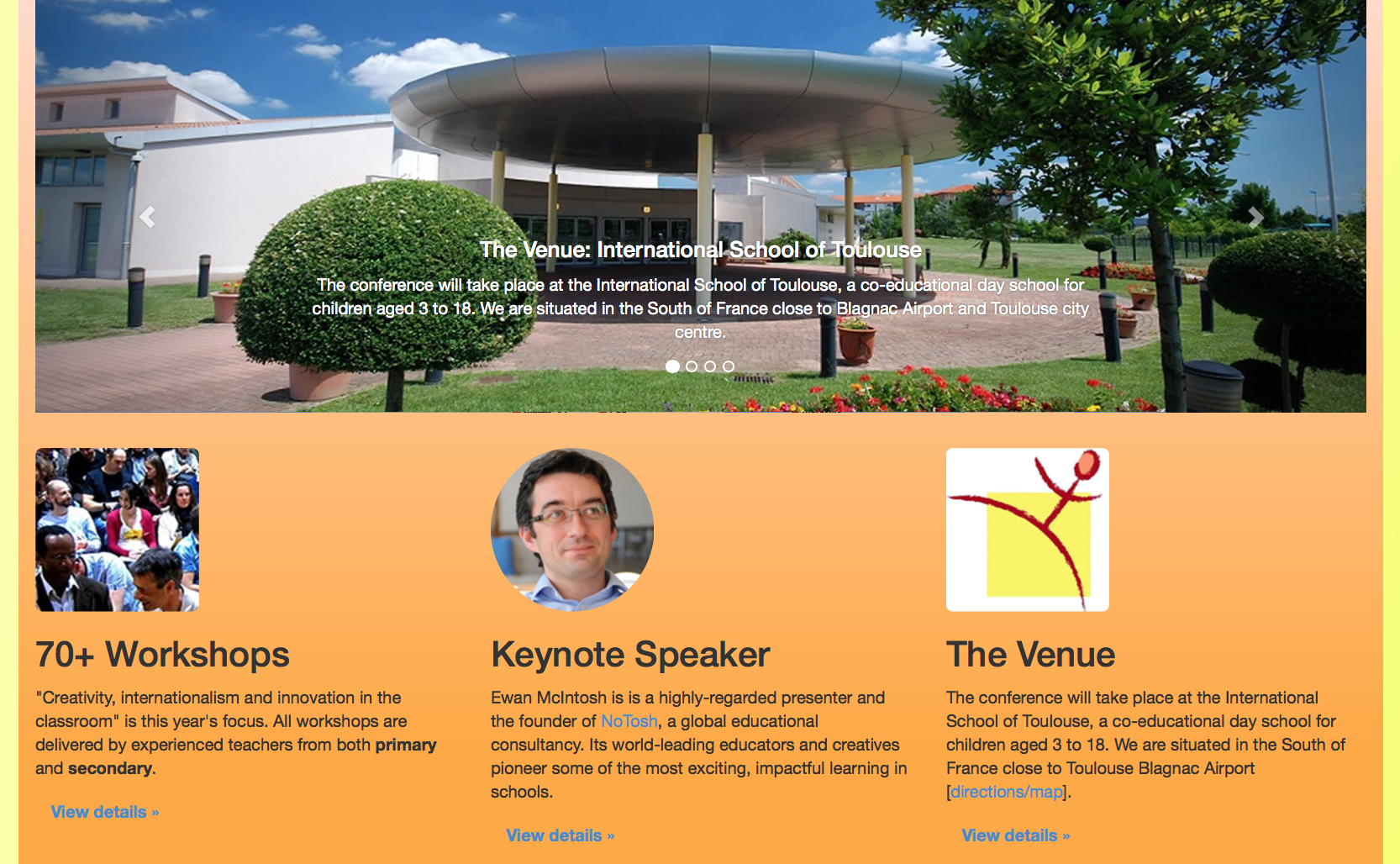
Practical Pedagogies takes place at the International School of Toulouse on October 15th and 16th and is
A high-impact training conference for classroom teachers by classroom teachers.
Two days of inspiring keynotes, 70+ workshops and networking activities: only 150 Euros!
I’m very much looking forward to the conference as there are so many different sessions under the umbrella theme of “Creativity, internationalism and innovation in the classroom” that it was very hard to choose which I’d like to attend. The programme is packed with goodies as you can see! And Ewan McIntosh @ewanmcintosh @notosh who is keynoting and also delivering workshops always inspires and challenges!

My session will be about using ICT in the Primary Language Classroom:

There are threads for
and of course
There’s still time to register if you’d like to attend. It costs 150 euros (very reasonable) and if you can get a cheap flight it’s not much more expensive than two days of INSET!
And if you can’t attend in person, you can follow on Twitter! You can follow the Twitter account @pedagogies and the conference hashtag is
It’d be great to see some of you there and if not, converse via Twitter. And of course I’ll share my thoughts (and sketch notes!) on my return!
from lisibo
If you’ve read the July edition of UKEDmagazine you may have read my article entitled Top ten tips for Primary Language Learning. If you haven’t, you can read the unedited version below or the official version at this link
A wide variety of people teach languages in Primary schools, probably more than in any other ‘subject’. Whether you’re a class teacher with or without language skills, a reluctant language coordinator or a visiting language specialist (to name but a few possibilities) here are my top ten tips for primary language teaching and learning.
It doesn’t matter which language you teach, making the correct sounds of that language is key. Working on phonics from the start builds a strong foundation on which learners can build, enabling them to see new words and say them accurately. Have a look at Rachel Hawkes’ website where there are links to free resources covering French Spanish German and Italian. http://www.rachelhawkes.com/Resources/Phonics/Phonics.php
A good way to increase confidence in reading and speaking the language is by sharing songs, poems and rhymes. This is also a good way to reinforce phonic knowledge and explore the rhythms of the language. Mama Lisa has songs and rhymes in many languages, often with a sound file giving the correct pronunciation and a translation into English so you know what you’re saying! There are also many songs and rhymes on Youtube on channels such as Basho and Friends or by searching for the artist such as Alain le lait
Using stories – in translation or original language – is another great tool for language learning as they are familiar and often very repetitive. My favourites include Oso pardo, ¿qué ves?, Le navet enorme and Kleiner weisser Fisch as they lend themselves to acting out (even Y6 like acting!) and are easy for learners to adapt into their own stories. For example, Y5 invented stories based on Le navet enorme that included a child who didn’t want to get in the bath and had to be pulled to the bathroom, a teacher stuck in the PE cupboard and a car that broke down and needed to be pushed.
There are many opportunities for using technology to enhance language learning such as recording, reviewing and refining speaking activities using Audacity or an app like VoiceRecordPro, or performing speeches and role plays using Tellagami, YakitKids, or Puppet Pals. BookCreator app is an excellent tool for creating multimedia books including text, sound, video, hyperlinks, doodles and pictures; incredibly easy to use and suitable for young children as well as those who are less confident with technology. And why not use Build Your Wildself or Switchzoo to create hybrid animals then describe them in the language.
Using technology is also a great way to enable sharing of the great things that go on in language learning. Whether it is via the school website or VLE, tweeted or shared on a class/school blog, celebrating language learning gives it status and also provides an audience and a purpose for learning. Additionally, learners are able to take their learning home with them digitally; the excitement of pupils when we made our first podcast nine or ten years ago was great. “I’m on my Gran’s iPod!” was my favourite comment.
The primary classroom is full of things that can be used and adapted for language learning. Number fans are great for counting and also giving feedback with numbered images for example. Mini whiteboards allow learners to write and correct without committing it to paper as well as drawing images to show understanding of vocabulary or instructions. Unifix cubes can be used for ordering ideas or vocabulary and cushions make great impromptu puppets for speaking or islands for phoneme sorting!
Primary learners are very familiar with grammatical terms and enjoy comparing the grammar of other languages, making links and finding differences. Sorting words into boxes according to gender, making human sentences to explore word order and creating verb flowers or spiders are just some ways of making grammar fun and memorable.
Language learning shouldn’t be seen as a standalone but, as much as possible, integrated into the primary curriculum. As there is no prescribed content in the KS2 PoS, it’s possible to teach the skills through whatever topic if you use a little imagination. And where full integration is tricky or where a specialist delivers the lesson, a class teacher can always build language into routines such as PE warmups, lining up, the register and so on, even if their knowledge of the language is limited.
Don’t just make cross curricular links, but also cross country and cross cultural links. Making contact with children that speak the language you’re learning is very motivating and gives a real purpose to learning. It also increases learners’ understanding of other cultures as well as considering their own in new ways. The British Council SchoolsOnline is a good place to start the search for partners.
Most of all, celebrate all languages. Many learners already speak more than one language which is a valuable skill. Encourage them to share how to say things in their languages; comparing and contrasting numbers or colours in a variety of languages is a fun activity as learners try to group similar words together.
This article first appeared in the July 2015 Edition of UKEdMagazine
If you’d like to read more of the magazine that includes other articles about language learning including one of target language by @reebekwylie and Progress in MFL by @jakehuntonMFL the links are below.
You can buy a printed copy of the magazine by clicking here, or
Freely read online by clicking Here
from lisibo
 On Friday 26th June I attended the Entrust Primary Languages Conference in Stafford, organised and led by Lorna Harvey. Entitled ‘We’re on our way’, the day began with an excellent keynote from Clare Seccombe aka @valleseco and genius behind LightBulbLanguages.
 |
 |
|---|
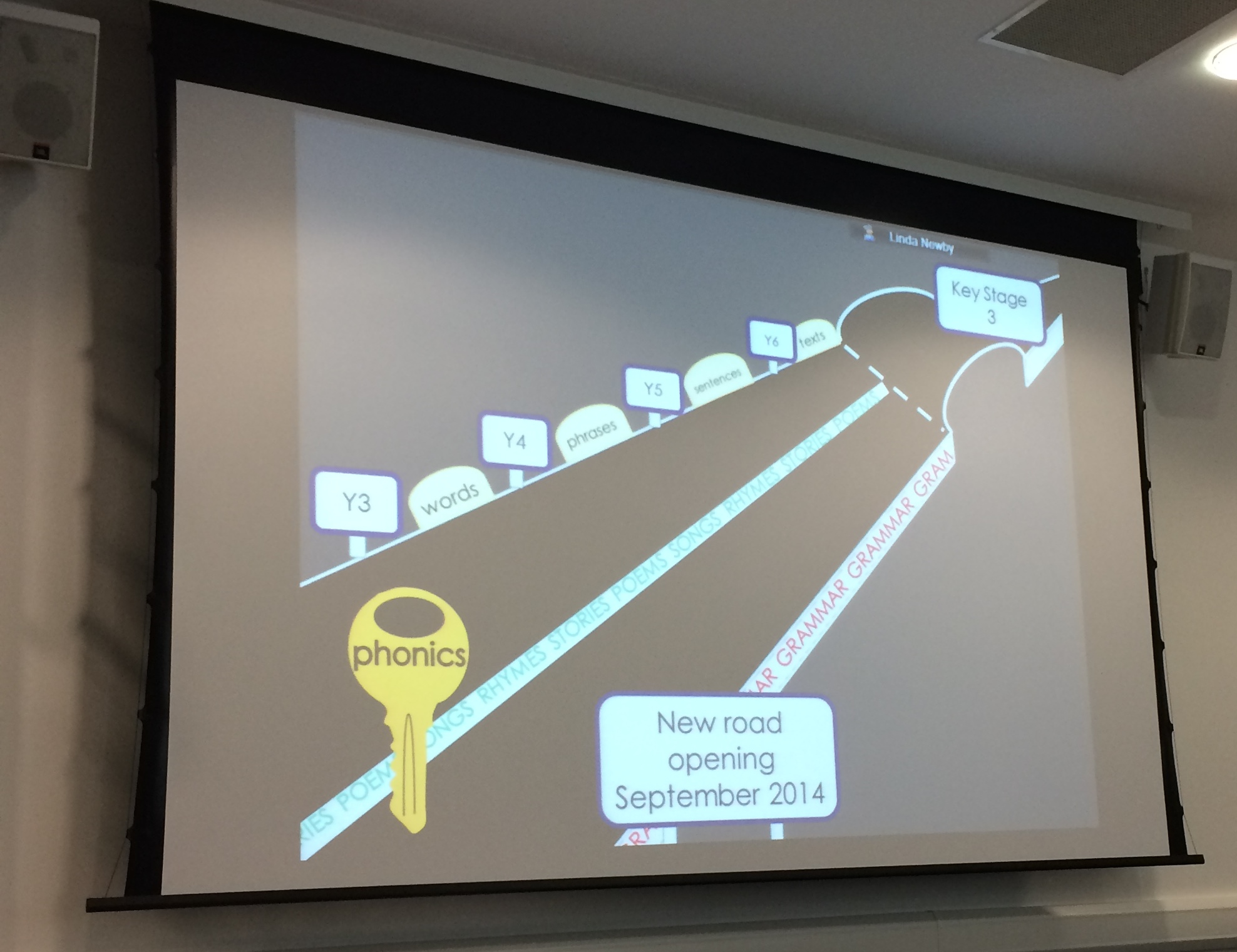
Sharing a title with the conference, Clare shared her ideas on the journeys involved in primary language learning – for the child, the teacher and as a nation. I love how Clare can express her ideas so well in images. I’ve tried to capture some of them in my sketch note below.
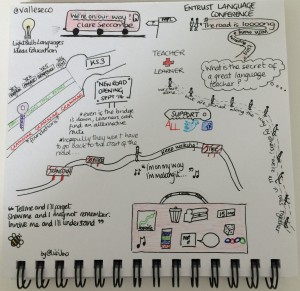
You can read Clare’s presentation for yourself here – We’re on our way!
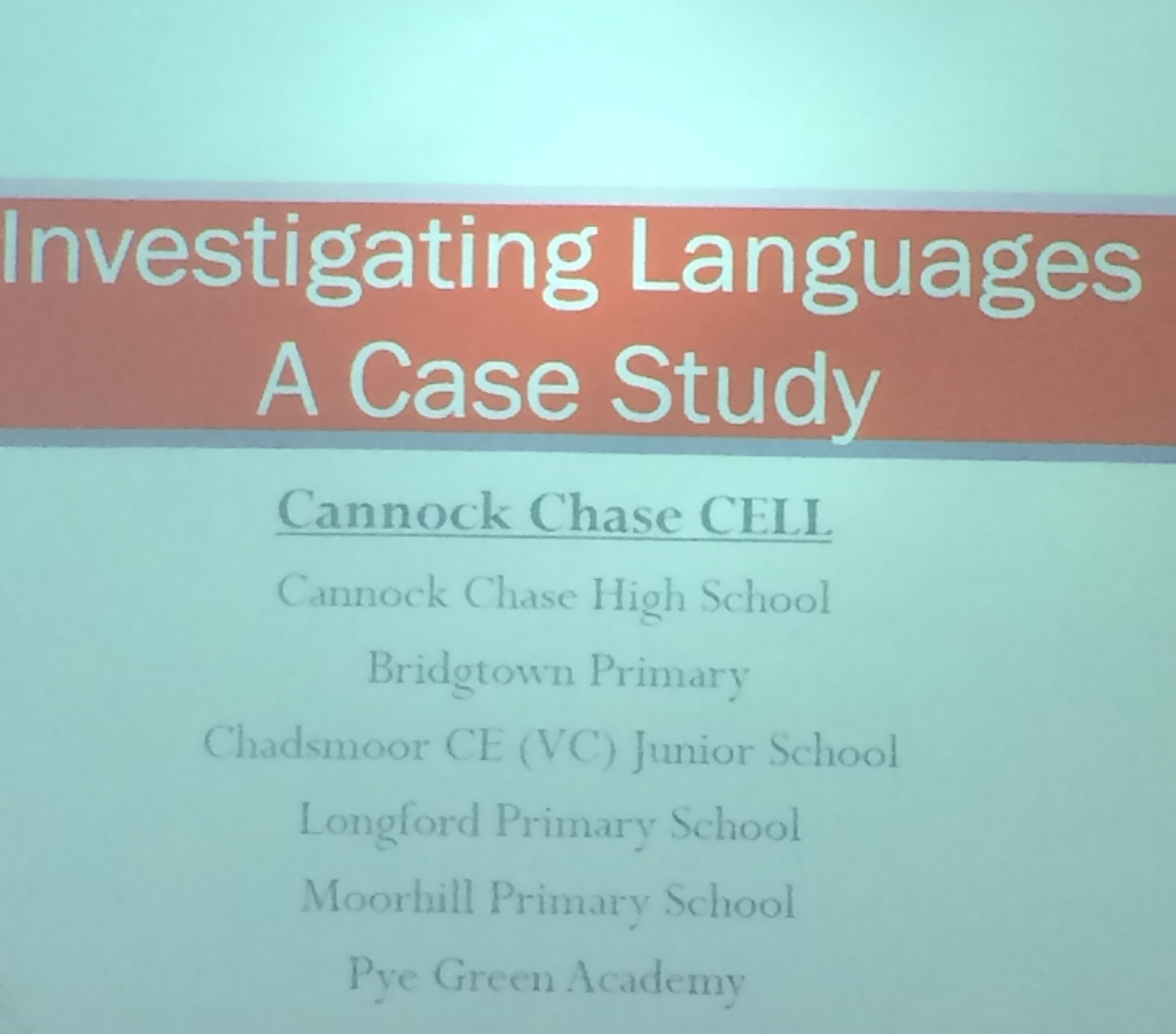
There were a number of workshops during the day – I attended one on a cluster of schools who use a ‘language investigators’ approach to language learning in Y1-2 and 3-4 before focussing on one language in Y6. My sketch note is below along with a few images.

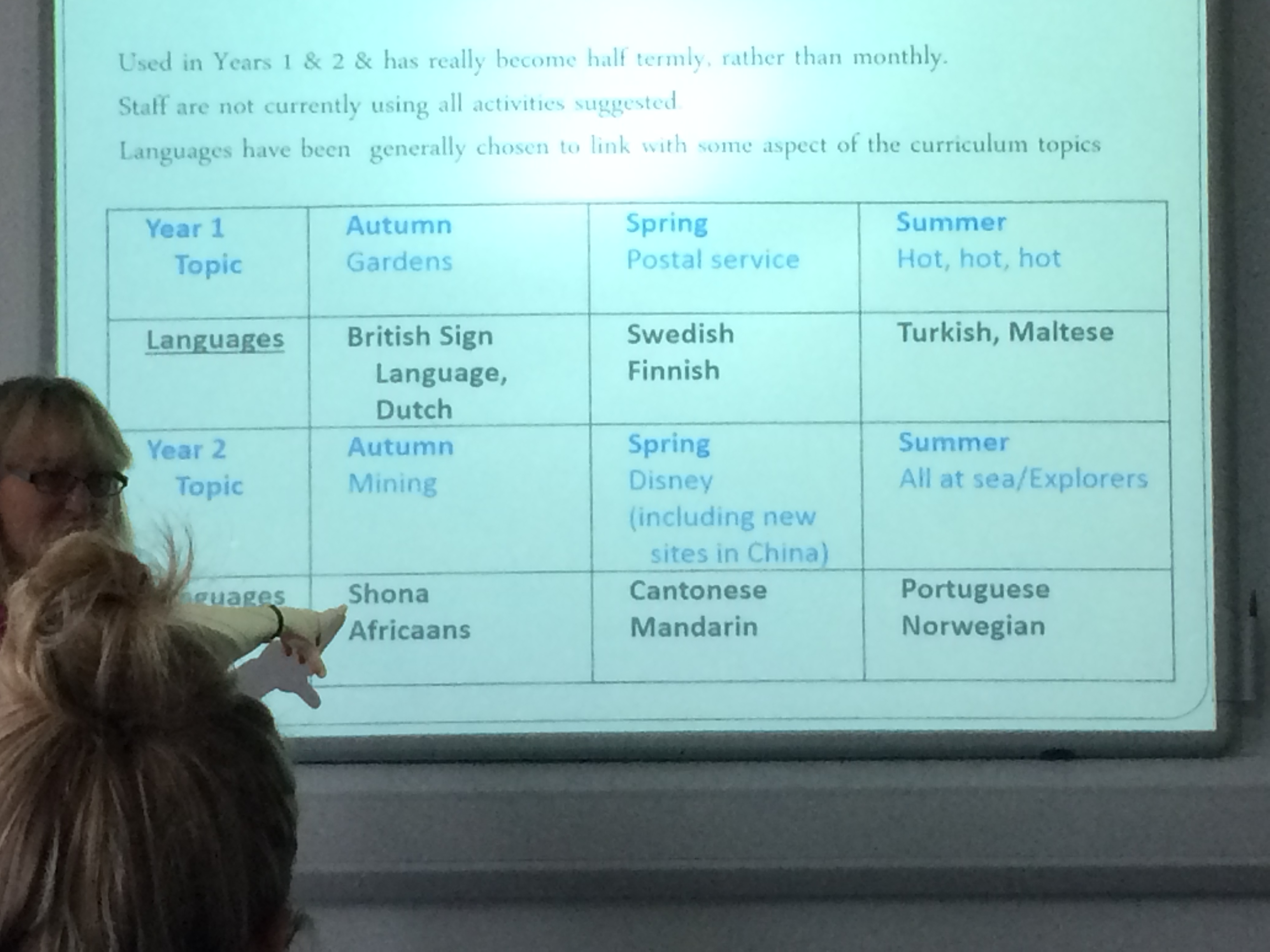 Plan for Y1-2 |
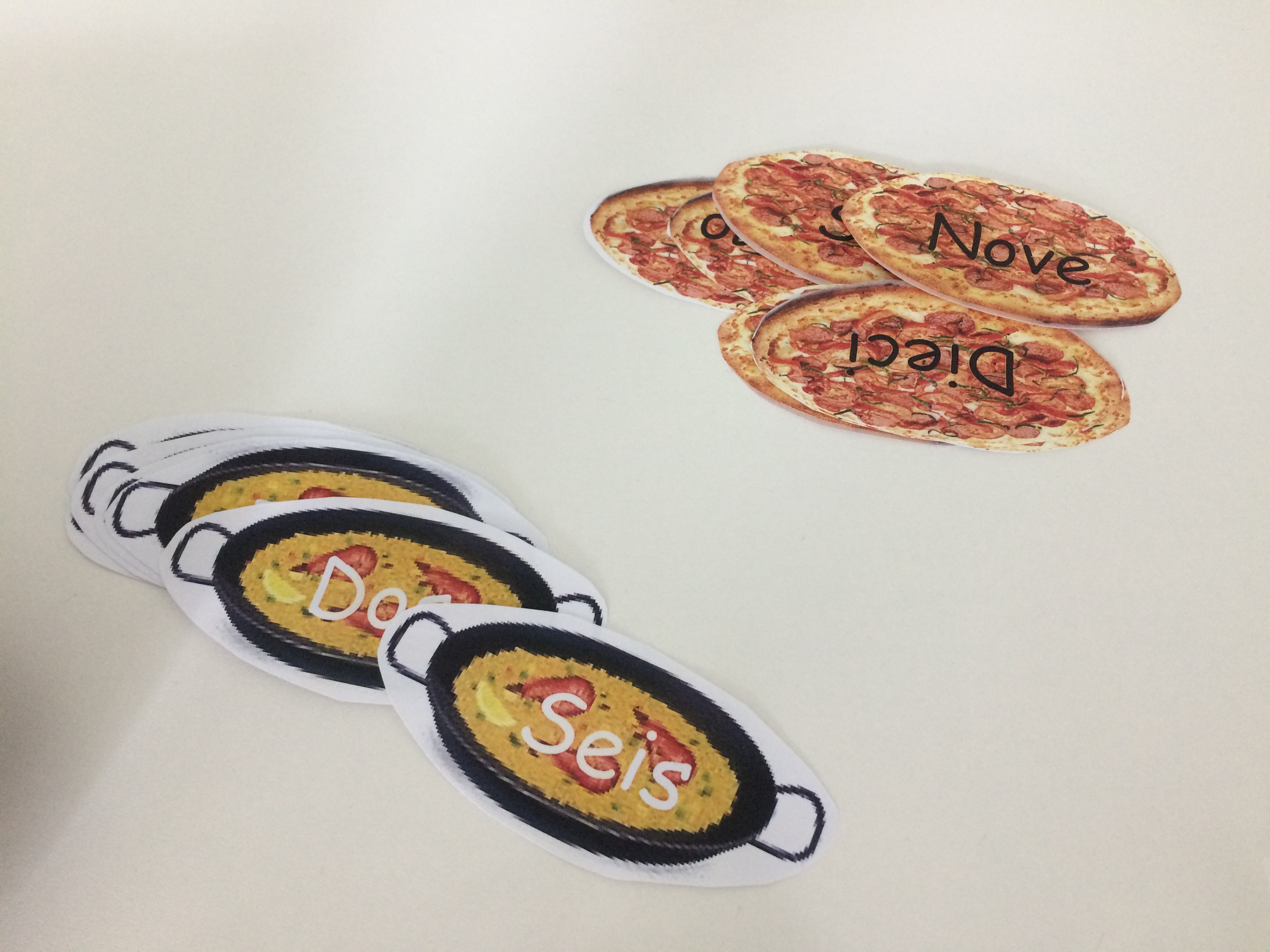 I loved the pizza/paella Italian/Spanish numbers! |
|---|---|
 |
 |
The day was very much a celebration of a project between Stafford and Burgundy, and I’d been asked to speak after lunch about a similar partnership in which I’d been involved, between Birmingham and Barcelona. It was wonderful to prepare my presentation as it sparked so many amazing memories and caused me to reflect on where we’ve gone since the (official) end of the partnership. Below you can see my presentation (although without the video clips I’m afraid) and Clare kindly sketch noted it for me.
Make it real! from @lisibo #sketchnote pic.twitter.com/6fkbnNo0sx
— Clare Seccombe (@valleseco) June 26, 2015
We had a brilliant presentation from pupils about their experiences as well as a culinary lesson based on tasting and making mustard. Great fun and with clear language goals too!
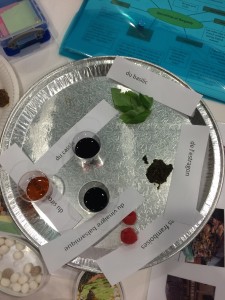 |
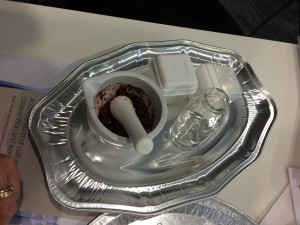 |
I finished the day by presenting about using technology to enhance language learning. You can see my presentation below and access the notes, tutorials etc here.
A great day – not much tweeting as I was too busy sketching or making mustard as was Clare, but here’s the Storify of the tweets anyway.
A great day – thanks Lorna!
PS Clare’s workshop – Be a crafty language teacher is explained here too!
from Charlie Love
It seems that everyone has this idea of the “transformative” use of technology in education. Every technology event I attend, just about every “evangelist” trainer, every company sales person or “education specialist” and every fan-boy/girl has this view that digital technology is a life-changing, wonder tool to inspire and change …