
346/365 Weeping Angel flickr photo by NomadWarMachine shared under a Creative Commons (CC BY-NC-SA 4.0) license
Silent Sunday⤴
from NomadWarMachine
view: full | short | titles only
from NomadWarMachine
346/365 Weeping Angel flickr photo by NomadWarMachine shared under a Creative Commons (CC BY-NC-SA 4.0) license
from Blue Collar
 The Inklings: C.S. Lewis, J.R.R. Tolkien, Charles Williams and Their Friends by Humphrey Carpenter
from John @ Glowing Posts
I saw a note from Sarah Honeychurch in an email thread about a problem with FeedWordPress, the plugin that makes the ScotEdublogs Aggregation work. This alerted Alan Levine who raised an issue and simplified the solution. Alan also had blogged about the problem, with his usual speed!
I’ve applied the fix and this post should test it out. Thanks Alan!
from NomadWarMachine

Shady Map flickr photo by NomadWarMachine shared under a Creative Commons (CC BY-NC-SA 4.0) license
On a cloudy day
Still, there are moments of light
Birds sing, and I smile

Hello! Today I want to talk about teachers and other educators getting involved in research, and specifically, about ‘action research’.
By action research, I mean research that reflects on and attempts to inform one’s own practice. Often, the focus is on changes to areas that are perceived as problematic. For educators, it might involve:
Gathering data on student engagement;
Investigating an innovative new aspect of practice, such as a use of educational technology or a form of group work;
Exploring changes to assessments or types of feedback given;
Gauging student responses to a new short course.
In short, any aspect of pedagogy in a teacher or instructor’s own context could be a suitable subject for an action research project.
This means that such projects tend to be more classroom-focused than a lot of other education research (although it is just as applicable to educators who are not classroom based). Action research is less likely to focus on things like policies, funding, sociological theories, and so forth.
How an action research project is done – its methodology – is where we start to see another major difference between this and other forms of research:
Action research is carried out on one’s own teaching. For example, as a lecturer, I could study my own students to see how they feel about practice questions.
Action research usually aims to act on the findings. So, if my student feedback suggests an appetite for more practice questions, I could introduce this later in their course or the following year.
As the above suggests, action research often aims for improvements via a series of iterations over many years. This is less commonly the case with traditional forms of research.
It’s easy to see the potential of this approach. The relevance is high, and it has the potential to impact on important and problematic areas.
As I touched on last time, there are potential issues with action research, too. Consider the following scenario:
Jake has heard that group work is better for learning. He tries out an increased level of group work with his science class, then gives learners questionnaires to evaluate their experience. Most say that they enjoy the new format, and Jake concludes that it is motivating and effective for science learning.
Unfortunately, I have come across many studies a bit like this terrible example! The problem, often, is that the practitioner action researcher has already decided that something helps before they ‘research’ it.
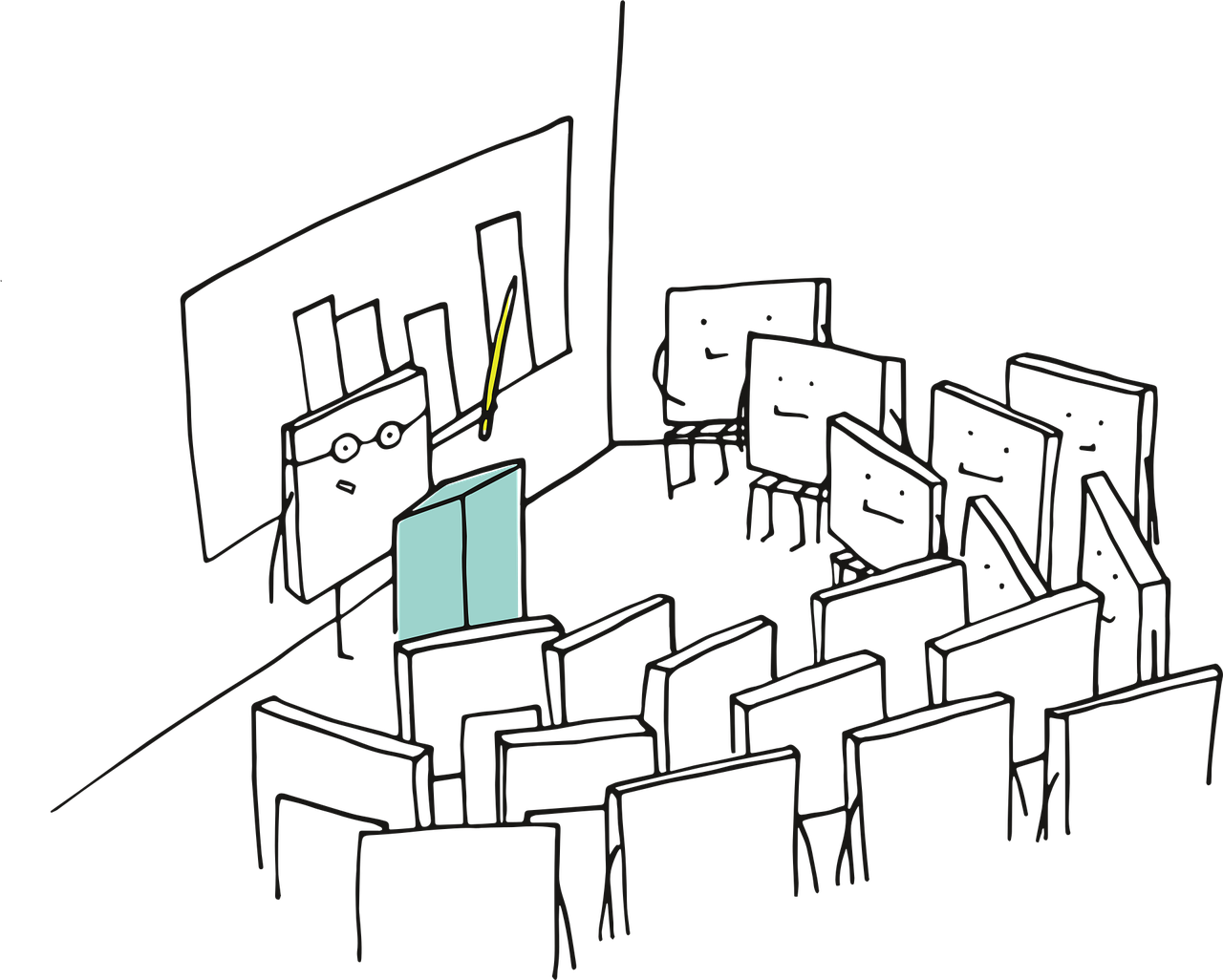
I am sure you can see how this could easily lead to apparent support for learning myths like the ones discussed recently, and, indeed, for a swathe of practices that are either ineffective or actively harmful.
This shows that engagement in action research can’t be a shortcut, and should not be conducted in ignorance of existing research and theories (just as other educational research should not be ignorant of practical contexts).
Of course, we don’t want biased and flawed research being used to inform practice, a problem which could be amplified if flawed findings are shared more widely.
However, this must be weighed up against the potential benefits such as contextual relevance of action research findings, as discussed above. There may be knock-on benefits, too; as a teacher-researcher myself, for example, I began to read widely about cognitive science findings and debates, leading to me carrying out my first research into interleaving and the spacing effect. This model could therefore lead to greater research engagement by those who carry it out.
So, as I see it, there is promise to the approach, but also significant pitfalls.
This will be my last update for the year, and I hope it was food for thought!
In the New Year, I will delve into this a little more, and share my view on how action research is best carried out. It should be helpful to you or any colleagues who are planning to undertake a research project in the coming months.
In the meantime, have a wonderful holiday when it comes, and many thanks for reading.
🎄🌟🎅🏽🎁🎄
Jonathan
Last week: Why Learning Myths Matter
I hope you are enjoying Memory and Metacognition Updates. Subscribe for free to receive new posts and support my work – and consider sharing it with colleagues!! Thank you!

Please note that my slides and similar materials are shared under a CC BY-NC 4.0 license. This means you can use or adapt them with attribution for non-commercial purposes. If you wish to use my materials for other purposes, feel free to get in touch.
from NomadWarMachine

333/365 Sunset flickr photo by NomadWarMachine shared under a Creative Commons (CC BY-NC-SA 4.0) license
from NomadWarMachine
Today’s TDC asks us to:
Find a suitable image. Now cut it up into several pieces (16-32 is a good range). Now rearrange those pieces to form a different image. Bonus points if you go beyond squares and triangles.
I decided to make a jigsaw, so I searched for a free, online jigsaw maker. I uploaded my mastodon profile pic and followed the instructions. You can solve it for yourself here.

Doodle Jigsaw flickr photo by NomadWarMachine shared under a Creative Commons (CC BY-NC-SA 4.0) license

Doodle Jigsaw Solve flickr photo by NomadWarMachine shared under a Creative Commons (CC BY-NC-SA 4.0) license
from NomadWarMachine
Today’s TDC asks us to
At the site, Plotted, users make maps from books they are reading. Explore the site’s many maps and choose one to share, or use one of the maps to make some interesting art, or if you want, create your own literatured-themed map there or elsewhere and share that.
I found a map of Earthsea, and added a wizard

Day 4 of my advent calendar of simple #H5P examples, in. Glow Blogs. A wee game for primary school pupils every day till Christmas.