Acrostic Poems⤴

from

Sarah
Sarah flickr photo by NomadWarMachine shared under a Creative Commons (CC BY-NC-SA 4.0) license

Today’s TDC says

Arguments rage in poetry circles about the merits of the Acrostic Poem (where the letters of the name of something, written vertical, form the first letters of words for each line). Use this Acrostic Poem generator to create your own, and if time, maybe transform the lines of the poem into a piece of art (what that means, is up to you, per DS106 ethos).

I made a couple – one for me and one for my Lacey Cat

Lacey
Lacey flickr photo by NomadWarMachine shared under a Creative Commons (CC BY-NC-SA 4.0) license

RIP Jean-Luc⤴

from

Enterprise over Earth
Enterprise over Earth flickr photo by NomadWarMachine shared under a Creative Commons (CC BY-NC-SA 4.0) license

Today’s TDC says

Honestly, we’re not sure what you can do with this one, but Ambient Earth is seven hours (plus) of footage from the International Space Station, looking at our beautiful planet. We hope it inspires you to write, or make art, or do something.

Last night we had the sad news that Patrick Stewart had died, so here’s my nod to him. I took a screen shot of the video and edited Enterprise into it.

We’re All Changing⤴

from

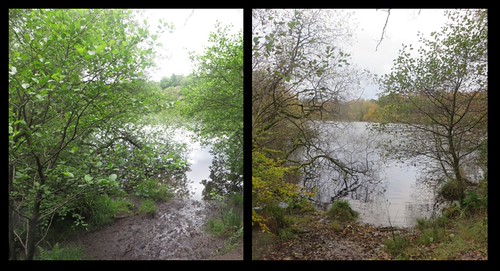
Mugdock June and October
Mugdock June and October flickr photo by NomadWarMachine shared under a Creative Commons (CC BY-NC-SA 4.0) license

Today’s TDC says

One hemisphere is entering Fall from Summer the other entering Spring from Winter… show us in a photo something that is changing (not necessarily nature).

Yesterday afernoon we found a gap in the rain clouds and walked around Mugdock Loch – a place we visit regularly, noticing as we walked around how many leaves had dropped since the last time we visited. Without knowing what the challenge would be today I stood and took a photo through the trees. So here’s Mugdock Loch in June and October – beautiful in all seasons.

We also saw a red squirrel while we were there, but didn’t get a photo.

Learning Without Edges: My Takeaways from #ALTC26 in Cardiff⤴

from @ Experimental Blog


I had luxury at ALTC this year to get into lots of sessions without worrying about what was happening back at my institution - now I am a free agent. All sessions I went along to were busy and highly relevant but with a range of parallel sessions I always have a bit of fear of missing out.

Great line up of exhibitors - as College body encouraged them to work with UFI Vocational Trust to find ways into the College and vocational landscape. Knowing the realitiies of College budgets, a lot of College focus will be on driving the most out of systems they have access to rather than buying in more technology.

Sure too as the PHP issue unfolded on Tuesday evening and Wednesday morning some folks would be going back to a firestorm of plugins to update. I am glad I missed that too.
This year’s overarching theme—"Learning without Edges" was particularly timely and tied in well too with pre-conference I attended. Life Long Learning is really back on the UK agenda.

We are all navigating a rapid shift across job markets, digital infrastructure, and student expectations, the focus wasn't just on shiny tech, but on how digital pedagogy can dissolve barriers and create adaptable, resilient learning ecosystems for all.


Here are my takeaways from two days in Wales.

1. Moving Beyond the AI Hype: Embedded Pedagogy & Integrity
Rather than isolating Artificial Intelligence into its own separate strand, #ALTC26 embedded AI throughout the entire program, focusing on practical application, academic integrity, and AI literacy. It is great that we have moved passed the AI right or wrong discussion.
 
The Sessions: Highlights included discussions around Agentic AI and the Student Experience 2026, which looked at how autonomous AI tutors are replacing basic chatbots, alongside sessions showing how conversational bots can support Universal Design for Learning (UDL) without overwhelming teaching staff.

Key Takeaway: AI is no longer a separate conversation; it should be part of every aspect of curriculum design and assessment strategy. ( this will take a while)

Reflections

I attended workshop with BlueTrain team from France it was an excellent workshop based game around changing assessment strategies to reflect the new world driven by AI and a presentation from ODEA who are rolling out a tool developed initially at Eindhoven University. Based initially on Gemini, now using Mistral, ( European Sovereign AI ) it is a local agent fed on an index of actual course materials designed to give learners individualised support. I also enjoyed session from Kortext again at a price mapping content to provide individualised support in a controlled way.

Lots of useful courses are appearing for staff development - and good use of Open Practice emerging in Ireland .

I am up to speed with Jisc work around Beyond Blended - really worth tuning into. I went along instead to workshops around the edges on Vibe Coding learning materials and around building AI agents. Jisc have been so key in supporting community in moving things forward. A really key ally of ALT.

I do wonder how well institutional IT teams are adjusting to this brave new world of AI agents - when will curriculum teams and students get access to these tools - or will it all be shadow IT. Think there is big bit of work needed here around managing cost of AI credits etc and building up IT teams confidence around using AI to support whole institution. There is some excellent work happening here from Jisc - both on ensuring harmony between IT and Learning Technology Teams and on not getting carried away by AI hype and making sensible procurement decisions around governance and cost cotrol of AI systems .

Within Canvas for instance on the knowledge base contained with a course a lot of this AI enablement is already possible.

2. Experiencing the Friction: Student Agency & Participatory Learning

One of the strongest recurring beats of the conference was making sure student voices sit at the center of digital transformation, not as passive end-users, but as co-designers.
The Sessions: Interactive workshops like "Be the Student for an Hour" put delegates directly into simulated digital learning environments to reveal hidden points of cognitive overload, accessibility gaps, and design friction.

Key Takeaway: Institutions scaling successful digital strategies actively involve students in tool procurement, interface testing, and learning space design. Think we all have a way to go here on Co-Design.

Reflections

These were great workshops but we have a long way to go here. Platforms tend to be selected on how they fit with existing institutional models, Students rarely have a voice. The opening session led by students highlighted how important truly flexible delivery is along with digital skills and simple pathways that allow learners to login and access all the right tools in the one place.

The right tool is single sign on, supports accessibility , learning design , microcredentials, eportfolio , offers AI support when needed - and can serve both learners within institution but can also open up content and learning experiences to those beyond the institution.

There was a session around how to bring learning design into making 2hr lectures more interactive - thought that highlighted how far we still have to travel. Brickfield Labs led a very simple session around challenges of accessibility of basic content. It is worth running this exercise ( and note to self check accessibility of this piece)

UCL demoed a simple co-pilot , .MD file driven tool that can provide better accessible descriptions of charts than for instance those automatically generated by Power Point.

I enjoyed session on slow learning that encouraged us to use tools and design learning not for efficiency but for flourishing

"where is technology enhancing, hindering, and transforming our experiences, and how can we take agency over the use of existing and emerging tools not for efficiency or automation alone, but for our own individual flourishing "

3. Accessibility as Core Culture, Not a Checklist

Digital accessibility remained a core pillar of the conversation, shifting from basic compliance toward embedded daily workflow habits.
The Sessions: Real-world case studies showcased institutional frameworks (such as Manchester's accessibility model) that empower educators to create accessible resources natively within their VLEs rather than retrofitting content later. Good use of Canvas as underlying platform.

Key Takeaway: Accessibility works best when it is automated, supported by institution-wide culture, and framed as essential universal design.

Reflections

There is a growing number of tools to make accessibility simply part of the workflow and to audit and upgrade existing content. I think challenge is still around staff skills and intent. It was good to here BrickField Labs updates in this area and see Manchester University's approach using Canvas. 

4. Community, Connectivity & 20 Years of ALT Awards

Beyond the formal presentations, ALTC26 was a celebration of community connection. It marked the 20th anniversary of the ALT Awards, recognising individuals, teams, and projects that have driven meaningful digital innovation over the past two decades. It is great to catch up with the community.


What’s Next? Other useful bits

  • Leaving Cardiff, my key take aways are :Explore and add some of my publications to https://zenodo.org/ and see how Mistral AI stacks up against Claude, CoPilot and Gemini.
  • Really liked an example of using AI Co-Pilot to create a 360 degree image that was then used in Thinglink to create a learning exercise.
  • Refocus on Co-Pilot and Gemini - where Colleges are at - I have some workshops to deliver in that space.
  • Follow up and support some of great folks and organisations I engaged with.
  • Do a blog post reflecting on another great ALT conference - job done.

Heckethaler⤴

from

Pot of Gold
Pot of Gold flickr photo by NomadWarMachine shared under a Creative Commons (CC BY-NC-SA 4.0) license

Today’s TDC says:

Check out this link to get a random German fairy tale.  Now make us some art based on whatever you get – maybe a picture or a poem.

I landed on The Heckethaler (Swinemünde), which I discovered is a magical self-replicating coin. I have nursery rhymes on my mind, so here’s the poem that wrote itself for me:

Heckethaler

What would I do with a magic coin?
Could I solve the problems of the world, a guinea at a time?
A penny for the match girl,
Another for your thoughts,
And one for the old man’s hat

Snobby Nursery Rhymes⤴

from

Today’s TDC says

Read a nursery rhyme aloud in a bad snobby accent.

Now, last week when we were out for a drink a pal told me I always sound posh, so here’s a nursery rhyme in my own acccent

This is a  rhyme mum said to us every time she dried our hair – I can’t find this exact version online. I still say it to myself every time I dry my own hair.

Rub a dub dub

Rub a dub dub
Three men in a tub
The butcher, the baker, the candlestick maker
All wrapped up in a rotten potater
Green peas, tuppence a peck
A man fell down and broke his neck
Apples for the king and pears for the queen
And a jolly good dance on the old bowling green

Life in Links – 70⤴

from @ wwwd – John's World Wide Wall Display

A collage of nine website screenshots, including a film-trailer selector, globe game, bird-identification page, literacy article, citizen-science site, salmon campaign, Guardian article, art exhibition page, and an older education blog.

Links I’ve collected at Links and Notes recently.

Fun

Trailer Time Machine Watch random film trailers from a year of your choice! I have clicke through a few from the year I was born (1958) and the year I went to university 1976, 58 seems a better year so far. Great fun.


I never got the wordle habit but I am finding these interesting:

MapTap.gg – Daily Geography Game I have been playing this for a week or two every day.

Birdle UK | Guess the Daily Bird

a fun way to encourage more people to learn about birds and bird conservation, no matter their experience level.

Facinating

The Right Words in the Right Order I posted about this earlier. LLMs, education, humanities & screens.


Chronolog 

Timelapses of Earth powered by community science. Used by organizations worldwide to monitor the environment and inspire stewardship.

Via @dogtrax. There is a map: Map | Chronolog. This looks great. Crowd sourced timelapses. There are none in Scotland.

Nicola Turner | 1 October – 7 November 2026 – Overview | Annely Juda Fine Art

A site-responsive installation made mainly from dark wool and horsehair will fill the ground-floor galleries at 16 Hanover Square, extending in a procession-like manner that continues 12 metres up the façade of the Georgian townhouse. Inline with Turner’s practice, the installation will reference the fascinating history of the building, whilst touching on myriad issues such as shame associated with the female experience, secret-keeping and the inherent ‘memory’ of materials.


Frightening

End Salmon Farming – Project Slingshot

All Scottish salmon sold in supermarkets comes from overcrowded, filthy, underwater factory farms, where parasites and flesh-eating sea lice are endemic. Investigators have filmed fish with damaged and missing eyes and whole chunks of their flesh eaten away.

Years ago I had a wee picture of the colour chat fish farms used to choose the colour of the salmon flesh on my sidebar linking to attempts to clean up salmon farming. Looks like it i still a problem.


Why Arturo Béjar left Meta – and blew the whistle: ‘I don’t recall Mark ever being empathetic’ | Social media | The Guardian

24.4% of 13-15-year-olds on Instagram said they had received unwanted advances, and 21.8% said they had been the target of bullying on the platform in the past seven days. Furthermore, 51% of Instagram users said they had had a bad or harmful experience in the past seven days. Only 1% of them reported it, and of those, 2% had the content taken down – so just 0.02%. This was a far greater degree of harm than the company’s existing measurements suggested. Zuckerberg never replied.


Finally

John @ Sandaig Primary John’s Feeds Some nostalgia from the internet archive, sites I followed via RSS in 2007. Not many still active.

These are the sites I read in my feedreader, I just exported them all and converted the export to html.
The only feeds that are missing are the useful to me but no one else ones, comments on my flickr stream, del.icio.us links for me etc.

National Museum of Wales Education Leaders Summit Pre #ALTC26⤴

from @ Experimental Blog

Last week I was invited to contribute to a discussion among UK education leaders in the splendid surroundings of the Welsh National Museum Cardiff. This was an event pre Association For Learning Technology Conference #ALTC26 gathering hosted by Instructure. 

As we were in Wales the discussion was shaped by developments there, I was impressed by focus to push forward tertiary opportunities for all. In some respects they are ahead of Scotland in some other areas they are behind. I think difference may be that they do seem more prepared to make funding contingent on Universities and Colleges working more closely together. Check out MeDr developments and specifically current list of projects.

 In Scotland I'd make all tertiary activity  funded at the same level - that would correct the market and behaviours - and perhaps be much simpler than drip funding range of projects. 

It's interesting the theme of Life Long Learning is back on everyone's radar.

Here is a summary of the five key takeaways for supporting lifelong learners: You can read things in full on the Instructure Website

  • Lifelong Learning as a Shared Societal Responsibility: Anchored in Wales’s Well-being of Future Generations Act, institutions and policymakers are encouraged to move past short-term priorities and collaborate on connected learning pathways. With AI reshaping the workforce, education must focus on long-term adaptability, creativity, and reducing inequality for underrepresented groups.

  • Removing Barriers to Inclusion: To reach non-traditional learners, institutions need to make opportunities more visible and approachable. Examples include bringing education directly into local communities, libraries, schools, and remote areas to engage individuals who might not otherwise consider life long learning opportunities. I think there is massive role that Open Educational policies could play in this space. 

  • Rethinking Traditional Institutional Structures: Current university administrative systems (enrolment, student records, course approvals) are designed for traditional 18-year-old undergraduates. To compete with agile commercial learning providers and adapt to policy changes (like England's Lifelong Learning Entitlement), institutions must simplify processes and embrace flexible, modular, or asynchronous online learning. Colleges in Scotland are much more agile here but lack funding. They could be a true engine of change. 

  • Prioritising Collaboration Over Competition: Despite financial pressures and internal siloes between academic departments, stronger partnerships—both internally and externally with colleges and employers are essential to address changing workforce skill requirements. This is still a live issue in Scotland. In Wales the approach seems to be to use funding to incentivise collaboration between Colleges and Universities - I think a blunter instrument is still required in Scotland. 

  • Redefining Success Metrics: Beyond standard metrics like enrolment, completion rates, and revenue, institutions need to evaluate success based on learner-centric outcomes. This includes career transitions, gaining confidence, social mobility, and supporting learners who move in and out of formal education over time. This remains really hard to track in Scotland while Universities resist adoption of Scottish Candidate Number etc. 

Where Scotland is Behind

  • Funding Unitised and Short-Course Learning: The biggest area where Scotland falls behind is modular/Unitised  funding entitlement.

    • England is rolling out the Lifelong Learning Entitlement (LLE), allowing adult learners to take out loan funding for individual modules (30+ credits) or short courses throughout their lives.

    • Scotland’s non-tuition fee model relies heavily on full-time degree or full-award funding (via SAAS). It lacks a flexible, universal "credit bank" or modular loan system for adult upskilling, making it harder for mid-career adults to take single college or university courses without paying out-of-pocket.

  • Institutional Agility & Admin Bottlenecks: Much like the UK-wide challenges raised in Cardiff, Scottish universities remain constrained by traditional multi-year degree structures and lengthy course-approval processes. Commercial providers and short-course online platforms often outpace Scottish universities and Colleges  in launching agile retraining programs. Though at least College and Training Provider provision is shaped around relevant occupational standards. SCQF Microcredentials have been a thing in Colleges since the last century - but things like part-time evening, saturday morning and or even flexible blended short course provision seem to lack support. 

Where is space for Open Education ? 
I rehearsed this in earlier posts - there is so much scope for collaboration around both course design and learning materials in Scotland. We need much more flexible models for all learners. 

Do you have a platform that really supports Life Long Learning ?
Too many institutions , despite COVID are still overly focused on old models of course development and delivery.  Perhaps as they are just easier to deliver ?