Tag Archives: alt

Learning Without Edges: My Takeaways from #ALTC26 in Cardiff⤴

from @ Experimental Blog


I had luxury at ALTC this year to get into lots of sessions without worrying about what was happening back at my institution - now I am a free agent. All sessions I went along to were busy and highly relevant but with a range of parallel sessions I always have a bit of fear of missing out.

Great line up of exhibitors - as College body encouraged them to work with UFI Vocational Trust to find ways into the College and vocational landscape. Knowing the realitiies of College budgets, a lot of College focus will be on driving the most out of systems they have access to rather than buying in more technology.

Sure too as the PHP issue unfolded on Tuesday evening and Wednesday morning some folks would be going back to a firestorm of plugins to update. I am glad I missed that too.
This year’s overarching theme—"Learning without Edges" was particularly timely and tied in well too with pre-conference I attended. Life Long Learning is really back on the UK agenda.

We are all navigating a rapid shift across job markets, digital infrastructure, and student expectations, the focus wasn't just on shiny tech, but on how digital pedagogy can dissolve barriers and create adaptable, resilient learning ecosystems for all.


Here are my takeaways from two days in Wales.

1. Moving Beyond the AI Hype: Embedded Pedagogy & Integrity
Rather than isolating Artificial Intelligence into its own separate strand, #ALTC26 embedded AI throughout the entire program, focusing on practical application, academic integrity, and AI literacy. It is great that we have moved passed the AI right or wrong discussion.
 
The Sessions: Highlights included discussions around Agentic AI and the Student Experience 2026, which looked at how autonomous AI tutors are replacing basic chatbots, alongside sessions showing how conversational bots can support Universal Design for Learning (UDL) without overwhelming teaching staff.

Key Takeaway: AI is no longer a separate conversation; it should be part of every aspect of curriculum design and assessment strategy. ( this will take a while)

Reflections

I attended workshop with BlueTrain team from France it was an excellent workshop based game around changing assessment strategies to reflect the new world driven by AI and a presentation from ODEA who are rolling out a tool developed initially at Eindhoven University. Based initially on Gemini, now using Mistral, ( European Sovereign AI ) it is a local agent fed on an index of actual course materials designed to give learners individualised support. I also enjoyed session from Kortext again at a price mapping content to provide individualised support in a controlled way.

Lots of useful courses are appearing for staff development - and good use of Open Practice emerging in Ireland .

I am up to speed with Jisc work around Beyond Blended - really worth tuning into. I went along instead to workshops around the edges on Vibe Coding learning materials and around building AI agents. Jisc have been so key in supporting community in moving things forward. A really key ally of ALT.

I do wonder how well institutional IT teams are adjusting to this brave new world of AI agents - when will curriculum teams and students get access to these tools - or will it all be shadow IT. Think there is big bit of work needed here around managing cost of AI credits etc and building up IT teams confidence around using AI to support whole institution. There is some excellent work happening here from Jisc - both on ensuring harmony between IT and Learning Technology Teams and on not getting carried away by AI hype and making sensible procurement decisions around governance and cost cotrol of AI systems .

Within Canvas for instance on the knowledge base contained with a course a lot of this AI enablement is already possible.

2. Experiencing the Friction: Student Agency & Participatory Learning

One of the strongest recurring beats of the conference was making sure student voices sit at the center of digital transformation, not as passive end-users, but as co-designers.
The Sessions: Interactive workshops like "Be the Student for an Hour" put delegates directly into simulated digital learning environments to reveal hidden points of cognitive overload, accessibility gaps, and design friction.

Key Takeaway: Institutions scaling successful digital strategies actively involve students in tool procurement, interface testing, and learning space design. Think we all have a way to go here on Co-Design.

Reflections

These were great workshops but we have a long way to go here. Platforms tend to be selected on how they fit with existing institutional models, Students rarely have a voice. The opening session led by students highlighted how important truly flexible delivery is along with digital skills and simple pathways that allow learners to login and access all the right tools in the one place.

The right tool is single sign on, supports accessibility , learning design , microcredentials, eportfolio , offers AI support when needed - and can serve both learners within institution but can also open up content and learning experiences to those beyond the institution.

There was a session around how to bring learning design into making 2hr lectures more interactive - thought that highlighted how far we still have to travel. Brickfield Labs led a very simple session around challenges of accessibility of basic content. It is worth running this exercise ( and note to self check accessibility of this piece)

UCL demoed a simple co-pilot , .MD file driven tool that can provide better accessible descriptions of charts than for instance those automatically generated by Power Point.

I enjoyed session on slow learning that encouraged us to use tools and design learning not for efficiency but for flourishing

"where is technology enhancing, hindering, and transforming our experiences, and how can we take agency over the use of existing and emerging tools not for efficiency or automation alone, but for our own individual flourishing "

3. Accessibility as Core Culture, Not a Checklist

Digital accessibility remained a core pillar of the conversation, shifting from basic compliance toward embedded daily workflow habits.
The Sessions: Real-world case studies showcased institutional frameworks (such as Manchester's accessibility model) that empower educators to create accessible resources natively within their VLEs rather than retrofitting content later. Good use of Canvas as underlying platform.

Key Takeaway: Accessibility works best when it is automated, supported by institution-wide culture, and framed as essential universal design.

Reflections

There is a growing number of tools to make accessibility simply part of the workflow and to audit and upgrade existing content. I think challenge is still around staff skills and intent. It was good to here BrickField Labs updates in this area and see Manchester University's approach using Canvas. 

4. Community, Connectivity & 20 Years of ALT Awards

Beyond the formal presentations, ALTC26 was a celebration of community connection. It marked the 20th anniversary of the ALT Awards, recognising individuals, teams, and projects that have driven meaningful digital innovation over the past two decades. It is great to catch up with the community.


What’s Next? Other useful bits

  • Leaving Cardiff, my key take aways are :Explore and add some of my publications to https://zenodo.org/ and see how Mistral AI stacks up against Claude, CoPilot and Gemini.
  • Really liked an example of using AI Co-Pilot to create a 360 degree image that was then used in Thinglink to create a learning exercise.
  • Refocus on Co-Pilot and Gemini - where Colleges are at - I have some workshops to deliver in that space.
  • Follow up and support some of great folks and organisations I engaged with.
  • Do a blog post reflecting on another great ALT conference - job done.

Year Two over the Top : Post Summer Blog Catch Up #OER26⤴

from @ Experimental Blog


I am still pinching myself that I'm not back in the trenches for a fraught start of term.

I've moved on a lot since last year, and the work keeps evolving. 

All the very best to all who are back for a new session. 

I had a busy end to my part-time consulting year!  And then a useful chance to simply potter about and reflect. Had great fun watching World Cup too in Scotland and France. 

I am a few blog posts behind. 

Here is a quick look at what I’ve been up to:

  • Holyrood Communications: I had the privilege of speaking on the transformative role of AI in Education, exploring both the opportunities and challenges it brings for learners and teachers. Mainly how assessment needs to change. But have a close look at the presentation on skills you and learners need to develop to make the most of AI tools.

  • #OER26: Connected with the open education community to share ideas and insights on the future of open educational resources. I focused on the practical things that open education advocates and their organisations should be doing to be open. Extended blog to follow.

  • Very timely as the Scottish Government has finally got behind Open Practice. Caught up too over the summer with the team leading on this work. Worth a read - if I was still working at a public body or at an institutional level I'd be figuring out how we start the journey towards sharing more resources publicly with an appropriate open licence and discussing this with all stakeholders. 

    The #openscot community and Association for Learning Technology have lots of experts on hand who could help.
  • Quality Systems: Delivered a session for Northampton College on familiar territory of quality systems internal and external quality assurance for their engineering academic team. 

  • Île de Ré: Balanced the busy schedule with a fantastic summer break on the French coast, enjoying the quiet beaches, cycling routes, food, wine, and plenty of sunshine (perhaps too hot this year).

  • Glasgow Commonwealth Games: Spent an unforgettable time volunteering on the ground, soaking in the vibrant energy of the events. Some memorable moments: the Ugandan team (on a rainy day)  telling me how beautiful Scotland was in the autumn and being surprised it was summer.  The Cook Islands team singing and playing their music on their hotel balcony each evening.   Above all, working with a great set of volunteers and welcoming so many different people into the City of Glasgow. 

  • RSA Scotland: Supported the Commonwealth Reception in Trades House of Glasgow, engaging in fantastic conversations with fellows and partners celebrating regional and international connections and handing the baton on to the Indian delegation. 


  • Mentoring: Continued supporting senior leaders on driving change, leveraging digital tools while staying human, and leading authentically. If you role-play being a rotter, you risk getting stuck in that mode, and we have more than enough angry leaders in the world right now!

Looking forward to ALTC in Cardiff, meeting new ALT Scotland Exec members, and supporting Instructure Canvas (including Canvas Con in November) and moving on a few other projects that will keep me occupied into the new year. 


Learning Technology – The State of the Nation ALT ( Association for Learning Technology) Scottish Regional Special Interest Group⤴

from @ Experimental Blog

This is a part report on proceedings at Stirling and an annual report from the special interest group. The hybrid gathering at Stirling was our 2nd event of the academic year. 

In early May, we held an online 'Two Stars and a Wish' event looking at the broad trends within the Scottish learning technology landscape.  

At Stirling, we focused on public bodies, policy, and sector initiatives related to learning technology. 

The agenda and links to presentations are on the agenda and in the event Padlet. Special thanks to all who joined us at Stirling and or online. 

My own short takes on items. 
Forgive any of my own bias and dig into the links and notes for your own take on proceedings. 

  • Jisc Innovation Hub is a great central venue - many thanks, Jason Miles-Campbell, for hosting us.  
  • ALT - Looking forward to seeing the new version of CMALT, OER26, and ALTC in Cardiff. Great to have Susan Martin, CEO, along virtually and look forward to seeing her in Scotland at future events. 
  • Education Scotland: Great updates on guidance and support going into schools to support digital learning and AI guardrails - learners will be arriving at Colleges and universities with ever-heightened expectations.  Still a challenge: national policy implemented with 32 different local authority flavours. 
  • College Development Network - some really good work is going on developing staff skills around AI - overall sense that students, particularly, have been terrified by some institutional messaging and that AI use has not perhaps moved on from the assumption that it allows more than sophisticated web searches. 
  • Jisc has so much great support, which is too often not being used or overlooked by the sector.  I particularly like the digital benchmarking surveys of institutional digital transformation. 
  • Some great updates from Scotland's Tertiary Enhancement Projects delivered in conjunction by QAA and CDN. My view would be useful with a bit more focus on digital. 
  • Lee Dunn, Head of Scottish Digital Academy, laid out Scotland's Digital strategy and the critical role that Colleges, Universities, and learning technologists have in delivering this.  They are, among other things, advocating an open educational approach to developing and sharing resources. There was also an open invitation
 "Anyone wishing to get involved in the discovery work and planning for OER and the Model of Professional Learning can email digitalacademy@gov.scot, and we will note their interest, reaching out to them once we’re ready to engage." 
  • Theo from QS (Qualifications Scotland ). The consensus Policy needs to move fast, but it must remain equitable and grounded in what educators and learners actually experience. Guidance is basically sound, but still misinterpreted by teaching staff.  Qualifications Scotland cannot change the assessment landscape on its own. 
  • Rosemarie gave a good update on SCAITEN - still looking for some institutional reps with focus on taking an ethical tertiary approach to AI .
  • Caroline brought it back to practical application, showcasing "The Stirling Approach" to blended learning. Seeing how Stirling intentionally weaves these digital tools into curriculum design and delivery created a useful debate. 
Finally, my thanks to the ALT Scotland steering group.  We have been following a similar schedule for the last five years;  steering group meetings in autumn and spring, with events scheduled around March/ April and one in June. I've got some new volunteers for the steering group who I will introduce at first meeting in the autumn. 

ALT Scotland Update – May 2026 Two Stars and a Wish.⤴

from @ Experimental Blog


In early May, we convened an online 2 Stars and a Wish Session with members of the Association for Learning Technology across Scotland. We had an active and useful discussion around themes and burning issues - and mostly our hopes for the future.  

Scotland’s digital learning landscape is shifting in ways that matter deeply for ALT members. Across AI, open practice, digital capability, and national reform, the sector is innovating, but unevenly; collaboration is strengthening, but still fragile; and the gap between policy ambition and operational reality remains stubborn.

Our next gathering will be hybrid, with both face-to-face and online options. Hosted at Jisc Innovation Hub at the University of Stirling on 12th of June - book here. 

And our wishes -

Better Assessment Design: A hope that AI disruption finally forces institutions to rethink outdated, surface‑level assessment practices.

Broader ALT Scotland Engagement: A desire to bring more colleagues into the ALT Scotland community, too many are still missing out on the support, camaraderie, and shared expertise.

More Thoughtful Use of AI vs OER: A call for educators to recognise when AI is helpful — and when a well‑chosen OER or public‑domain resource is the better, safer, or more transparent choice.

 A More Open System: A strong plea to move beyond “It’s all on SharePoint, unfortunately.” Members want institutions to enable external sharing, embrace open platforms, and reduce unnecessary barriers to collaboration.

 And a quick personal summary reflection on initial provocations - any omissions are my own. See Padlet for all links. (Both Padlets are now frozen)

1. Digital Capability: Progress, but still too slow

The Digital Skills Development Scoping Report (2025) continues to shape conversations about workforce readiness across colleges. It highlights what many ALT members already know: capability is improving, but the system lacks coherence, shared frameworks, and visible institutional and national leadership.

The ongoing Tertiary System workstream has real potential to address this, but only if outputs are openly published and actively used. Transparency here would make a tangible difference to practitioners.

Meanwhile, The Data Lab’s Education Community is emerging as a valuable cross‑sector space for data and AI practice. It’s early, but it could become a key partner for ALT Scotland.


2. AI in Education: Between grassroots realism and global critique

AI remains the dominant theme, but the conversation is maturing.
  • The Scottish AI in Tertiary Education Network (SCAITEN) making great progress in providing an informed position on AI for Colleges and Universities across Scotland.
  • AICE.scot, led by Stuart Caddell, is one of the most grounded, practitioner‑led initiatives in Scotland. It’s pragmatic, classroom‑focused, and aligned with the realities of Scottish schools. FE/HE should be paying attention.
  • Helen Beetham’s “AI Can Fail You” is resonating strongly with ALT members — a reminder that criticality must sit alongside innovation.
  • Timnit Gebru’s work at DAIR continues to expose the structural risks in the global AI ecosystem. For a sector dependent on vendor tools, this critique is not optional reading.
  • Jisc’s National Centre for AI remains a key source of guidance, though institutions are still wrestling with implementation.

The overall picture: There is some confident experimenting happening, but the ethical and infrastructural questions are getting louder. There are challenges to the best use of local AI solutions that need to be overcome in partnership with IT colleagues and with students.


3. Academic Integrity & Assessment: Normalisation underway

  • Across universities, AI‑supported academic work is becoming normalised rather than feared.
  • Northampton’s GenAI assessment guidance
  • Edinburgh’s subject‑level guidance
  • A growing set of open resources on copyright, public‑domain images, and AI‑generated media

These are practical, aligned, open, and increasingly shareable, exactly the kind of cross‑institutional consistency ALT Scotland has long advocated for.

4. Open Education: A renewed moment for Scotland

Open practice is gaining momentum again, and ALT members are at the centre of it.

  • Edinburgh’s TILT toolkit is a strong, interdisciplinary OER contribution.
  • Jisc’s Open Policy Finder is becoming essential for policy alignment.
  • UCL’s ABC Learning Design resources remain widely adopted across FE and HE.
  • Edinburgh’s Open Education Week shows what a mature institutional open culture looks like.
  • If you are doing work in the open follow #openscot example and get your work on the OERWorldMap.

With Creative Commons celebrating 25 years, it’s a timely reminder that open licensing underpins everything from AI training to resource reuse.

We had a good discussion around 'sharepoint', it can enable external sharing, but this is normally disabled.

5. AI for OER Discovery: A promising pilot

The Jisc–Sylla pilot exploring AI‑driven OER discovery is one to watch. If it can deliver transparent, licence‑accurate search, it could transform how materials are found and reused. But the risks, hallucinated attributions, opaque sourcing, remain real.


6. ALT Developments: A more integrated ecosystem

  • ALT itself is evolving in ways that matter for Scotland:
  • OER26 is approaching
  • ALT and DLI have announced a strategic partnership
  • AmplifyFE is now an ALT Special Interest Group
  • The arrival of a refreshed CMALT is imminent
These shifts strengthen ALT’s FE presence and create clearer pathways for professional recognition.

7. Wider Sector Signals

A few additional developments shaping the landscape:

  • Jisc Connect More (12–13 May) – free, online, and increasingly influential
  • SFC’s College Sector of the Future – early but important
  • Jisc’s Manifesto for Tertiary Education in Scotland – a bold attempt to shape national direction
  • UCISA’s VLE Review Toolkit – outputs will be essential for procurement cycles
  • DataFest – expensive, but consistently strong, some great global speakers. 
  • We Are Open Co‑op – closing after years of thoughtful sector support. Worth having a look and their fantastic legacy. 

What this means for ALT Scotland

Across all these threads, a few strategic implications stand out:

  • ALT Scotland is uniquely placed to convene the cross‑sector conversations others aren’t hosting.
  • Grassroots innovation (AICE.scot, open practice communities, practitioner networks) is outpacing national strategy.
  • AI is both enabling and destabilising — and the sector needs a shared, critical, Scottish voice.
  • Open practice is becoming the backbone of responsible digital education.
  • The tertiary reform agenda needs more visibility and more practitioner input.

ALT Scotland’s role is clear: connect, challenge, and amplify — ensuring Scotland’s digital learning community shapes the future rather than reacts to it.

Recording of Session Here 


One Year Over the Top ; Reflections. The Joy of Not Being There: A September Without the Start of Term⤴

from @ ...........Experimental Blog

I've been feeling a bit guilty. I've done a bit of work over summer but mainly I've just chilled.  It was strange coming back from a foreign holiday and not having to check lots of work emails - but it is a really nice sensation. 

This September, for the first time in thirty nine years , I am not preparing for the start of term. No staff briefings. No last-minute system tweaks. No wondering whether staff will be more engaged, more challenging, more everything - and what budget cuts are coming down the line etc and mainly wondering if the students will cope and will staff actually step them through induction or leave them to sink or swim. And or the dreaded moment when we discover that something promised to support induction hasn't actually happened - but it's included in all our start of session materials. 

As I push on I am bringing opportunities back to the College sector and the folks I know will be receptive to new ideas.  

Time to for a quick reflection on what I said I would do and what I've actually achieved and what I have to catch up on - I am due a post both on ALT Scotland SIG meeting at end of June and on #OER25 which I keynoted at before heading off on leave. That will be my next tasks.

When I said my farewells I promised I would keep pushing on a number of fronts.  Here is a potted update and a report card. 

  • UNESCO - Continue shaping bid for project around better understanding of the open source code available for creation and management of Open Badges in support of Micro credentials. Bid completed and I anticipate publication appearing before Christmas.  This from work in Bilbao 
  • Continue work with UK Digital Badging Commission - input completed and work now published. Tied in well with UNESCO work and my fellowship with RSA. Led to some comms and  work with 1Edtech.  Scottish education seems miles away from adopting these approaches. 
  • Hopefully continue to support work of QAA around Scottish Tertiary Quality framework. Delighted to say I now have a part-time role as a Quality Assurance Specialist for QAA.
  • Champion Teachermatic and other AI approaches to changing learning paradigm. This is still work in progress have delivered a number of sessions and keynotes.
  • Champion Canvas by Instructure . I am still due to do a bigger deeper blog on Canvas and why it should be platform of choice. But enjoyed working with Martin Bean in Scotland and enjoyed my time in Barcelona at #CanvasCon 
  • Continue to support Open Scotland following Dubai Summit to encourage more Open practice in Scotland. I keynoted #oer25 in London in June ( post to follow) I've presented to Once for Scotland to see if we can re-engage policy makers across Scotland and hoping to pick up conversation with Lee Dunn in the current administration. I am presenting OERGlobal25 in November. 
  • Encourage better understanding of Adaptive Comparative Judgement - this probably one area where I haven't really pushed on. 
  • Offer informed input on shape and future of tertiary sector in Scotland.  I keep knocking on relevant doors. There really needs to be a wholesale change in approach. 
  • Continue as Chair of Association of Learning Technology special interest group in Scotland and do a bit more community building for ALT. Held two meetings this year. Summary of online conference April  - report on June Stirling Conference to come and I am co-chair of UK ALTC Conference coming to Glasgow for first time in October. 
  • Continue to offer support to  suppliers , institutions and staff who want to digitally transform their practice and the experience of learners. Some notable successes with Smart Technologies really down to quality of product and support available in Scotland and in dialogue with a number of other suppliers. I continue to work with lots of old friends from @Bett Conferences  and my network. 
  •  I've run a couple of College sessions but sector could do with a few more - still not really seeing blended learning to the fore.  I think I could do more on that front. (if anyone wants a short workshop on digital transformation for managers or teaching staff - please just reach out) 
  • FRSA - Support Glasgow branch around organising a series of events this and next year. Making progress civic reception at City Chambers and event at Citizens Theatre in planning - reaching out to Education contacts for RSA.
  • Continue as Chair of IWasGonnae and Old Hall Scout Group. - both organisations thriving - really down to the energy and skills of the teams there. 
I've done lots of travelling over the year for business and fun and hosted some guests in Glasgow. 

Here are two happy snaps of 

Kim William Gordon, PhD from EdTech Research Labs St Louis USA

Maria Soledad Ramirez Montoya, UNESCO Chair Open Educational Movement for Latin America


OER25 – Stepping back and speaking truth to power⤴

from

The 16th annual Open Education Conference (OER25) is taking place in London next week and the theme “Speaking truth to power: open education and AI in the age of populism” could be more urgent or important.  Chaired by Sheila MacNeil and Dr Louise Drumm, both of whom have a long standing commitment to critical engagement with ed tech, the conference features keynotes by Helen Beetham and Joe Wilson. 

Helen’s keynote, “When speaking truth is not enough: repurpose, rebuild, refuse”, will explore the links between the AI industry and the politics of populism. Helen’s thoughtful, contextual approach to education technology and AI in particular has already made me step back and question the  foundational concepts of artificial intelligence.  I’m still thinking about her keynote at the 2023 ALT Winter Conference “Whose Ethics? Whose AI? A relational approach to the challenge of ethical AI.”

Joe Wilson has been my Open Scotland partner in crime for over a decade now and I’m continually inspired by his optimism and his commitment to openness.  Joe’s keynote, “Shaping Open Education ” will focus on the challenges of closing the attainment gap, promoting social mobility, ethical use of AI and keeping open education at the heart of change.

I’m also really pleased to see that Natalie Lafferty and Sharon Flynn will be leading a workshop on reviewing ALT’s Framework for Ethical Learning Technology, which is more critically important now than ever.  The workshop will inform an updated version of the framework, which is due to be launched at the end of the year. 

I’ve been hugely privileged to attend all fifteen OER Conferences, going right back to OER10 in Cambridge, but unfortunately I won’t be able to go to London this year.  I’ve had to step back from all work commitments as I was diagnosed with stage two throat cancer earlier in the year. I’ve already completed six weeks of radiotherapy treatment and am now (hopefully!) on the slow and convoluted road to recovery. (The jury is still out as to whether and how this relates to the autoimmune disease I was diagnosed with last year.  That remains to be seen.) Over the last six months I’ve been deeply moved by how immensely kind people have been, I really can’t express my gratitude enough.  

I haven’t had much energy to focus on anything other than recovery for the last six months, but during occasional bright spots I’ve found myself turning more and more to independent writing and journalism in an attempt to find some respite from endless doomscrolling. Shout out to Audrey Watter’s Second Breakfast, Rebecca Solnit’s Meditations in an Emergency, Carole Cadwalladr’s How to survive the Broligarchy, and Helen Beetham’s imperfect offerings for keeping me sane, more or less. All inspiring women with fearless voices speaking truth to power.

I’ve also been enthralled by the Manchester Mill’s tenacious investigative journalism that led to the suspension of two member’s of the University of Greater Manchester’s senior leadership team, including the vice chancellor, and the subsequent police enquiry into “allegations of financial irregularity“. As a former (brief) employee of the University of Greater Manchester, when it was better known as the University of Bolton, I’ll be watching with interest to see how this investigation develops.  

I’ve been making a rather half-hearted attempt at following the progress of the government’s questionable Data (Use and Access) Bill, particularly as it relates to AI and copyright, but I haven’t got the brain or will power to write about that right now.

In the meantime, I’ll hopefully be able to follow some of the OER25 Conference online and I’ll be with everyone in spirit, if not in person, this year. 

ALT Scotland 24th April Catch Up – Meeting Summary⤴

from @ ...........Experimental Blog

Here is a quick summary of what the Scottish ALT Special Interest Group Discussed on 24th of April 2025.

It's the curse of living in interesting times across the tertiary education sector. So many opportunities yet so much threatened. Our conversation covered a mix of personal updates, reflections on education, and ongoing challenges. 

But mainly some really useful insights from folks working across the Education sector with focus on learning technology. 

Much excitement that ALT Conference coming to Glasgow in October 2025. 

In all  a rich mix of policy concerns, educational debates, and technology insights

Padlet below here has relevant links we discussed and I highlight some of our discussion below. 

  • Key discussion points:
    • Our key themes are reflected in the embedded padlet. We discussed in the round  and I'll single some specific things out here
    • Policy background of cuts across sector and reforms to Education Scotland, HMIE, SQA , SFC but clearer guidance from QAA etc and routes to improved learning and teaching. By a  range of definitions we are all working towards blended learning through learning design but all feeling pinch of less funding and less staff. 
    • Concerns about new UKVI regulations causing confusion. There is a useful summary from WONKE included in the padlet - this is impacting on blend of learning and more fundamentally viability and access of international students to UK HE.
    • The conversation around learning design and the tendency for it to be more intuitive rather than methodically pedagogically planned. Staff are still reluctant to embrace digital skills and or accept new approaches to delivery.  Some useful past work from QAA on multi modality was highlighted - see padlet.
    • The rapidly changing trends in AI, Including its use in digital art and Facebook-based AI-generated content and on going sustainability and  intellectual property right issues. Specifically large-scale AI-trained book databases and impact on copyright. 
    • Challenges of open and AI - is this simply eshittification ? is it inevitable that our content will be exploited ?. We are assuming that AI is always the answer. We need to challenge this. Individuals and institutions need to make more informed decisions. Will using these tools really lead to personalisation or to a dull  homogenous approach to learning and teaching ?. There is a lot to question. 
    • ALT are about to revisit their ethical framework and hopefully some of these concerns will be addressed in latest review. 
    • There is a lot happening in space from AI Alliance and others in Scotland but does not appear to be strong connection with Education.  Highlighted recent AI playbook with number of commercial and or public sector examples of AI in action but none at moment from Education. 
    • On open education specifically - more threatened by institutional systems which favour closed rather than open and in a competitive environment fears and concerns around sharing are amplified. The latest concern that AI could eat our content is simply the latest barrier to supporting open practice. Focus tends to be on commercialisation rather than collaboration and sharing,  Telling that even with learning technology few Scottish institutions are sharing their training offers across the sector. Though all run online webinars etc for their own staff. 
    • There is  also a trend to move staff support guides from the open web onto closed SharePoint etc 
    • Roll out of AI tools at institutional level  Lack of clarity around even simple things like what bits of co-pilot are switched on or off at institutional level and how under 18s are managed in terms of access. ( my interpretation I think this is ok and part of an institutions Acceptable Use Policy) . Issues here around how IT and LT teams and wider organisation navigate things like local agents and Co-Pilot studio ( what are GDPR risks , hidden costs ) This moved to a discussion on productivity as a concept, with noted tensions and frictions.
    •  VLE etc  Jisc are offering VLE reviews to help institutions and staff make most of their virtual learning environments. Increasingly VLE offers come with embedded AI capabilities.  Main challenge though still around learning design and making effective sensible use of the VLE for learners.  
    • Staff Digital Skills It is an old chestnut. We talked around use and or lack of use of excellent surveys from Jisc.  The College sector (CDN)  has started a bit of work to find out what real barriers are to using these excellent benchmarking tools. This both for Digital Capabilities and Digital Insights Surveys. CDN and Jisc Scotland are going to bring back Virtual Bridge Sessions as Inside Sessions to support innovative practice in College sector.  There is a list of useful training sites on Padlet. 
    • Scottish AI Alliance is worth reaching out to with suggestions to raise educational pointers for their playbook.

    • AR and VR noted this still has a way to go to make real learner impact. VR content is still very expensive both to create and to access. AR is probably way forward.  Centres still generally reluctant to procure class head sets and still slow to make their own AR content even for use on flat screens. Still a  big fan of ThingLink in this space. 


    And some final ALT related plugs

    ALT Scotland SIG
    Save the date: Monday, June 16th, 10 AM - 3 PM
    Face-to-face event at Jisc's interactive classroom, University of Stirling.
    Booking arrangements and agenda to follow


    New online community for ALT Scotland
    Jisc is supporting a Microsoft Team to sit alongside the Jiscmail list please sign up here.
    ALT Scotland Community Teams site registration request

    We will also retire the Alt Scotland twitter account and a new BlueSky account and LinkedIn presence will appear in due course.

    #OER25
    Share your ideas on "Speaking Truth to Power: Open Education and AI in the Age of Populism" at #OER25 in London, 23-24 June. Spread the word to inspire more voices to join this critical conversation and or simply get along. Learn more: #altc #openscot

    #ALT-C Glasgow October 2025
    ALT-C is coming to Glasgow please reach out to all those who work in learning technology across institutions and into the public and private sectors. Collaboration is key.

#ALT-C24: presenting, and (re)connecting⤴

from

Last week I was lucky enough to attend and present at the annual ALT-C conference. I was only there for a day but, as always, it was such a tonic to catch up with lots of colleagues from across the sector. Thanks to everyone who came to our session on the Jisc Beyond Blended Resources.

The ALT-C conferences always do seem like the start of a new term (that’ll be the timing I hear you say), and have always provided that, imho, really important opportunity to catch up with people.

As ever, ALT did an amazing job of streaming sessions for those who couldn’t make it in person. Sadly, due to the current financial situation most universities are in just now, there seems to be more of those. Cutting staff and staff development are always the easy targets for cut backs . . .

However, one positive that I did take away was another re-connection. This time with social media. Like so many others, I left Twitter as it transitioned into X. There was a void for sure, sort of filled by Mastadon, not so much Threads (still can’t figure out the why of it!), and a lot more LinkedIn. The latter more for its focus and improved app experience – tho finding anything again is still a bit of “a mare”.

I have adjusted to less instant social media contact, but had joined Bluesky, oh quite a while ago. TBH I had kind of forgotten about it. But the week before ALT-C I did get a raft of new (legit and interesting) followers. Turns out I was part of a list circulating of people to follow. At the conference it really did seem to fill that Twitter void.

It kind of reminded me of when Twitter started. I couldn’t really see the point of it. I mean why would you want to tell everyone what you were doing? Why would anyone be interested? Wasn’t that a bit creepy ? But then I went to a conference and experienced a (small)conference back channel for the the fist time and realised how useful it could be. I saw the conversational aspect to it all, and was hooked. Lucky me to have been there when at the start – before all the adverts, influencers, haters . . . And being able to share my work on Twitter really did help with my professional development and expansion of my PLN.

It feels a bit more like those early days in Bluesky just now. A place for connecting and sharing without adverts, or (at this point) too much hate speak. So I will be there a bit more often now, you can find me there @sheilmcn.bsky.social.

This image was created with the Word press AI generator

OER24: Gathering Courage⤴

from

Hands of Hope, Cork, CC BY, Lorna M. Campbell

Last week the OER24 Conference took place at the Munster Technological University in Cork and I was privileged to go along with our OER Service intern Mayu Ishimoto. 

The themes of this year’s conference were: 

  • Open Education Landscape and Transformation
  • Equity and Inclusion in OER
  • Open Source and Scholarly Engagement
  • Ethical Dimensions of Generative AI and OER Creation
  • Innovative Pedagogies and Creative Education

The conference was chaired with inimitable style by MTU’s Gearóid Ó Súilleabháin and Tom Farrelly, the (in)famous Gasta Master.

The day before the conference I met up with a delegation of Dutch colleagues from a range of sectors and organisations for a round table workshop on knowledge equity and open pedagogies. In a wide ranging discussion we covered the value proposition and business case for open, the relationship between policy and practice, sustainability and open licensing, student engagement and co-creation, authentic assessment and the influence of AI.  I led the knowledge equity theme and shared experiences and case studies from the University of Edinburgh.  Many thanks to Leontien van Rossum from SURF for inviting me to participate.

A Cautionary Fairy Tale

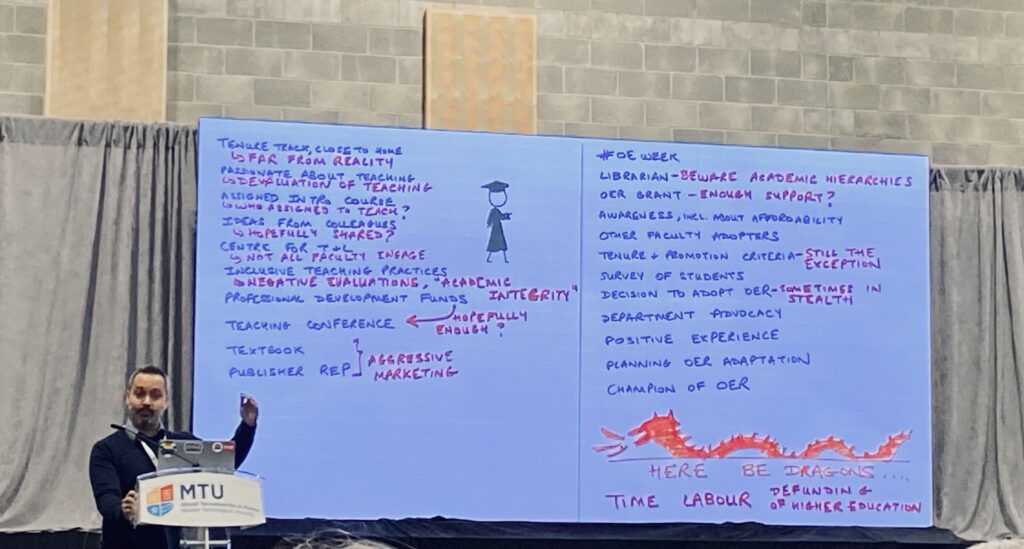
The conference opened the following day with Rajiv Jhangiani’s keynote, “Betwixt fairy tales & dystopian futures – Writing the next chapter in open education“, a cautionary tale of a junior faulty member learning to navigating the treacherous path between commercial textbook publishers on the one hand and open textbooks on the other.  It was a familiar tale to many North American colleagues, though perhaps less relatable to those of us from UK HE where the model of textbook use is rather different, OER expertise resides with learning technologists rather than librarians, OER tends to encompass a much broader range of resources than open textbooks, and open resources are as likely to be co-created by students as authored by staff. However Rajiv did make several point that were universal in their resonance.  In particular, he pointed out that it’s perverse to use the moral high ground of academic integrity to defend remote proctoring systems that invade student privacy, and tools that claim to identify student use of AI, when these companies trample all over copyright and discriminate against ESL speakers. If we create course policies that are predicated on mistrust of students we have no right to criticise them for being disengaged. Rajiv also cautioned against using OER as a band aid to cover inequity in education; it might make us feel good but it distracts us from reality. Rajiv called for ethical approaches to education technology, encouraging us not to be distracted by fairy tales, but to engage with hope and solidarity while remaining firmly grounded in reality. 

Rajiv Jhangiani, OER24, CC BY Lorna M. Campbell.

Ethical Dimensions of Generative AI and OER Creation

Generative AI (GAI) loomed large at the conference this year and I caught several presentations that attempted to explore the thorny relationship between openness and GAI. 

UHI have taken a considered approach by developing policy, principles and staff and student facing guidance that emphasises ethical, creative, and environmentally aware use of generative AI. They are also endorsing a small set of tools that provide a range of functionality and stand up to scrutiny in terms of data security.  These include MS Copilot, Claude, OpenAI ChatGPT, Perplexity, Satlas and Semantic Scholar. Keith Smyth, Dean of Learning & Teaching at UHI, outlined some of the challenges they are facing including AI and critical literacy, tensions around convenience and creation, and the relationship between GAI and open education. How does open education practice sit alongside generative AI? There are some similarities in terms of ethos; GAI repurposes, reuses, and remixes resources, but in a really selfish way. To address these ambiguities, UHI are developing further guidance on GAI and open education practice and will try to foster a culture that values and prioritises sharing and repurposing resources as OER. 

Patricia Gibson gave an interesting talk about “Defending Truth in an Age of AI Generated Misinformation: Using the Wiki as a Pedagogical Device”.  GAI doesn’t know about the truth, it is designed to generate the most most accurate response from the available data, if it doesn’t have sufficient data, it simply guesses or “hallucinates”. Patricia cautioned against letting machines flood our information channels with misinformation and untruth. Misinformation creates inaccuracy and unreliability and leads us to question what is truth.  However awareness of GAI is also teaching us to question images and information we see online, enabling us to develop critical digital and AI literacy skills. Patricia went on to present a case study about Business students working collaboratively to develop wiki content, which echoed many of the findings of Edinburgh’s own Wikipedia in the curriculum initiatives.  This enabled the students to co-create collaborative knowledge, develop skills in sourcing information, curate fact-checked information, engage in discussion and deliberation, and counter misinformation.

Interestingly, the Open Data Institute presented at the conference for what I think may be the first time. Tom Pieroni, ODI Learning Manager, spoke about a project to develop a GAI tutor for use on an Data Ethics Essentials course: Generative AI as an Assistant Tutor: Can responsible use of GenAI improve learning experiences and outcomes?  

CC BY SA, Tom Pieroni, Open Data Institute

One of the things I found fascinating about this presentation was that while there was some evaluation of the pros and cons of using the GAI tutor, there was no discussion about the ethics of GAI itself. Perhaps that is part of the course content? One of the stated aims of the Assistant AI Tutor project is to “Explore AI as a method for personalising learning.” This struck me because earlier in the conference someone, sadly I forget who, had made the sage comment that all too often technology in general and AI an particular effectively remove the person from personalised learning. 

Unfortunately I missed Javiera Atenas and Leo Havemann’s session on A data ethics and data justice approach for AI-Enabled OER, but I will definitely be dipping in to the slides and resources they shared. 

Student Engagement and Co-Creation

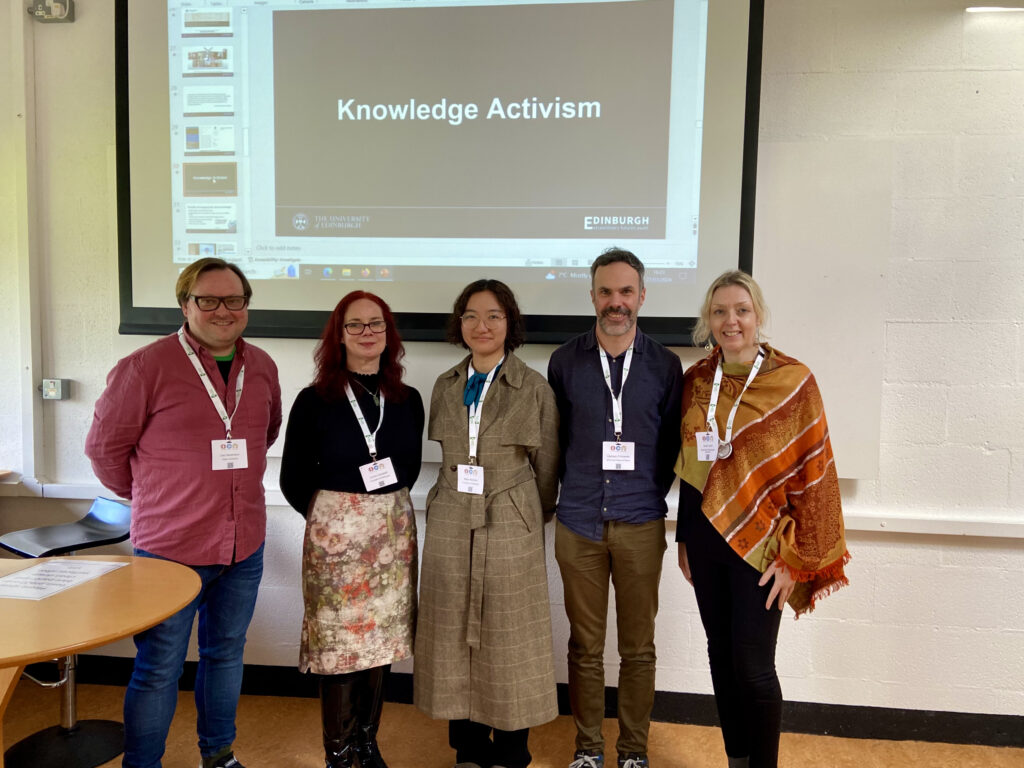
Leo Havemann, Lorna M. Campbell, Mayu Ishimoto, Cárthach Ó Nuanáin, Hazel Farrell, OER24, CC0.

I was encouraged to hear a number of talks that highlighted the importance of enabling students to co-create open knowledge as this was one of the themes of the talk that OER Service intern Mayu Ishimoto and I gave on Empowering Student Engagement with Open Education. Our presentation explored the transformative potential of engaging students with open education through salaried internships, and how these roles empower students to go on to become radical digital citizens and knowledge activists. There was a lot of interest in Information Services Group’s programme of student employment and several delegates commented that it was particularly inspiring to hear Mayu talking about her own experience of working with the OER Service.  

Open Education at the Crossroads

Laura Czerniewicz and Catherine Cronin opened the second day of the conference with an inspiring, affirming and inclusive keynote The Future isn’t what it used to be: Open Education at a Crossroads OER24 keynote resources.  Catherine and Laura have the unique ability to be fearless and clear sighted in facing and naming the crises and inequalities that we face, while never losing faith in humanity, community and collective good. I can’t adequately summarise the profound breadth and depth of their talk here, instead I’d recommend that you watch to their keynote and read their accompanying essay.  I do want to highlight a couple of points that really stood out for me though. 

Laura pointed out that we live in an age of conflict, where the entire system of human rights are under threat. The early hope of the open internet is gone, a thousand flowers have not bloomed. Instead, the state and the market control the web, Big Tech is the connective tissue of society, and the dominant business model is extractive surveillance capitalism.

AI has caused a paradigmatic shift and there is an irony around AI and open licensing; by giving permission for re-use, we are giving permission for potential harms, e.g. facial recognition software being trained on open licensed images.  Copyright is in turmoil as a result of AI and we need to remember that there is a difference between what is legal and what is ethical. We need to rethink what we mean by open practice when GAI is based on free extractive labour.  Having written about the contested relationship of invisible labour and open education in the past, this last point really struck me. 

HE for Good was written as an antidote to these challenges.  Catherine & Laura drew together the threads of HE for Good towards a manifesto for higher education and open education, adding:

“When we meet and share our work openly and with humility we are able to inspire each other to address our collective challenges.”

CC BY NC, Catherine Cronin & Laura Czerniewicz, OER24

Change is possible they reminded us, and now is the time.  We stand at a crossroads and we need all parts of the open education movement to work together to get us there.  In the words of Mary Robinson, former President of Ireland, former UN High Commissioner for Human Rights, and current Chair of the Elders:

“Our best future can still lie ahead of us, but it is up to everyone to get us there.”  

Catherine Cronin & Laura Czerniewicz, OER24, CC BY, Lorna M. Campbell.

The Splintering of Social Media

One theme that emerged during the conference is what Catherine and Laura referred to as the “splintering of social media”, with a number of presenters exploring the impact this has had on open education community and practice.  This splintering has lead people to seek new channels to share their practice with some turning to the fediverse, podcasting and internet radio. Blogging didn’t seem to feature quite as prominently as a locus for sharing practice and community, but it was good to see Martin Weller still flying the flag for open ed blogging, and I’ve been really encouraged to see how many blog posts have been published reflecting on the conference.  

Gasta! 

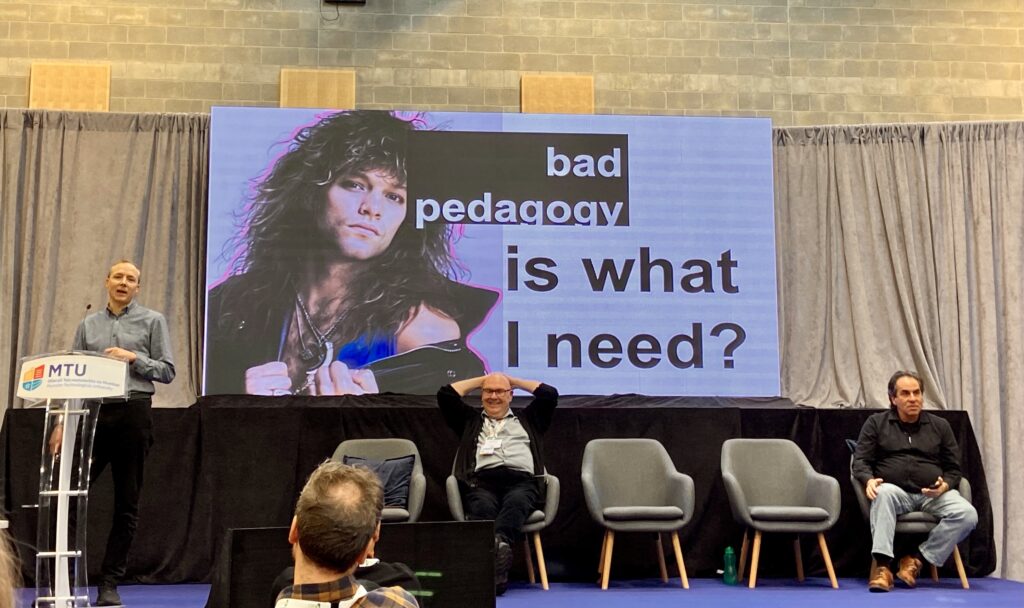
The Gasta sessions, overseen by Gasta Master Tom Farelly, were as raucous and entertaining as ever.  Every presenter earned their applause and their Gasta! beer mat. It seems a bit mean to single any out, but I can’t finish without mentioning Nick Baker’s Everyone’s Free..to use OEP, to the tune of Baz Luhrmann “Everybody’s Free (To Wear Sunscreen)”, Alan Levine’s Federated, and Eamon Costello’s hilarious Love after the algorithm: AI and bad pedagogy police.  Surely the first time an OER Conference has featured Jon Bon Jovi sharing his thoughts on the current state of the pedagogical landscape?!

Eamon Costello, Jon Bon Jovi, Tom Farrelly, Alan Levine, OER24, CC BY, Lorna M. Campbell

The closing of an OER Conference is always a bit of an emotional experience and this year more so than most. The conference ended with a heartfelt standing ovation for open education stalwart Martin Weller who is retiring and heading off for new adventures, and a fitting and very lovely impromptu verse of The Parting Glass by Tom. Tapadh leibh a h-uile duine agus chì sinn an ath-bhliadhna sibh!

Martin Weller, Tom Farrelly, Gearóid Ó Súilleabháin, CC BY, Lorna M. Campbell, OER24.

* The title of this blog post is taken from this lovely tweet by Laura Czerniewicz.

2023 End of Year Reflection⤴

from

Posting an end of year round up at the end of January might seem a bit daft, but I’m already one step ahead of last year, when I posted my end of year reflection in February! 

The beginning of the year was a succession of real highs and lows.  UCU entered a long phase of industrial action which came at a particularly challenging time for me as January and February is usually when I’m preparing for Open Education Week and the OER Conference.  However I also took some time out for a trip to New York with friends, which turned out to be one of the high points of my year. 

Open Education Week

For Open Education Week we ran a webinar that celebrated 10 years of open course development at the University of Edinburgh and shared the open course creation workflow that we’ve developed and refined over the years. 


OER23 Conference

It was great to see the OER Conference returning to Scotland in March when it was hosted by UHI in Inverness.  Inverness is a place that is very close to my heart as it’s the main city in the Highlands and it’s also were we used to go on holiday when I was a kid.  Inverness is still a stopping off point on the journey home when I go to visit family in Stornoway so I had a slightly weird feeling of nostalgia and home-sickness while I was there, it was odd being in Inverness and not traveling on further north and west. 

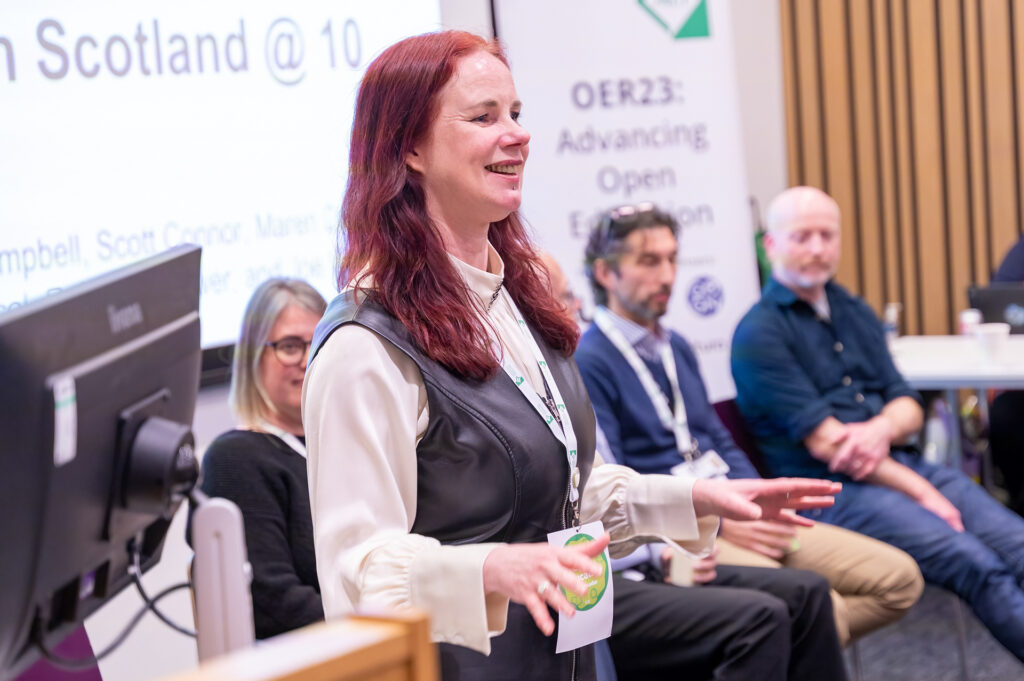
One of the themes of this years conference was Open Scotland +10 and Joe Wilson and I ran a number of sessions including a pre-conference workshop and closing plenary to reflect on how the open education landscape in Scotland has evolved over the last decade, and to discuss potential ways to advance open education across all sectors of Scottish education. 

Photograph of Open Scotland Plenary Panel at the OER23 Conference.

Open Scotland Plenary Panel by Tim Winterburn.
Here, the closing Panel Plenary session

Generative AI

Like many working in technical, educational and creative sectors I found it impossible to ignore the discourse around generative AI, though I hope I managed to avoid getting swept up in the hype and catastrophising.  In July I wrote an off-the-cuff summary of some of the many ethical issues related to generative AI and LLMs that are becoming increasingly hard to ignore: Generative AI – Ethics all the way down.  I appreciated having an opportunity to revisit these issues again at the end of the year when I joined the ALT Winter Summit on Ethics and Artificial Intelligence which provided much food for thought. Helen Beetham’s keynote Whose Ethics? Whose AI? A relational approach to the challenge of ethical AI was particularly thoughtful and thought provoking. 

Student Interns

Much of the summer was taken up with recruiting and managing our Open Content Curator student interns.  It’s always a joy working with our interns, their energy and enthusiasm is endlessly inspiring, and this year’s interns, August and Mayu, were no exception. I suggested it might be fun for them to interview each other about their experience of working with the OER Service and, with the help of our fabulous Media Team, they produced this lovely video. 


I was delighted when August and Mayu were shortlisted for the Student Employee of the Year Award in Information Services Group’s Staff Recognition Awards, in acknowledgement of their outstanding work with the OER Service and their wider contribution to ISG and the University. 

Their Finest Hour

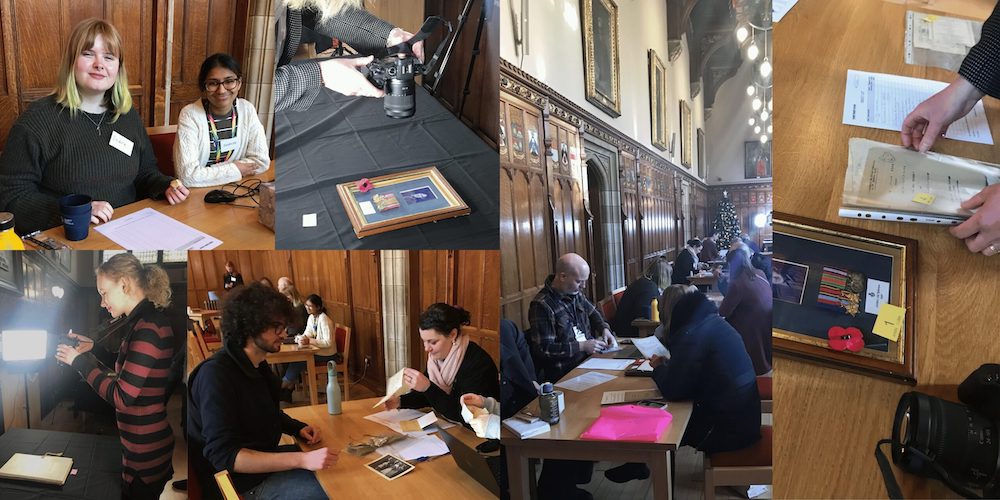
The OER Service welcomed another student intern in the summer, Eden Swimer, who joined us to help run a digital collection day as part of the University of Oxford’s Their Finest Hour, a National Lottery Heritage funded project at the University of Oxford, which is collecting and preserving the everyday stories and objects of the Second World War. Organising and running the digital collection day proved to be a huge undertaking and we couldn’t have done it without the help of 26 volunteers from across ISG and beyond who committed so much time and energy to the project.  


The digital collection day took place in Rainy Hall, New College at the end of November and it was a huge success. Over 100 visitors attended and volunteers recorded over 50 interviews and took thousands of photographs, all of which will be uploaded to an open licensed archive that will be launched by the University of Oxford in June this year.  It was a deeply moving event, many of the stories recorded were truly remarkable and the visitors clearly appreciated having the opportunity to share their families stories.  In some cases these stories were being told by the last surviving relatives of those who had witnessed the historic events of WW2 and there was a real sense of preserving their experiences for posterity. 

Their Finest Hour digital collection day by Fiona Hendrie

The collection day was covered by STV and you can see a short clip of their news item here: Second World War memories to be preserved at university collection day

Publications

It was a privilege to work with co-authors Frances Bell, Lou Mycroft, Guilia Forsythe and Anne-Marie Scot to contribute a chapter on the “FemEdTech Quilt of Care and Justice in Open Education” to Catherine Cronin and Laura Czerniewicz’s timely and necessary Higher Education for Good: Teaching and Learning Futures. 

“Quilting has always been a communal activity and, most often, women’s activity. It provides a space where women are in control of their own labour: a space where they can come together to share their skill, pass on their craft, tell their stories, and find support. These spaces stand outside the neoliberal institutions that seek to appropriate and exploit our labour, our skill, and our care. The FemEdTech-quilt assemblage has provided a space for women and male allies from all over the world to collaborate, to share their skills, their stories, their inspiration, and their creativity. We, the writers of this chapter, are five humans who each has engaged with the FemEdTech Quilt of Care and Justice in Open Education in different ways, and who all have been active in the FemEdTech network.” 

I was also invited to submit a paper to a special open education practice edition of Edutec Journal.  Ewan McAndrew, Melissa Highton and I co-authored a paper on “Supporting open education practice: Reflective case studies from the University of Edinburgh.”

“This paper outlines the University of Edinburgh’s long-running strategic commitment to supporting sustainable open education practice (OEP) across the institution. It highlights how the University provides underpinning support and digital capability for OEP through central services working with policy makers, partners, students, and academics to support co-creation and active creation and use of open educational resources to develop digital literacy skills, transferable attributes, and learning enhancement. We present a range of case studies and exemplars of authentic OEP evidenced by reflective practice and semi-structured ethnographic interviews, including Wikimedia in the Curriculum initiatives, open textbook production, and co-creation of interdisciplinary STEM engagement resources for schools. The paper includes recommendations and considerations, providing a blueprint that other institutions can adopt to encourage sustainable OEP. Our experience shows that mainstreaming strategic support for OEP is key to ensuring inclusive and equitable quality education and promoting lifelong learning opportunities for all.”

Writing this paper was an interesting experience as Edutec is a research journal that expects evidence to be presented in a very particular way.  As a service division, we support practice rather than undertaking academic research, so the case studies we present are based on authentic reflective practice rather than empirical research, however it was useful to think about this practice from a different perspective. 

Wikimedia UK

In July I was awarded Honorary Membership of Wikimedia UK in recognition of my contribution to the work of the charity during my six years as a Trustee. When my term as a trustee came to an end, I was hoping that I’d have more time to contribute to the Wikimedia projects.  That hasn’t quite happened, I didn’t manage to do any Wikipedia editing in 2023, but I did enjoy taking part in Wiki Loves Monuments again.  I also digitised some pictures I took of the Glasgow Garden festival way back in 1988 and uploaded them to Wikimedia Commons to share them with the fabulous After the Garden Festival project, which is attempting to locate and archive the legacy of the festival. 

Teddy Bears Picnic, sponsored by Moray District Council. CC BY, Lorna M. Campbell on Wikimedia Commons.

ALT

I made short-lived trip to the ALT Conference in Warwick in September.  Unfortunately I  had to leave early as I came down with a stinking cold. I was really disappointed to have to miss most of the conference as it was outgoing CEO Maren Deepwell’s last event and I was also due to receive an Honorary Life Membership of ALT award. It was a huge honour to receive this award as ALT has been a significant part of my professional life for over two decades now.  You can read my short reflection on the award here: Honorary Life Membership of ALT. 

For almost three decades Lorna has been a champion of equitable higher education and an open education activist. Lorna ‘s lifelong commitment to and passion for equality and diversity clearly is evident in her work, yet Lorna tends not to push herself forward and celebrate – or even self-acknowledge – her many achievements. 
~ ALT press release.

Kenneth White, 1936 – 2023

I was deeply saddened to hear of the death of Kenneth White in August.  Despite being an avid reader of Scottish poetry, and having studied Scottish Literature at Glasgow University for a couple of years, I hadn’t come across White until my partner introduced me to him in 2002.  His absence from Glasgow’s curriculum, and indeed his relative obscurity in his homeland, is striking given that he was a graduate of Glasgow University who went on to become the chair of 20th century poetics at Paris-Sorbonne. White, however, has always been a writer who divides the critics, particularly in Scotland. A poet, writer, philosopher, traveller, and self-identified transcendental Scot, White founded the International Institute of GeoPoetics and was a regular visitor to the Edinburgh International Book Festival, where I was fortunate to see him read.  To say that White’s writing, particularly his meditations on openness and the Atlantic edge, had a profound effect on me, is something of an understatement. This blog is named after the title of White’s collected poetic works and his lines frequently find their way into more unguarded pieces I’ve written.  I’ll leave you with a few words from the man himself. 

Image of the coast with the words of Scotia Deserta by Kenneth White.