
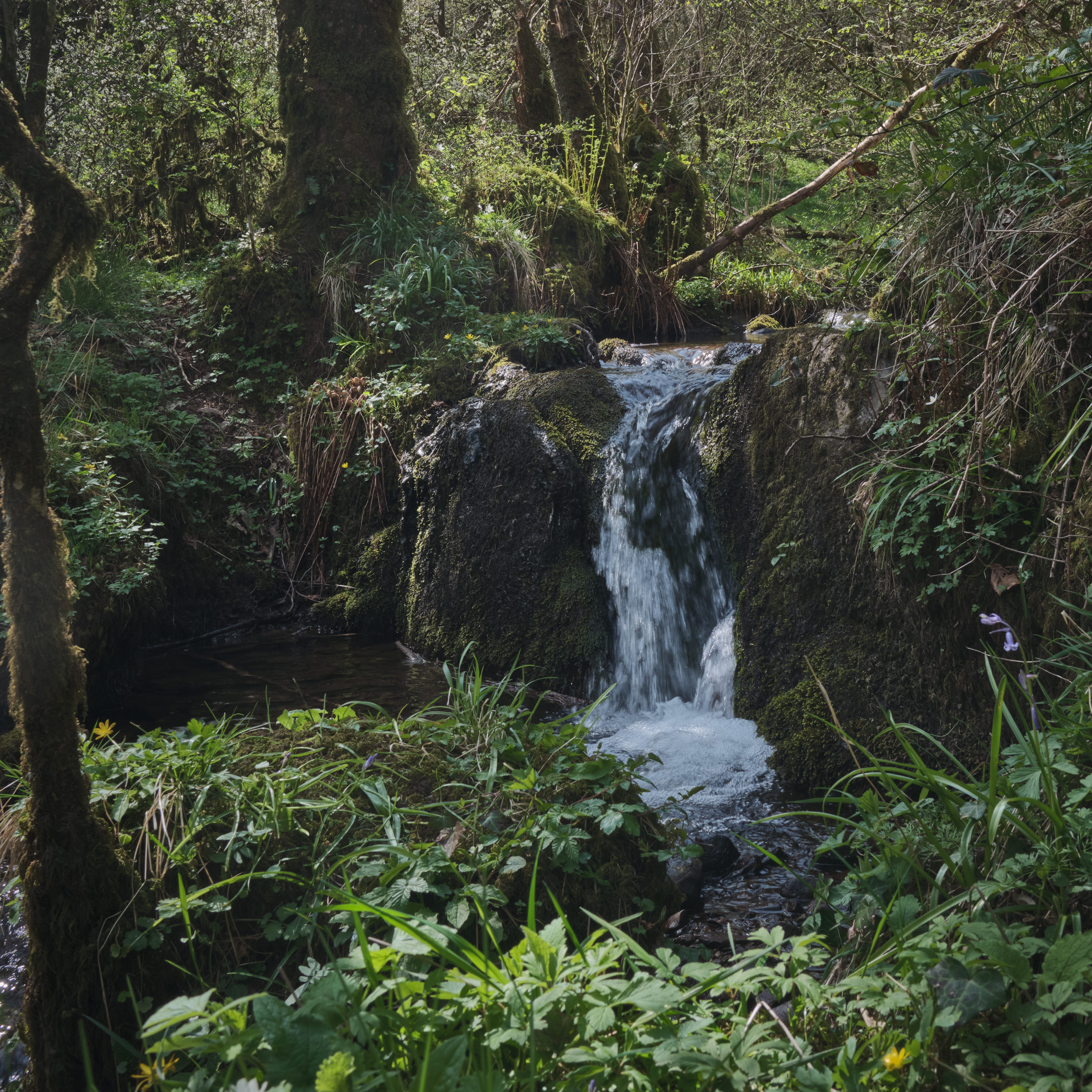
Bluebells at Croe Water flickr photo by NomadWarMachine shared under a Creative Commons (CC BY-NC-SA 4.0) license
Silent Sunday⤴
from NomadWarMachine
view: full | short | titles only
from NomadWarMachine
Bluebells at Croe Water flickr photo by NomadWarMachine shared under a Creative Commons (CC BY-NC-SA 4.0) license
from NomadWarMachine
Residential outdoor education is characterised by its place, its activities, and its learning processes. It is located within the natural environment, usually some distance from the participating school, with traditionally adventurous outdoor activities, which may also be curriculum-related. Whilst the learning processes of residential outdoor learning are predominantly experiential, they have potential across all domains of learning.
The Scout movement was an early example of organised residential outdoor education, focusing on character building, but more recently outdoor education has been seen to enable the development of life skills. Such skills include social effectiveness, teamwork, resilience and problem solving, as well as the promotion of connectedness to nature, and health and wellbeing. It has recently been very much in the news in Scotland with the passing of the Schools Residential Outdoor Education Act by the Scottish Parliament in December 2025, which is expected to come into effect from 2027. Through this Act, all Scottish school pupils will be entitled to a 5-day long residential experience at some time during their years in school.
One of the most obvious aspects of education outdoors is that there is a lot going on
Complexity, in a nut shell, is ‘the state of having many parts and being difficult to understand or find an answer to’ (Cambridge Dictionary). Two significant but different cases have been made for the complexity of outdoor education. Firstly, in 2001, Higgins said, ‘One of the most obvious aspects of education outdoors is that … there is a lot going on’. Importantly, the ‘lot going on’ ranges across and between the affective, cognitive and psychomotor domains of learning, a process referred to as ‘intertwining’ by Krathwohl et al. It is an adventure, and by its very nature has an uncertain outcome. Higgins concluded that education outdoors is a complex learning process, encompassing social (soft) and scientific (hard) examples of complexity. He argued that it is an educational imperative to introduce pupils to the complexity of learning outdoors to complement the prescriptive and compartmentalised nature of the educational experiences of the day.
The second case for the complexity of outdoor education comes from Williams in 2013, who was concerned with the learning process during a residential adventure education course for primary pupils. He doesn’t refer to Higgins’ 2001 paper but adopts complexity theory following discussions with educationalists to throw light on the inter-relationships between different aspects of the residential experience. In summary, he concluded that pupils demonstrate emergence at the conclusion of a residential experience due to the complex interactions acting on them. Emergence is a phenomenon associated with complex systems, referring to a step change in growth (personal growth in this case) which emerges only when properties or behaviours interact with one another.
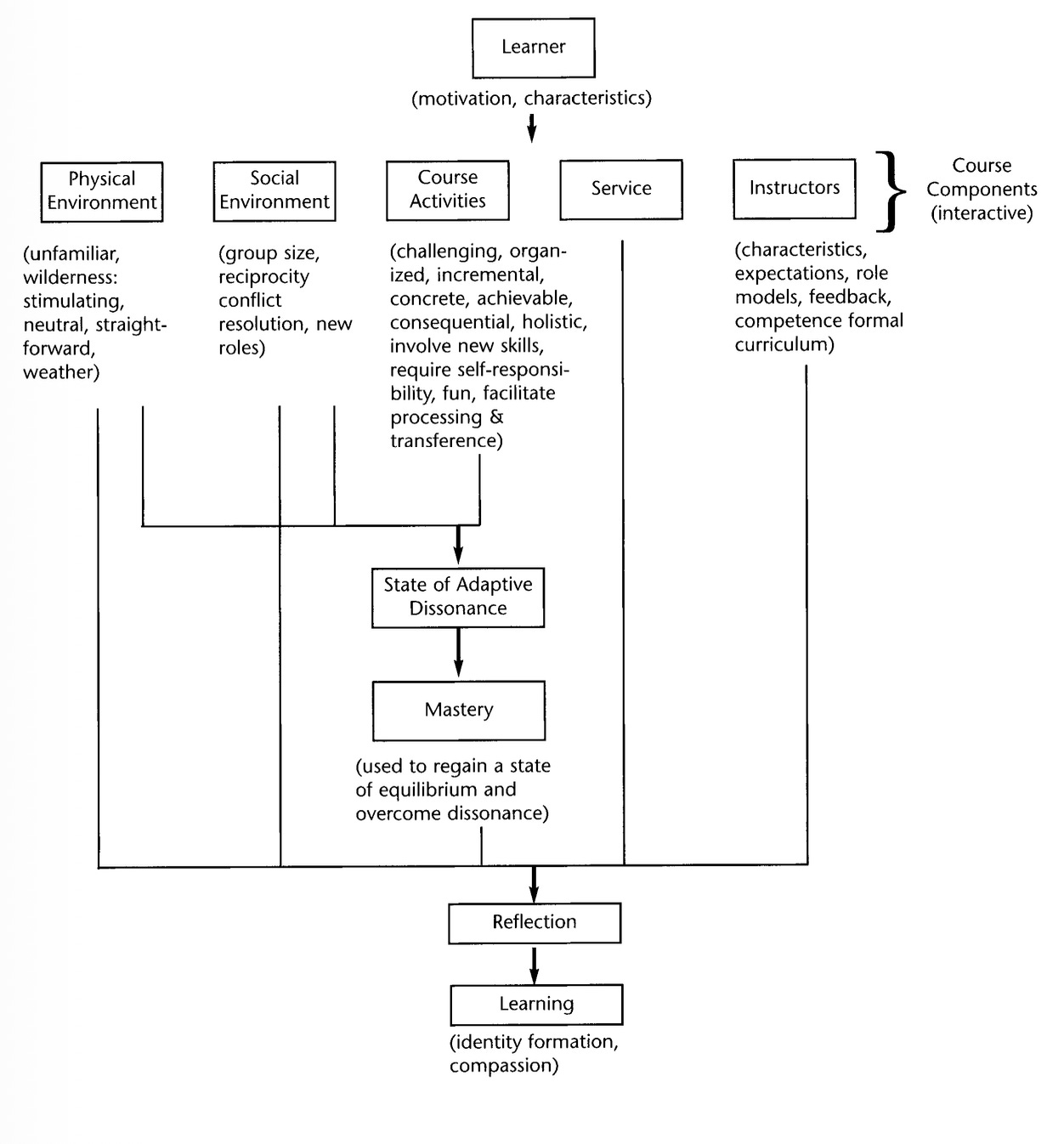
Williams made passing reference to a 2003 paper by McKenzie. This paper, on the learning process during Outward Bound courses, was too late for Higgins to take into consideration; but to my mind it is deserving of more than a passing reference because it presents the complex nature of residential adventure education graphically (see figure, below). The publication doesn’t refer to complexity at all, but it does make the point that course elements interact. The graphic doesn’t need much explanation. It includes the inputs to the complex process – the learner, the physical and social environments, course activities, service and instructors – and towards the bottom, reflection and the emergent learner. The involvement of instructors at a late stage in the process is misleading though, since outdoor instructors are teaching, encouraging, reviewing and reflecting with the learners throughout the residential experience.
Of these three research papers only Higgins 2001 referred explicitly to interdisciplinary learning, yet all the authors were aware of residential course components interacting on the learner during the learning process. However, other papers do refer. In 2012, Allison and co-authors, writing about Scotland, said, ‘It is arguable that outdoor learning, conceived in an interdisciplinary way, might well provide the kind of educationally meaningful links for which recent curriculum initiatives like Curriculum for Excellence have sought.’; and in 2024 Higgins said, ‘Education outdoors has long been a feature of Scottish education in school grounds, locally and at residential centres, and lends itself to practical, innovative interdisciplinary pedagogies’. Allison et al. made a passing reference to complexity to bemoan the fact that at their time of writing pupils had very limited appreciation of the importance of complex problem solving. However, in 2010 Learning and Teaching Scotland had already moved on this and said, ‘The introduction of Scottish Baccalaureates, particularly in Science, at Higher and Advanced Higher together with an interdisciplinary project will offer opportunities for the outdoors to be used as a context for learning.’
Learning in the outdoors is one of the four contexts for learning in the Scottish Curriculum for Excellence not least because it provides opportunities for personal development, and the development of life skills that bear on pupils’ motivations and attitudes towards learning.
Dr. Roger Scrutton has a background in geology and geophysics as a member of academic staff in the School of Geosciences at Edinburgh University from 1974. He is now an Honorary Research Fellow in the Outdoor Education Group at Edinburgh.
Allison, P., Carr, D., & Meldrum, G. (2012). Potential for excellence: interdisciplinary learning outdoors as a moral enterprise. Curriculum Journal, 23(1), 43-58.
Higgins, P. (2001). Learning outdoors: Encounters with complexity. Other ways of learning, 99-106.
Higgins, P. (2024). Nature’s classroom: Tackling the climate and nature crisis through Scottish schools. Resource, Royal Society of Edinburgh, Spring, 2024, 16.
Krathwohl, D.R., Bloom, B.S., & Masia, B.B. (1964). Taxonomy of educational objectives: The classification of educational goals. Handbook II: The affective domain. New York: David McKay.
Learning and Teaching Scotland (2010). Curriculum for excellence through outdoor learning. 28pp.
McKenzie, M., & University, S. F. (2003). Beyond “The Outward Bound process:” Rethinking Student Learning. Journal of Experiential Education, 26(1), 8-23.
Williams, R. (2013). Woven into the fabric of experience: Residential adventure education and complexity. Journal of Adventure Education & Outdoor Learning, 13(2), 107-124.
from NomadWarMachine
from NomadWarMachine

Ben Lomond from Ross Priory flickr photo by NomadWarMachine shared under a Creative Commons (CC BY-NC-SA 4.0) license
I made a tiny pixel character creator called Pixabots. It generates 10,752 unique combinations from four categories — eyes, heads, bodies, and tops — all bouncing on a little idle loop.
This pack is a curated 2,000 of them, ready to use. Free.



Not sure where I saw this, there is a live editor at Pixabots — Pixel Character Avatars which is fun. Could be useful in class I think. Perhaps in Scratch when an uploaded gif is turned into a sprite with a costume for each frame.
from NomadWarMachine

Cotton wool clouds flickr photo by NomadWarMachine shared under a Creative Commons (CC BY-NC-SA 4.0) license
When life gives you sunshine …
Stand outside and drink it in
Breathe it deep into your lungs
And bask in the warmth of the day
Robin Julian presented at the recent interdisciplinary learning conference at Edinburgh University, on the new interdisciplinary pathway for the International Baccalaureate (IB) Diploma Programme extended essay. In this article for the IDL Network, he sets that presentation in context and provides links to further literature.
The International Baccalaureate Organisation, a global leader in international education, has offered, via authorised IB World Schools, its Diploma Programme (DP) to pre-university school students across the globe for over 50 years. Emphasising breadth and depth of learning, DP students take subjects from six subject groups (language and literature; language acquisition, individuals and societies, sciences, mathematics, and the arts) in combination with a mandatory ‘core’, consisting of Theory of Knowledge, the Extended Essay, and Creativity, Activity, Service (CAS). Learning in the DP is inquiry driven, student centred, and based on conceptual understanding.
Cross-disciplinary approaches to learning are embedded in the DNA of the IB, for example, the transdisciplinary themes of the Primary Years Programme (PYP), the interdisciplinary unit of the Middle Years Programme (MYP), and the interdisciplinary pathway of the DP’s academic research paper, the “extended essay”. The DP also features specific courses that integrate disciplines, and it is in this space that we find a new cross-disciplinary innovation, Language and Culture.
In their article published by the Royal Anthropological Institute1, Gabriela Grinfeld and Robin Julian consider the design and piloting of the Language and Culture course in the context of the IB’s cross-disciplinary learning and teaching framework, exploring the integration of studies in language and literature with social and cultural anthropology. As anthropologists, and incorporating their experiences in curriculum design and management, they provide an overview of the development of the new Language and Culture curriculum, highlighting its purposes and challenges, and discussing the value of adopting an interdisciplinary approach as a way to broaden access to anthropology at a school level. They draw from their involvement in the creation of this new pedagogic initiative and from the analysis of testimonies gathered from alumni focus groups.
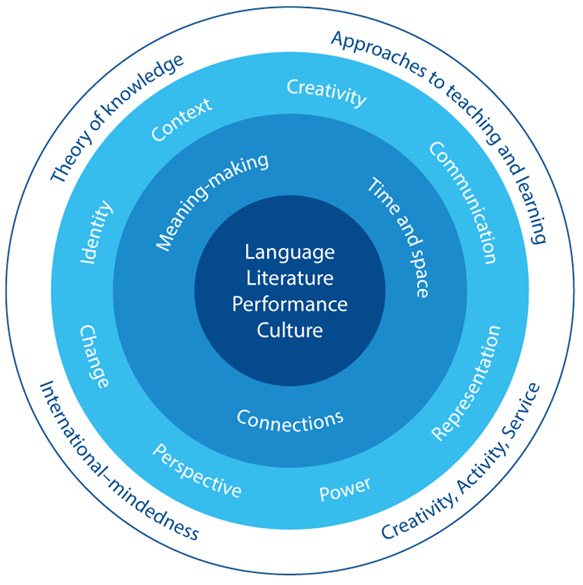
Language and Culture is a cross-disciplinary subject linking language and literature with social and cultural anthropology. It is built on the notion of conceptual learning in which students engage with central concepts of studies both in language and literature and in individuals and societies. In language and culture, students engage with a variety of different text-types in order to explore key notions related to language and culture through them and become flexible, critical readers. The model above portrays the main areas of study of the course, the central concepts in it and the way it relates to the principles at the core of the DP.
Robin Julian is a Curriculum Manager at the International Baccalaureate Organisation and is based in The Hague.
Grinfeld, Gabriela, and Robin Julian. ““Language and Culture”: Strengthening Access to School Level Anthropology through a Cross-Disciplinary Approach to Curriculum Design.” Teaching Anthropology 14, no. 2 (November 2025): 12–27. https://doi.org/10.22582/ta.v14i2.790.
from Joe Wilson @ Experimental Blog
In early May, we convened an online 2 Stars and a Wish Session with members of the Association for Learning Technology across Scotland. We had an active and useful discussion around themes and burning issues - and mostly our hopes for the future.
Scotland’s digital learning landscape is shifting in ways that matter deeply for ALT members. Across AI, open practice, digital capability, and national reform, the sector is innovating, but unevenly; collaboration is strengthening, but still fragile; and the gap between policy ambition and operational reality remains stubborn.
Our next gathering will be hybrid, with both face-to-face and online options. Hosted at Jisc Innovation Hub at the University of Stirling on 12th of June - book here.
Better Assessment Design: A hope that AI disruption finally forces institutions to rethink outdated, surface‑level assessment practices.
Broader ALT Scotland Engagement: A desire to bring more colleagues into the ALT Scotland community, too many are still missing out on the support, camaraderie, and shared expertise.
More Thoughtful Use of AI vs OER: A call for educators to recognise when AI is helpful — and when a well‑chosen OER or public‑domain resource is the better, safer, or more transparent choice.
A More Open System: A strong plea to move beyond “It’s all on SharePoint, unfortunately.” Members want institutions to enable external sharing, embrace open platforms, and reduce unnecessary barriers to collaboration.
The Digital Skills Development Scoping Report (2025) continues to shape conversations about workforce readiness across colleges. It highlights what many ALT members already know: capability is improving, but the system lacks coherence, shared frameworks, and visible institutional and national leadership.
The ongoing Tertiary System workstream has real potential to address this, but only if outputs are openly published and actively used. Transparency here would make a tangible difference to practitioners.
Meanwhile, The Data Lab’s Education Community is emerging as a valuable cross‑sector space for data and AI practice. It’s early, but it could become a key partner for ALT Scotland.
A few additional developments shaping the landscape:
Across all these threads, a few strategic implications stand out:
ALT Scotland’s role is clear: connect, challenge, and amplify — ensuring Scotland’s digital learning community shapes the future rather than reacts to it.
Recording of Session Here
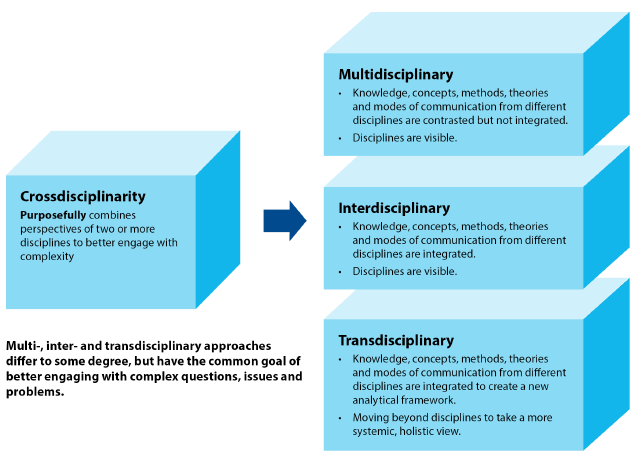
Criminology is a multidisciplinary field. It draws on sociology, psychology, law, neuroscience, philosophy, and more. But multidisciplinary is not the same as interdisciplinary — and that difference matters enormously, both for the researchers in the discipline and for how we teach it.
A multidisciplinary field borrows from many places, but an interdisciplinary one asks how those borrowings fit together. Criminology has historically done a great deal of the former and rather less of the latter. As Gerben Bruinsma argued in his 2015 ESC presidential address1, the field has generated hundreds of crime causation theories without necessarily achieving greater explanatory power and resembles a ‘battlefield of conflicting ideas’. Theories proliferate, but they often operate on different — sometimes mutually exclusive — assumptions, and scholars tend to form camps that rarely interact. The result is fragmentation: a field rich in perspectives but lacking the integrative frameworks to connect them.
This creates a real problem in the classroom. First-year students arrive to find a dizzying array of theories taught week by week, discipline by discipline, with little explicit guidance on how these perspectives relate to one another or why they sometimes conflict. Students default to what feels familiar — typically the sociological approaches they encountered at A-level — and struggle to move beyond description toward genuine critical engagement.
Our paper2, which I published with my PGTAs on the module, published earlier this year in Humanities and Social Sciences Communications (2026), asks a simple question: what happens when you deliberately bring interdisciplinary thinking into a multidisciplinary field? We used a first-year Criminological Theory module at the University of Birmingham as our case study, and the findings suggest it makes a real difference.
We redesigned the module around an explicitly interdisciplinary structure. From the very first lecture, we introduced students to epistemology and the philosophy of science — not as abstract prerequisites, but as practical tools for evaluating the theories they would encounter throughout the semester. We asked: what counts as evidence? What assumptions does each theory rest on? How do different disciplines approach the same question — the question of why crime happens — with different methods and different starting points?
We gave students integration frameworks to work with: end-to-end integration (proposing a causal order between theories), side-by-side integration (recognising that different theories may fit different types of crime), and up-and-down integration (understanding that different explanations operate at different levels of analysis). These frameworks gave students a shared vocabulary for talking about how theories relate to one another — moving them from a multidisciplinary encounter with many perspectives toward an interdisciplinary practice of connecting them.
The module combined lectures, seminars built around structured debates, circle-of-voices discussions, comparison tables, and concept maps, a self-guided online “jigsaw module” developed with Florida International University’s Science and Fiction Lab, and a summative essay that rewarded cross-disciplinary comparison and epistemological reflection.
We conducted semi-structured focus groups with five students and analysed the data thematically. Four themes emerged, and they speak directly to the multi-to-inter shift.
Students described moving from what happened to why it happened — from cataloguing theories to interrogating the assumptions beneath them. As one student, Emma, put it: “I now think about why a crime happened … not just that it happened.” Seminar discussions evolved from what another student, Mary, called “versus debates” into “together debates,” reflecting a growing capacity to hold multiple perspectives in productive tension rather than picking sides.
The jigsaw module — combining criminology, neuroscience, and supernatural fiction — was described as “eye-opening” but also abstract. Students valued the interdisciplinary connections it surfaced but wanted clearer scaffolding. This is a useful reminder: moving students from multidisciplinary exposure to genuine interdisciplinary thinking requires deliberate structure, especially when the task is unfamiliar.
Students consistently praised practical tools — Coleman’s boat for bridging micro and macro analysis, comparison tables, concept maps, and real-world case studies — as the moments where integration became tangible. And they reported a “comfort zone bias” toward sociological theories, asking for more sustained engagement with psychology and biology. The multidisciplinary habits of the field, it turns out, are reproduced in students’ own instincts — which is precisely why an interdisciplinary intervention matters.
Many fields are multidisciplinary in practice — they draw on multiple traditions — without being interdisciplinary in pedagogy. Students in these fields encounter diverse perspectives but are rarely taught how to integrate them, compare their epistemological foundations, or evaluate where they genuinely complement or contradict one another.
Our findings suggest that when you make interdisciplinarity a deliberate, scaffolded part of the curriculum — when you give students the tools and vocabulary to do the integrating themselves — it supports critical thinking across three dimensions: analytical depth, cross-disciplinary synthesis, and reflective engagement. These are transferable outcomes. The specific theories belong to criminology; the pedagogical approach does not.
For anyone teaching in a fragmented or multidisciplinary field, the invitation is straightforward: make the interdisciplinary character of your discipline visible and deliberate. Name the epistemological differences. Give students frameworks for navigating them. Design assessments that reward integration rather than reproduction. And then ask your students what happened — because, as we found, they will tell you.
The full open-access paper is available here: Svingen, Tsirova, and Khalilova (2026), Humanities and Social Sciences Communications.
About the authors
Evelyn Svingen is an Assistant Professor in Criminology at the University of Birmingham, where she teaches criminological theory and serves as Programme Director of the BASc in Social Sciences. She has also served as Program Director for the MRes in Interdisciplinary study and as Academic Lead in Social Sciences at the Liberal Arts and Natural Sciences (LANS) program. Her research spans evolutionary and biosocial criminology, cooperation, and punishment. She is the author of Evolutionary Criminology and Cooperation: Retribution, Reciprocity, and Crime (Palgrave, 2023), winner of the 2024 European Society of Criminology Book Award, and lead editor of Building and Sustaining Interdisciplinary Higher Education: Lessons from LANS (Palgrave, forthcoming).
Egle Tsirova and Ulviyya Khalilova are postgraduate teaching assistants in the Department of Social Policy, Sociology and Criminology at the University of Birmingham, where they co-designed and co-facilitated the module’s seminars and focus group research.
Bruinsma, Gerben. “Proliferation of Crime Causation Theories in an Era of Fragmentation: Reflections on the Current State of Criminological Theory.” European Journal of Criminology 13, no. 6 (November 2016): 659–76. https://doi.org/10.1177/1477370816667884.
Svingen, E., Tsirova, E. & Khalilova, U. Developing critical thinking through the lens of interdisciplinarity: a case study of a criminological theory module. Humanit Soc Sci Commun 13, 211 (2026). https://doi.org/10.1057/s41599-026-06517-4


