Tag Archives: learning

Creative playfulness⤴

from

I submitted a draft of my PhD discussion chapter yesterday. It’s over 7,000 words, so I won’t post it all here! I can never remember the actual title of my thesis – but I am looking broadly about how peer interaction helps to support learning, and I am using CLMOOC (and a bit of DS106) to think about the question. My draft thesis statement at the moment is this:

CLMOOC is best conceptualised as being an affinity space, or affinity network, in which the principles and values of connected learning support and facilitate a participatory culture of lifelong learners who engage in reciprocal and collaborative practices such as remix. This ethos of creative playfulness leads to meaningful learning because members of CLMOOC perceive themselves to be in a safe space where they can experiment and learn new skills without fear of ridicule or censure, and can ask openly for help and advice as they need it. Much of the learning that occurs in CLMOOC is emergent and thus unplanned in one sense, and the structure and ethos of CLMOOC are carefully designed so that they support and facilitate this emergent learning. However, although this structure is carefully designed, this design is not immediately obvious.

I’ve done various types of analysis – some social network analysis (using TAGS), and a textual analysis of some CLMOOC tweets. To do this, I focused on the 2016 summer pop-up, as looking at the 40K tweets I have in my TAGS database would have taken me years. My summary of that analysis is this:

CLMOOC is a highly connected, non-hierarchical community of lifelong learners with an ethos of social justice who support each other and learn through creative play. In summary, CLMOOC has the following features:

  • Connected community: the social network visualisations in particular show that CLMOOC is a highly connected community of learners, and the thematic analysis shows that many members feel a sense of belonging and being connected to each other;
  • Communicative conversations: the content analysis shows that many of the conversations in CLMOOC are more than just informal chit-chat. They are:
    • highly cognitive and meta-cognitive: members talk about teaching and learning and consider how to apply what they are learning to their own teaching practices;
    • highly social and supportive: members praise each other, are not afraid to show their feelings for each other and their appreciation for what others are doing;
  • Creative and collaborative: the thematic analysis shows that CLMOOC is a maker space where participants engage in reciprocal creative play and that this leads to serendipitous and surprising happenings and emergent learning.

I am calling CLMOOC an affinity space, or affinity network, based on my reading of writings by James Paul Gee and Mimi Ito (especially the book some of us recently read together), and characterising the interactions that we engage in as HOMAGO. In order to explain this, I’m adding some examples of the sorts of collaborative and reciprocal activities we play around with. I’m also adding pictures to make it look pretty (all CLMOOC designed with CC licences, of course. At the moment my examples are:

  • Off the cuff play: I’ve used our giffing around as an example here,
  • Volunteer suggestion: I’ve used the badges from CLMOOC 2016, and Ron’s artwork,
  • Shared practice: I thought Silent Sunday would be good here. with a collage of a few pf the pictures,
  • Collaborative: I’ve chosen Story Jumpers for this, with a pic of Miss Direction,
  • Transcending the virtual: well, the postcards have to be mentioned, don’t they? I have a pic of my pin board to illustrate this,
  • I have not added this yet, but I will write something aboutdaily rituals – either the daily creates from DS106, or the daily doodles some of us have been drawing.

I’m also suggesting that the broad values we subscribe to are those of connected learning: that is, learning that is socially connected, interest-driven, and oriented towards educational opportunity.

In the next section, I’m going to look at the design of CLMOOC, using papers written by Anna, Christina, Mia and Stephanie as a starting point.

So what do you think? Does this sound like CLMOOC to you? What have I missed out? What would you want me to say about CLMOOC?

The Future of Learning⤴

from

“Education is not preparation for life; education is life itself. Education, therefore, is a process of living and not a preparation for future living.” Dewey, Democracy and Education.

I’ve been thinking a lot about resilience recently.

Not as the ability to spring back up when knocked down (though that can be a good thing).

But as the ability to adapt, to look at a new situation and think about how one can apply one’s existing skills.

resilience (n.)
1620s, “act of rebounding,” from Latin resiliens, present participle of resilire “to rebound, recoil,” from re- “back” (see re-) + salire “to jump, leap” (see salient (adj.)). Compare result (v.). Meaning “elasticity” is from 1824.

There’s no jobs for life now, we are frequently told. Bring on life long learning.

Transferable skills.

Graduate attributes.

Resilience.

Buzz words.

Life long learning is an attitude.

#CLMOOC, #DS106, #LTHEChat.

The future of learning is networked.

A post for OpenBlog19

Onnotation⤴

from

I see everybody’s annotation. I applaud Terry’s innotation. Here I raise you all with my onnotation.

How I did this:

  1. Screen capped Terry’s post and saved it to my PC
  2. Drew a canary bird and scanned it to my PC
  3. Opened both in GIMP
  4. Cut around the tweety bird with the lasso tool
  5. Pasted as a layer into the screen cap image, positioned where I wanted it and exported the image with a new file name
  6. Moved the tweety bird and repeated, again changing the file name (onnotation1, onnotation2 …).
  7. I did this six times in total.
  8. Closed all the windows
  9. Opened all of the (six) images of bird-on-blog that I had saved as layers
  10. Exported as gif, tweeking the settings to get the animation to the speed I wanted (I chose a 200 millisecond delay).
  11. Saved to my PC.

A picture is worth 1000 words⤴

from

150 words

If a picture is worth 1000 words, I reckon I am giving you 150 words worth in the above image.

How I did this:

  1. Opened GIMP and found an image I liked from my files.
  2. Used Filters – Render – Patterns – Grid to impose a grid on the image.
  3. Dragged the width up so there were exactly 4 rows of boxes
  4. Used the rectangular tool to make it a 5×4 grid
  5. Opened a new window and pasted this in as a new layer
  6. Used the lasso tool to cut out 3 squares (proportion: 150/1000 words)
  7. Opened a new window and drew a 5×4 grid in above
  8. Copied the part of the image I had selected with the lasso  tool and added as a new layer
  9. Exported
  10. Uploaded to Flickr

Word limits⤴

from

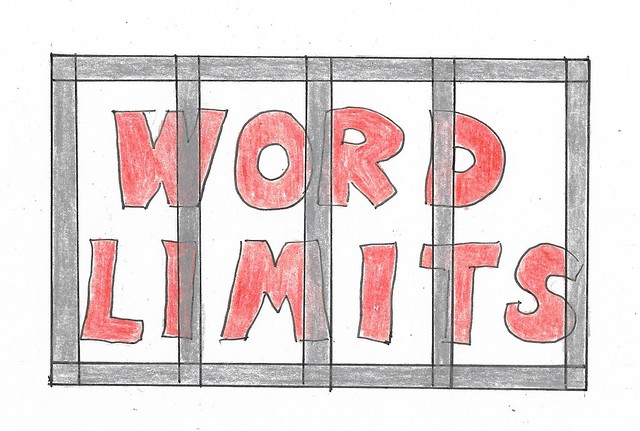
word limits

Busy days – holidays ending, a conference to prepare for. Not enough space to write. Still, I watch the conversations from the sidelines. Words constrain, words are constrained.

How many words are pictures worth? Nick’s post inspires me.

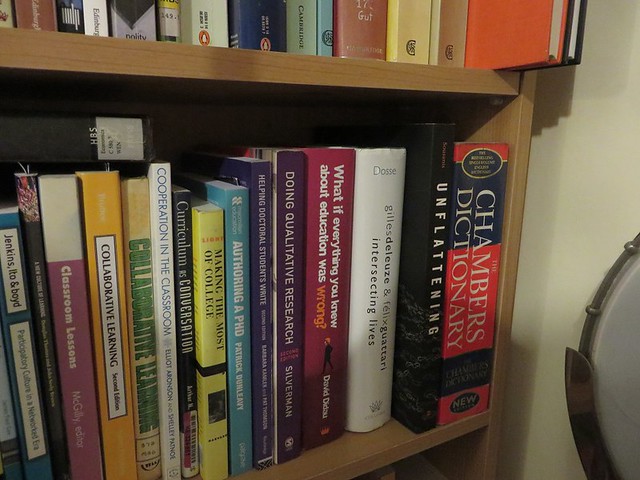
Bookshelves

I look over at my bookshelves to see if I still have a dictionary. I do, and am amused to see Nick’s book next to it. Serendipity again. Sorry, Wendy – I don’t feel like making  a word salad today.

MYOB⤴

from

  1. Find a photo (a bunch of tulips, opening and dropping their petals quickly in this heated room)
  2. Open it in Paint (it’s easy, and familiar)
  3. Spend ages deciding what words to use (in the end I Google “flower, quote”)
  4. Paste a few words onto the image and save
  5. Undo, paste the next few words, save with a new file name
  6. Repeat for the whole quote
  7. Head over to Giphy.com
  8. Upload all of the images and make a gif
  9. Save to PC
  10. Upload to WordPress and add to blog post.
  11. Publish

The peace of silence⤴

from

There’s so much emphasis at the moment in active learning, often accompanied with the (implicit) belief that this needs to be a collaborative activity. I think both are important, and also enjoyable – but sometimes peace and solitude are just as productive, if not more.

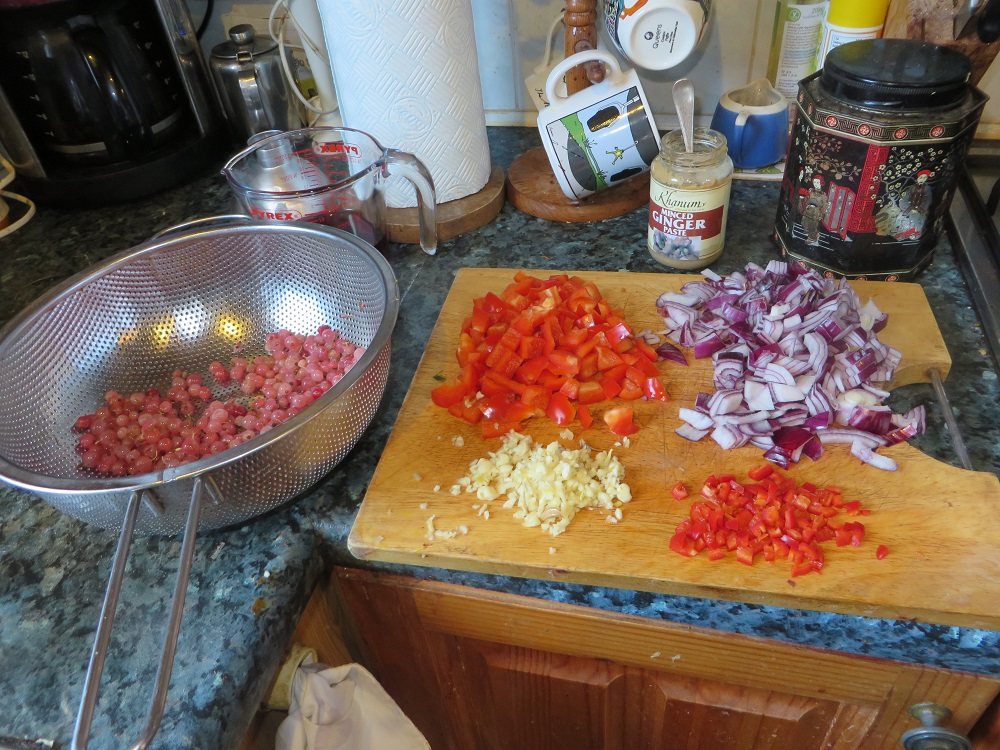
Today I have spent time in my kitchen away from social media  – chopping fruit and veg for relish, stirring together chocolate and nuts for fudge, churning yogurt and vanilla for ice cream and then stirring the remainder of the Christmas pudding through it. As I cooked, my mind wandered – thinking about PhD stuff, and presentations I need to write, and things I have read over the last few days.

Bacon says somewhere that there are three elements to learning: reading, writing and discussing. But of course there’s another – thinking is also important, and I worry that this vital element is being overlooked.  Today I made space for it.

Joining up the dots?⤴

from

We’re all thinking about dots. Sheri reminds us that this is not a new conversation. Terry responds and starts teasing out the metaphor. Dots and lines, or overlapping circles? Maybe both, maybe more. We don’t have the words to represent to ourselves this complex conceptual scheme. (A recurring memory: in a philosophy of science lecture we are described as three dimensional slices of four dimensional space-time worms.)

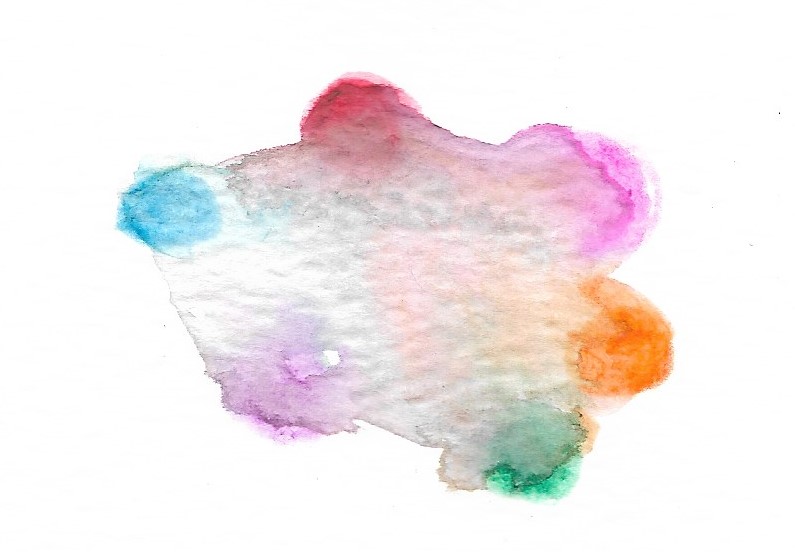
Wendy sees pictures in poems. I see pictures in my head – pictures I can’t translate onto paper because they are too transient – shape shifting wisps of mental smoke that drift at the edge of my mind. Blobs of ink dropped into water – blending with others yet keeping their shape. I try to represent what I see, but I just make a mess.

We bounce ideas off each other and they ricochet off in unexpected tangents (Wendy, again). (Another memory from philosophy of science – Newton’s “billiard ball” theory of causation.)  A wirearchy, not a hierarchy.

Reading this week…⤴

from

Here are some things I thought worth putting to one side via pocket this week.

I’m reading lots of things about how we learn and the best ways to get children to learn, this blog post is all about Rosenshine’s principle of instruction.

I’ve also been reading a lot about tier 2 vocabulary and think it’s definitely an area I’d like to develop within my class (and I’ve set about it in the last couple of weeks in a basic way) Here are ways to teach tier 2 vocabulary.

Estimation in maths. I keep meaning to do it but… Well there are lots of online resources to give children practice in it, and linked to a bit of number talks these make a great start to a maths lesson. Here’s one I noticed this week.

Good tips on mixed ability maths teaching here from Third Space Learning. You’ll need an e-mail address to get them, but I reckon they’re worth a read.

Clevedon
Image – James Clay.  https://www.flickr.com/photos/jamesclay/ 

Miscommunication⤴

from

Close up, blurry image of a pink flower

Random moments of misconnection:

George, a Chinese UG, tells me how hard it is to study independently when there is so much he does not understand in lectures. He struggles to understand aurally and finds it hard to use lecture notes to find out what he missed because he … does not know what he missed. We talk about strategies, I suggest some support networks. I tell him not to struggle alone.

Later that day some of us struggle in an LTHEChat as the terminology used by the question setter is obscure. I laugh with my network. It does not matter to me that I am not understanding as nothing hangs on it. Still, I feel frustrated that an opportunity for a conversation was lost.

Unboundeq runs scavenger hunts. These are FUN! We share blurry, close up pics of everyday objects with each other and try to guess what they are. It’s hard. I realise how difficult it is to anticipate what others will and will not find obvious.

We also talk about ALT-text, and realise how hard it is to add this in a way that makes visual activities inclusive. I don’t feel I have an answer to that.

There’s a lot to process here.