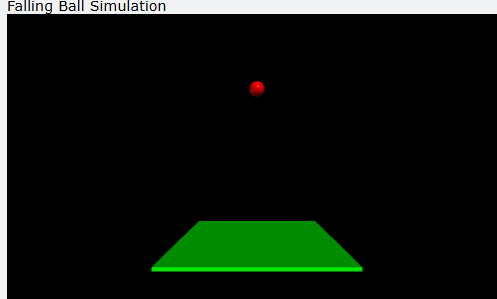
This is a vpython simulation graphing the potential and kinetic energies of a ball released from a height.
What do you notice about the potential energy and kinetic energy as the ball falls?
view: full | short | titles only
from Mr Mallon @ Helpmyphysics
This is a vpython simulation graphing the potential and kinetic energies of a ball released from a height.
What do you notice about the potential energy and kinetic energy as the ball falls?

I was tagged by Mags Amond for
tagging you next for a #TeachMeet20 looking back / looking forward post @johnjohnston
TeachMeet, a meet up for teachers, self organised and designed to keep it grassroots. The Wikipedia page is not too far from the mark. Started 20 years ago!
So I looked back. I’ve 38 posts tagged teachmeet here. But if I search for TeachMeet I find 124 posts. Searching my Twitter export finds over 300 matches. So TeachMeet has been on my mind over the years.
What I was thinking about 10 years ago: TeachMeet10: time for a TM-Reboot in Scotland?
For me TeachMeet is part of one of the most exciting periods in my teaching life. My already well developed obsession with using technology in teaching had exploded with the internet, blogging, podcasting & RSS. Twitter was on the horizon. As a class teacher I was getting to go to conferences!
Ewan MacIntosh was the main instigator of the 2006 ScotEduBlogger meet-up. After the second day of e-live conference we were all heading off to the Jolly Judge, a pub with WiFi! So excited.
The development of TeachMeet has been well covered. Mags has done an amazing job, for example.
I started writing some notes about TeachMeet’s past, but didn’t get past some bullet points, I am going to post them otherwise this post will take the rest of the year. Views very much IMO.
TeachMeet withered somewhat in Scotland, I am not sure why. Maybe things bubble up for a while, serve their purpose and then don’t anymore. Different times might need different solutions. Pedagoo felt to me like an evolution of TeachMeet to some extent. Its domain has gone now. My fingers are far from the pulse of Scottish education.
I am probably not the best person to ask. When the name was being discussed I held fast to Scots EduBloggers Meetup. That lacked a bit of inclusivity and was somewhat shortsighted 😃.
To me TeachMeet felt as if it was in the same category as Blogging, Creative Commons, RSS, Open Source and other things that promoted freedom and sharing. Online interactions seem a lot less innocent now than they did then. I still believe these things are important.
Lots of educational CPD now seems to be in Teams or Zoom, this misses the serendipity involved in a face to face meeting and the built in talk to your neighbour TM principle.
Other, to me, important aspects of TeachMeet which should be carried forward include: a relaxed social feeling; the flattening of hierarchy; the centrality of classroom practice and fun. We could do without freebies; involvement of leaders in setting the agenda, although they are more than welcome to share their classroom experience and technology and services without classroom practice.
The most important for me would be the selection of speakers at random, hopefully with more speakers than spaces. TeachMeeters should be willing to go along to listen to others and open the opportunity to share if it arises. Not being guaranteed a spot might lead to more spontaneous presentations, serendipity and perhaps a reason to organise the next one.
Given I’ve now retired from teaching, I do not suppose I’ll be at another TeachMeet I will alway be interested in seeing how it goes.
I have the teachmeet.scot domain. I don’t want to keep paying for it or hosting the inactive site2. I’d love to give it to someone else who would care for it in the right way.
Hello :)
I hope you are well, and that the heading of this newsletter didn’t cause too much alarm! I am going to discuss an important phenomenon called retrieval-induced forgetting. It’s useful to know about, but rather than being a problem, it makes retrieval practice (see update #36) all the more valuable.
Retrieval-induced forgetting happens when engaging in retrieval practice for one memory causes other competing memories to be ‘forgotten’ (or rather, less likely to be retrieved in future).
For example, if you spend some time recalling fact A in response to question A, you may be less likely, when prompted again with question A, to recall fact B.
The idea is set out in several research papers by the Bjorks, Benjamin Storm, Michael Anderson and others. This is one example:
Anderson, M. C., Bjork, E. L., & Bjork, R. A. (2000). Retrieval-induced forgetting: Evidence for a recall-specific mechanism. Psychonomic Bulletin & Review, 7(3), 522–530.
The idea of forgetting some facts when we practice others might sound rather alarming at first. When I first read about retrieval-induced forgetting I was concerned... could this mean that using retrieval practice causes a learner to lose other knowledge? That sounds terrible for students and their teachers!
But while it was all new and surprising to me at first, it’s not actually a problem at all. Indeed, it’s a good thing that some information becomes harder to remember when we learn, because that means that wrong answers are suppressed.
How can forgetting information be helpful? It’s worth considering what would happen if we didn’t ever forget anything at all.
Consider, for example, trying to recall where you parked your car. It would be incredibly unhelpful if every instance of parking were retained with equal strength in your memory. You would have no idea where to look! This shows that forgetting can be useful; some things ought to be forgotten.
Another example occurs when information is updated. Imagine a student was learning about the politics of Nigeria. In 1991, Nigeria made Abuja its capital; if the student incorrectly believed that the capital was still Lagos, they would need to update their knowledge. But then, every time they retrieve the correct (new) capital city during classes or discussions, it would come more readily to mind, until this response became automatic. By the same token, it would be less likely that the student would incorrectly remember or mention the former capital. They haven’t actually forgotten about the existence of Lagos, though! They just won’t retrieve that memory in the wrong context.
A similar situation arises in lots of scientific and political events – in short, anything where we need to forget outdated information.

If you’ve ever struggled with a search engine or perhaps searched unsuccessfully for a file on your computer, you know how easy it is to get the wrong search result.
This comparison shows two things. Firstly, again, a degree forgetting can be useful in focusing our thinking. Because of retrieval-induced forgetting, we are better prepared for what we need, and less likely to recall loads of useless and irrelevant information.
Also, it shows that human memory is rather unlike computer storage. Computers store each file separately, but as discussed on previous updates (for example, update #59), humans store long-term memory in schemas, with memories linked to other relevant information. It is this broader context, the links and connections, that makes our knowledge usable in everyday situations – not just how much we know.
I hope that was interesting! Have a great week.
Jonathan
Last time: Getting to Grips with Cognitive Science and Education

Please note that my slides and similar materials are shared under a CC BY-NC 4.0 license. This means you can use or adapt them with attribution for non-commercial purposes. If you wish to use my materials for other purposes, feel free to get in touch.
p.s I do not and will never use GenAI to produce these updates. They are human written.
from NomadWarMachine

Ross Priory flickr photo by NomadWarMachine shared under a Creative Commons (CC BY-NC-SA 4.0) license
from goodenoughmum @ lenabellina
Amongst all the awfulness
Amongst all the bad news
Amongst all the finger-wagging and
Narrow-minded “helpfulness”
On the platforms which are meant to be
Social and friendly….
….we sometimes need to look to strangers
For signs that the world is full of good.
When things go wrong and
All it takes is a look
For someone to understand
To help
To bring some tiny act of kindness
That, for a moment
Fixes everything.
Across nationalities
Across languages
Across all that divides us.
I see and thank you all.


from NomadWarMachine
It’s been a year since you died, mum. I still miss you, so much more than I realised I would.
Happy memories, so many memories. Now time has peeled away the layers I notice how so much that I do was taught by you. Every day there is something to remind me of you.
Time doesn’t heal grief, it doesn’t diminish it. Today, as I so often do, I look up at the framed copy of the poem I read at your funeral and I smile with a tear in my eye.
When I am an old woman I shall wear purple
With a red hat which doesn’t go, and doesn’t suit me.
And I shall spend my pension on brandy and summer gloves
And satin sandals, and say we’ve no money for butter.
I shall sit down on the pavement when I’m tired
And gobble up samples in shops and press alarm bells
And run my stick along the public railings
And make up for the sobriety of my youth.
I shall go out in my slippers in the rain
And pick the flowers in other people’s gardens
And learn to spit.
You can wear terrible shirts and grow more fat
And eat three pounds of sausages at a go
Or only bread and pickle for a week
And hoard pens and pencils and beermats and things in boxes.
But now we must have clothes that keep us dry
And pay our rent and not swear in the street
And set a good example for the children.
We must have friends to dinner and read the papers.
But maybe I ought to practise a little now?
So people who know me are not too shocked and surprised
When suddenly I am old, and start to wear purple.

After a few years of laying fairly fallow I’ve got a bit of time to work on ScotEduBlogs.
The site had chuntered on mostly under its own steam for a while. Mostly auto-updating, all I need to do was to keep the site & domain up and running.
ScotEduBlogs is a site that aggregates and shares posts from Scots Educational Blogs running since 2007. It also posts out links, for the original posts, to mastodon and bluesky.
I’ve retired from teaching this summer so hopefully have a bit more time to promote the site. I’ve just added a few sites into the mix:
I am hoping to find some more, these sites have certainly increased the diversity of posts aggregated.
I’d like to add more voices to the site. If you know an educational site with a feed (Blogs or substacks for example) please let me know about it. If you blog about education send me your site. You can fill in the form or send me an email.
Please pass this on, I am a lot less networked than I was in the noughties.
One of the main problems with SEB that is run by me. Andrew McLaughlin pointed this out a while back.
this currently hinges on centralised moderators to update and organise the aggregator.
I cannot say I disagree. I’ve never turned down a request for addition other than sites that, don’t support RSS or ones that are not about education in Scotland. Having seem the number of spam pages that have been created on the teachMeet Wiki I don’t think automatic inclusion is an option. But there is a need for more involvement, I’ve had ideas about that, and am open to discussion.
Hi all :)
This is rather a short update, as I have been rather occupied with some family matters, but I wanted to let you know about a couple of upcoming events that I have organised. One is a professional learning session for teachers and other educators, running on Wednesday 19 November 2025, titled:
Getting to grips with cognitive science and education
This is in person in Glasgow, and as it’s run via my university, there is a small fee. If you’re interested despite those barriers, you can find out all about it and sign up via the link below:
Strathclyde Institute of Education: Career-long Professional Learning
Here’s a brief blurb:
This session will provide a beginner-friendly primer on cognitive science as it applies to education. It will then move on to clear and actionable strategies for translating the most robust research findings into classroom-ready techniques, along with guidance on how to keep appraised of new research evidence while remaining critical. Finally, we will focus on four of the most widely-recommended and easy to apply evidence-based strategies: retrieval practice, spaced practice, dual coding and interleaving.
If you scroll down on the same link, you can see that I’ll be running other sessions in January-March (on assessment/feedback, questioning, and study skills). Many of my departmental colleagues also run sessions on a range of topics.
It would be amazing to have some of you come along to any of the sessions! Please do reach out if you are planning to come along, or if you have any difficulties registering.
Also in November – a free event! I’ll be running an academic seminar on the following theme: when should education be easy, and when is difficulty desirable?

The seminar will feature several speakers all looking to contribute to our understanding of where learning benefits from simplification, and where difficulty is the preferable course. Again, a bit of the blurb:
Example questions include the level of challenge in the curriculum; pedagogical choices over scaffolding and/or differentiation; resistance or discomfort inherent in transformational learning; issues around the use of technology in simplifying or easing educational processes. Many other issues could also be considered via the lens of ease/support versus difficulty/challenge.
I am anticipating a wide range of theoretical perspectives to be shared – all educational, but not necessarily drawing on cognitive science.
More details here:
Educational ease and desirable difficulties (Thursday 6th Nov, 2025)
If you want to come along as a delegate and enjoy a bit of intellectual stimulation, you’d be most welcome (no charge for the seminar, and refreshments are provided, though spaces are limited). Sign up here:
Ease vs. Difficulties (Eventbrite link)
I’ll be back with a more substantial topic next time, but in the meantime, perhaps I can share this blog on learning vs. performance that was posted on the BERA site – I’ve included it in an update before, but that was way back in update #7, so it’s been a while!
Have a great week,
Jonathan
Last time: Retrieval Practice and Generative Learning: Classroom Implications
Please note that my slides and similar materials are shared under a CC BY-NC 4.0 license. This means you can use or adapt them with attribution for non-commercial purposes. If you wish to use my materials for other purposes, feel free to get in touch.
from NomadWarMachine

Adam Smith flickr photo by NomadWarMachine shared under a Creative Commons (CC BY-NC-SA 4.0) license
from Blue Collar


