For TDC5159

Cat coins flickr photo by NomadWarMachine shared under a Creative Commons (CC BY-NC-SA 4.0) license
view: full | short | titles only
from NomadWarMachine
For TDC5159
Cat coins flickr photo by NomadWarMachine shared under a Creative Commons (CC BY-NC-SA 4.0) license
from NomadWarMachine
Overheard on the radio this morning: “What’s the secret of feeling young?”. Here’s my response for TDC4148

56/365 Cagney, guardian of the landing flickr photo by NomadWarMachine shared under a Creative Commons (CC BY-NC-SA 4.0) license
What’s the secret of feeling young?
Playing chase with Cagney the cat –
running round and round the room
Standing bare headed in the rain –
catching rain drops with my tongue
Buying boxes of pretty crayons –
and doodling throughout boring meetings
Putting on my welly boots –
and kicking through drifts of Autumn leaves
Turning up the radio to full blast –
and pogoing in my seat to my favourite tunes
And never, ever looking in a mirror –
or at my own image in online meetings.
from NomadWarMachine

Worm flickr photo by NomadWarMachine shared under a Creative Commons (CC BY-NC-SA 4.0) license
Wriggle, wriggle, munch
Wriggle, wriggle, chew
Composting again
It’s all I have to do
Munching through the veggies
Working through the ground
Slithering and sliding
All without a sound
For most of my working life, I’ve been fascinated by how ideas become real. In the last century, when I taught mass communications and videography, the creative process was equal part excitement and endurance. We storyboarded ambitious scenes, imagined sweeping camera moves, and dreamed complex scenes. But we then we spent hours in the editing suite wrestling with sync, sound, and timing. The gap between what we envisioned and what we produced was often wide, and closing it required patience, skill, and a fair bit of stubbornness. That has since changed has technology moved on.
I followed a similar path with early computing. Tools like WordStar, HyperCard, and QuarkXPress opened new creative possibilities, but they also demanded a working knowledge of code. I spent a lot of time getting to a working if not optimum solution.
When the web arrived in the 1990s, I used those skills to build simple pages for students. But as blogging platforms and user‑friendly tools emerged, the need to hand‑craft everything faded. Even when I later managed large coding projects, I left the actual code to the coders.
Today, that landscape around coding has shifted again and dramatically.
We are now in an era where AI allows us to be more ambitious than ever. “Vibe coding”, using natural language to shape an application into existence, it represents a genuine paradigm shift. Instead of wrestling with boilerplate or scaffolding, we can focus on the logic, the user experience, and the problem we’re trying to solve. The AI does a lot of the magic and handles the heavy lifting.
If you are automating a manual workflow, prototyping a weekend idea, or simply tidying up a webpage, vibe coding lets you move from concept to working prototype with unbelievable speed. It’s powerful even if you never intend to write a line of code yourself. You can test ideas, explore possibilities, and hand a validated proof‑of‑concept to professional developers when you’re ready. Anyone really can have a go at this.
I’ve been experimenting with this through the Glasgow No Code Initiative, which has taken me “back to college” in the best possible way. While the classes use Replit, I’ve tried a range of tools, and the experience has been both a refresher and a revelation. It's been good too to catch up with some fellow like minds from Glasgow's digital community who have signed up for the course.
Interesting that course has been bought in by Glasgow region - I hope lots of academic and support staff have signed up and are able to deliver future iterations.
I’ve built a simple app that checks a community hall’s availability via Google Calendar and allows users to make a booking, something that would once have required a small team, a long timeline and/or would have cost money if we'd bought an off the shelf tool.
Regardless of the tool, your results depend on the clarity of your instructions. There are four principles that consistently produce better outputs from tools like Replit , Claude or ChatGPT:
Avoid unnecessary detail. Tell the model exactly what it needs to know.
Put the most important constraints at the top of your prompt. Structure matters.
Tell the AI what to do, not just what to avoid. Positive instructions reduce ambiguity.
Specificity narrows the “hallucination gap” and leads to more reliable results.
And if the model gets it wrong? Refine your prompt. Iteration is part of the process, just as it always was in the editing suite.
What excites me most is how familiar this all feels. The tools have changed, but the creative impulse hasn’t. We’re once again at a moment where the imagination leads, and technology follows. The difference now is the speed: the distance between idea and prototype has collapsed.
If I was back in the classroom I'd be showing all learners how to use these tools to develop apps for themselves.
At a very simple level it quickly unpacks how a full stack app is built and how the different files and folders interact. I'd use it as a way to get learners to start understanding coding.
For educators, community builders, and anyone with a spark of curiosity, this is an extraordinary opportunity. If you have an idea, even a small one, give it a go. You might be surprised by how quickly it becomes something real.
And if the Glasgow No Code Initiative runs again, it’s well worth signing up.
from NomadWarMachine
Choose art. Choose remix. Choose bricolage. Choose #4life. Choose waking up every morning and wondering what the daily creative challenge will be. Choose ignoring the instructions and doing what you damn well like. Choose looking at Mastodon and marveling over the other remixes. Choose finding quirky websites and submitting them as TDC suggestions. Choose telling all your friends and family about the TDC. Choose doing the TDC even if nobody else does. Choose bricolage. Choose remix. Choose Art. And make art, dammit. #4life
For TDC5156
from NomadWarMachine
Primary and secondary teachers are warmly invited to apply for a funded place at the Interdisciplinary Learning and Teaching Conference 2026. We are delighted that the Royal Society of Edinburgh has generously agreed to cover conference fees for a number of school teachers who wish to attend.
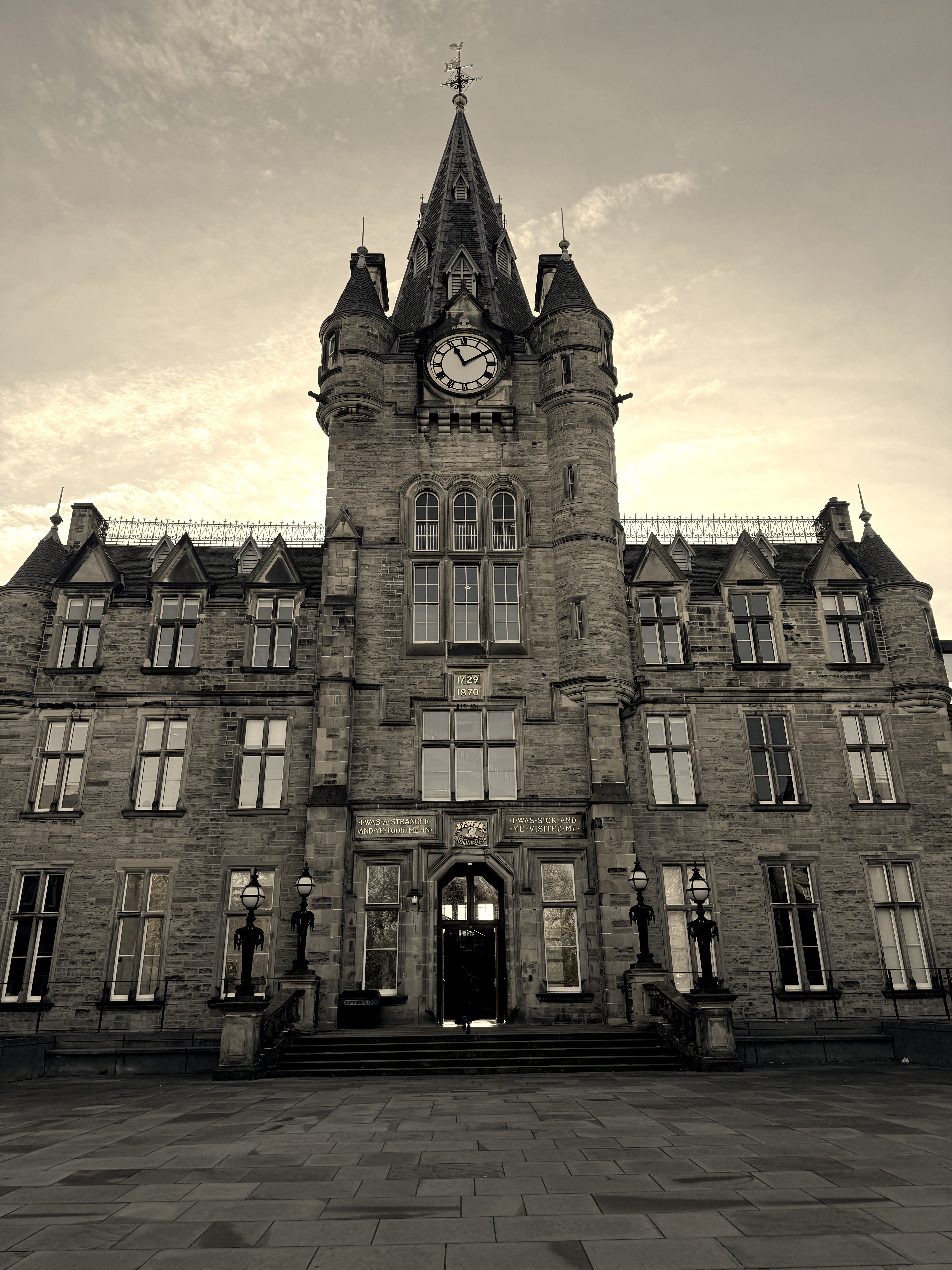
The conference will take place on 16 April 2026, from 9:00 AM to 5:30 PM (BST) at the Edinburgh Futures Institute, part of the University of Edinburgh. This year’s theme, Interdisciplinary Pathways: Engaging Learners and Creating Opportunities, focuses on how interdisciplinarity can be supported, structured, and developed across diverse educational contexts. Particular attention will be given to learning environments before, within, and beyond higher education.
The conference is open to everyone involved in interdisciplinary learning and teaching, both inside and outside university settings. We are especially keen to welcome educators working in primary and secondary schools, alongside students, early-career researchers, and community partners. The day offers a valuable opportunity to explore innovative approaches, share practice across sectors, and take part in conversations about how we create meaningful, connected learning experiences for students of all ages.
Thanks to the support of the Royal Society of Edinburgh, selected teachers will have their conference fees fully covered. Please note that this bursary applies to registration costs only; travel and subsistence expenses cannot be funded. As places are limited, we kindly ask that you apply only if you do not have access to alternative sources of funding.
If you would like to apply for a bursary, please complete the application form.
Further details about the conference programme.
If you have any questions, please contact David Overend at David.overend@ed.ac.uk.
We very much hope you will consider applying and joining us for what promises to be an inspiring and forward-looking day of discussion and collaboration.
from NomadWarMachine

Knightswood park flickr photo by NomadWarMachine shared under a Creative Commons (CC BY-NC-SA 4.0) license
from NomadWarMachine
Maps of Glasgow created for TDC4143 with this Minimalist city map posters maker

Glasgow Map (Autumn Filter) flickr photo by NomadWarMachine shared under a Creative Commons (CC BY-NC-SA 4.0) license

Glasgow Map (Copper Patina Filter) flickr photo by NomadWarMachine shared under a Creative Commons (CC BY-NC-SA 4.0) license

Glasgow Map (Neon Cyberpunk filter) flickr photo by NomadWarMachine shared under a Creative Commons (CC BY-NC-SA 4.0) license
from NomadWarMachine
For TDC5152. Highly derivative, here’s my tickling adult obviously based on my memory of Mr Tickle.

Mr Tickle flickr photo by NomadWarMachine shared under a Creative Commons (CC BY-NC-SA 4.0) license

