Primary and secondary teachers are warmly invited to apply for a funded place at the Interdisciplinary Learning and Teaching Conference 2026. We are delighted that the Royal Society of Edinburgh has generously agreed to cover conference fees for a number of school teachers who wish to attend.
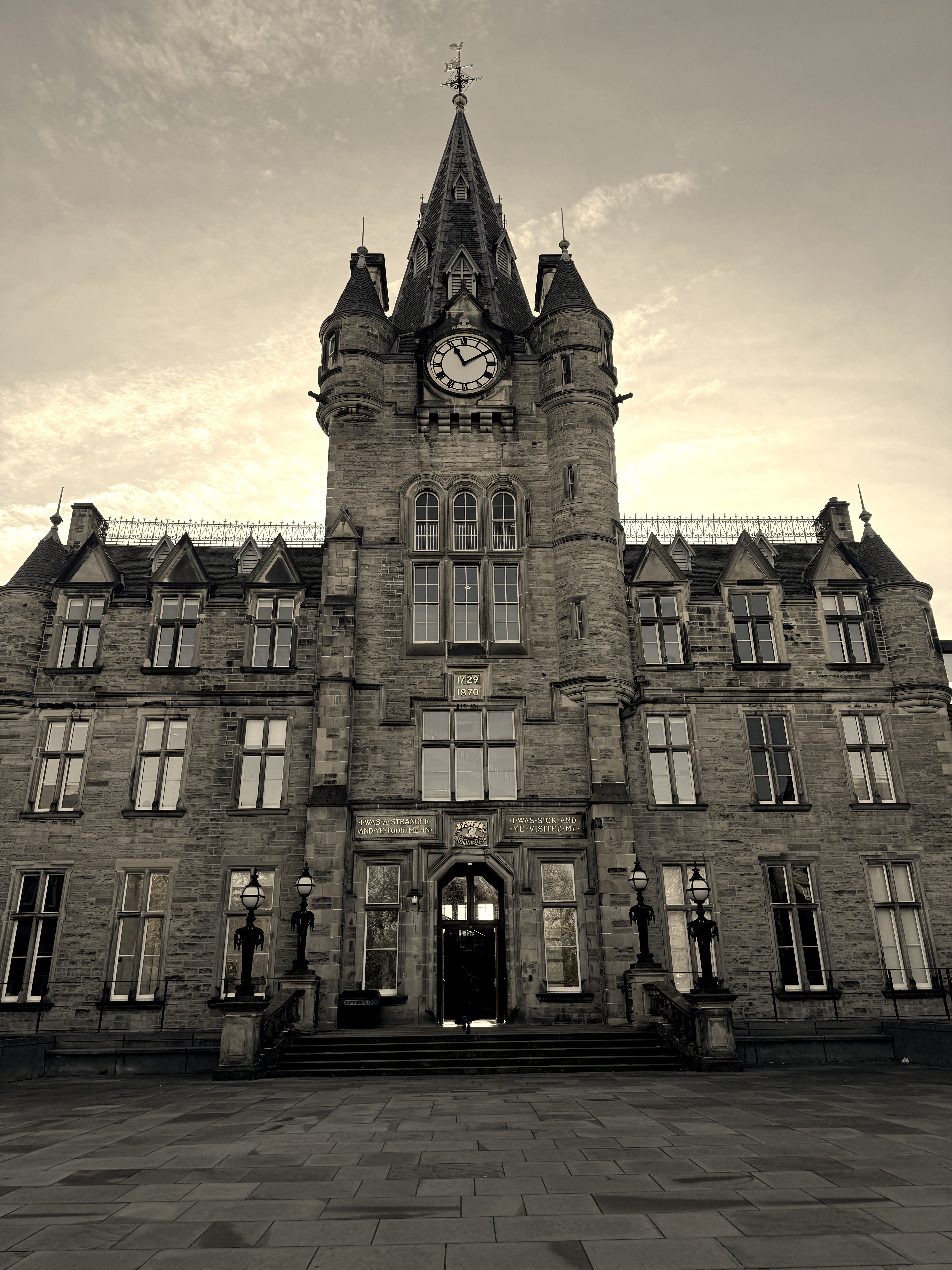
the Edinburgh Futures Institute
The conference will take place on 16 April 2026, from 9:00 AM to 5:30 PM (BST) at the Edinburgh Futures Institute, part of the University of Edinburgh. This year’s theme, Interdisciplinary Pathways: Engaging Learners and Creating Opportunities, focuses on how interdisciplinarity can be supported, structured, and developed across diverse educational contexts. Particular attention will be given to learning environments before, within, and beyond higher education.
The conference is open to everyone involved in interdisciplinary learning and teaching, both inside and outside university settings. We are especially keen to welcome educators working in primary and secondary schools, alongside students, early-career researchers, and community partners. The day offers a valuable opportunity to explore innovative approaches, share practice across sectors, and take part in conversations about how we create meaningful, connected learning experiences for students of all ages.
Thanks to the support of the Royal Society of Edinburgh, selected teachers will have their conference fees fully covered. Please note that this bursary applies to registration costs only; travel and subsistence expenses cannot be funded. As places are limited, we kindly ask that you apply only if you do not have access to alternative sources of funding.
We very much hope you will consider applying and joining us for what promises to be an inspiring and forward-looking day of discussion and collaboration.
On the University of Edinburgh’s new Interdisciplinary Futures undergraduate degree, we define interdisciplinarity as a space of possibility between existing ways of knowing and doing things. This spatial conceptualisation is enhanced by our building – the recently opened Edinburgh Futures Institute (EFI). EFI is a centre for interdisciplinary collaboration in the city’s Old Royal Infirmary. Centrally located and surrounded by some of the oldest university departments in the country, EFI offers an alternative space, where researchers, educators, collaborators and students can explore new ways of working in response to some of the most complex social and environmental problems.
Our challenge-based approach aims to empower students to contribute towards better futures and directly responds to employers, who have told us that they want our graduates to be adaptable, skilled in collaboration, and capable of responding to complexity. In this blog post, I introduce some of the core courses on the programme and share a new resource – a toolkit for interdisciplinary learning and teaching – that will hopefully provide ways for others to connect to the work that we are doing at EFI and to chart new pathways to study, collaborate and work with us. The proposed Scottish Diploma of Education, informed by the Hayward Review of Qualifications and Assessment (March 2023), offers new opportunities to build some of these pathways.
Creating an undergraduate programme for EFI has involved a long, careful process of collaboration across the University’s three colleges (Arts, Humanities & Social Sciences, Medicine & Veterinary Medicine, and Science & Engineering). The result is a collection of courses led by academics from across the University in collaboration with external lecturers and partner organisations, many of whom have close connections with EFI’s research and innovation centres. These courses are taken by a diverse cohort of students who are brave enough to enrol on a brand-new programme that is still in its early stages of development, but which promises a confident, ambitious and innovative model of education, as we imagine and work towards better futures.
An important strand of the Interdisciplinary Futures programme is a two-year series of research training workshops called Researching Global Challenges. On this pre-honours (first and second year) course, students are introduced to a series of challenge questions and ‘real-world’ problems, covering topics such as inequality, sustainability, conflict or global health. This year we asked ‘how can we enhance biodiversity?’. Last year, the question addressed the gap between rich and poor. Responding to these questions, students complete a cycle of methods workshops, moving week by week to a new workstation and working with a tutor on methods in data collection and analysis, cultural analysis and creative practice. Addressing the same questions from radically different perspectives, all in the same large teaching space, students build a sense of the vast range of possible approaches. In their assessments, which include essays, presentations, creative submissions and group projects, their learning across the different workstations is consolidated into mixed methods responses, which are always informed by data and creative research practice.
Alongside our methods course, we invite external partners to work with our students on courses that develop their capacity to work as ‘change agents’. Students develop core skills like problem-solving and data analysis, applying them to projects proposed by external partners. These partners, which have included a rewilding charity, a construction company, and a children's data collaborative, present the societal, economic, or environmental problems that they are working on. Students respond to these project briefs in teams to research, analyse data, and develop innovative solutions, culminating in a business-style impact report and presentation. Students value the ‘real world’ application of their learning that is offered by these courses.
Throughout the programme, students receive coaching, feedback, and opportunities for reflection, fostering personal development and a deeper understanding of their skills and values. Our Reflections on Interdisciplinary Practice courses are designed to create a space for students to step outside the ‘hands-on’ learning of the methods and change agents courses, to zoom out and consider how they are developing as learners, and what they need to progress through the years of the programme in a way that helps them achieve their personal and career goals. We aim to build a strong sense of community through these courses and foster an environment of careful, supportive and collaborative learning.
Alongside the core courses, we also offer a range of optional elective courses that are open to students in other schools. We have courses on ethics and politics of data, creative responses to the city of Edinburgh, and sustainable development, among others. As we approach the third year of the programme in 2025-26, we are introducing a suite of honours (third and fourth year) courses and will have over 200 students across our core and elective courses. It has been a period of rapid growth and development, and we are increasingly confident and clear about what interdisciplinary learning and teaching means to us. And we are ready to share these insights and experiences with others!
Emerging from the Interdisciplinary Futures programme but connecting to other researchers, educators and contexts, the Toolkit for Interdisciplinary Learning and Teaching (TILT) provides a set of strategies, methodologies, and materials designed to empower individuals from diverse educational backgrounds to engage in interdisciplinary work. Whether you're a student, educator, researcher, or curriculum developer, TILT offers practical support for fostering cross-disciplinary connections and expanding your interdisciplinary practice. We hope that TILT will connect us with others working with interdisciplinary methods and approaches in other parts of further and higher education, and also in other contexts, including community groups, arts organisations, life-long learning and secondary schools.
TILT is a digital space of possibility, a living document that we hope will grow and evolve through contributions and collaborations, reflecting the dynamic and ever-expanding nature of interdisciplinary education. It's an invitation to join us in shaping the future of education, fostering a collective and collaborative way of working that transcends traditional boundaries, and empowering individuals to tackle the complex challenges of our time with creativity, empathy, and a shared commitment to building better futures.
Overend, D., Choi, S., Cross, A., Cullen, C., Dures, S., Jay, D., Scoles, J., Winter, M. and Zhang, S. (2024). TILT: Toolkit for Interdisciplinary Learning and Teaching, blogs.ed.ac.uk/tilt/. University of Edinburgh.
David Overend is a researcher in interdisciplinary education, art and performance. He is programme director of Interdisciplinary Futures for Edinburgh Futures Institute at the University of Edinburgh. davidoverend.net.
If you are able to get to Edinburgh on 28th November, you are invited to launch of the TILT (toolkit for interdisciplinary learning and teaching)! Join us at 4.30pm for an hour in room 2.20 at the Edinburgh Futures Institute, The University of Edinburgh to find out about this new online resource for students and educators. Discover new ways to enhance your teaching and learning experience through interdisciplinary approaches.
Attendance is free but registration is required, please, via EventBrite.
Hopefully see you there,
Dr. David Overend Lecturer in Interdisciplinary Studies Programme Director, MA (Hons) Interdisciplinary Futures Edinburgh Futures Institute / Moray House School of Education and Sport