Tag Archives: oer

OER23 Conference: Imagining hopeful futures⤴

from

I’m a bit late with this OER23 reflection, it’s taken me a couple of weeks to catch up with myself and to let some of the ideas generated by the conference percolate.  

It was fabulous to see the OER Conference returning to Scotland for the fist time since we hosted it at the University of Edinburgh in 2016, and I was particularly pleased to see the conference visit the University of the Highlands and Islands in Inverness.  Inverness holds a rather special place in my heart as the site of many childhood holidays (it seemed like such a big city compared to Stornoway!) and as a stopping off point on annual journeys home to the Hebrides.  I had a slightly weird feeling of nostalgia and home-sickness while I was there, it was odd being in Inverness and not traveling on further north and west. Perhaps not coincidentally, sense of place and community were two themes that emerged throughout the conference. 

As one of the few universities in Scotland, along with Edinburgh, with a strategic commitment to open education, including an OER Policy and a Framework for the Development of Open Education Practices, UHI was a fitting venue for the conference. Keith Smyth and his UHI colleagues were the warmest of hosts and the airy Inverness campus was a beautiful location with plenty of space to breathe, think, and (re)connect. It was lovely seeing so many colleagues from around the world experiencing a Highland welcome for the first time. 
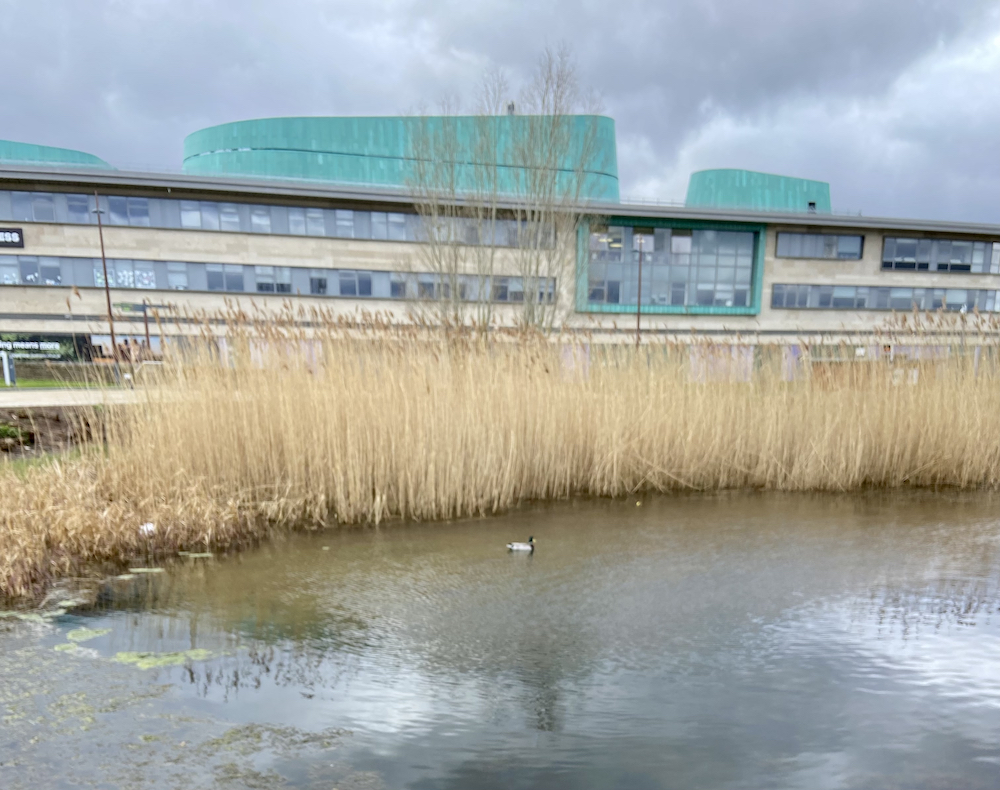
UHI Inverness, CC BY, Lorna M. Campbell

One of the main themes of the conference was “Open Education in Scotland – celebrating 10 years of the Scottish Open Education Declaration” and Joe Wilson and I ran both a pre-conference workshop and the closing plenary panel to reflect on progress, or not, over the last ten years and to map a way forward.  I’ll be reflecting on these discussions in another post.

Rikke Toft Nørgård opened the conference with a fantastic and fantastical keynote on “Hyper-Hybrid Futures? Reimagining open education and educational resources Places // Persons // Planets” (slides, recording) that challenged us to imagine and manifest transformative speculative futures for education.  Her call for “open hopepunk futures in grimdark times” clearly resonated with participants. Rikke described hopepunk as a sincerely activist approach to fighting for a more hopeful future.  I particularly liked her vision for place-ful OERs; education that has a home, that belongs and dwells in placefulness, being some-where, not any-where. 

Anna-Wendy Stevenson also picked up on this idea of belonging and placefulness in her keynote “Setting the Tone: The democratisation of music eduction in the Highlands and Island and beyond” (recording). Anna-Wendy is the course leader of UHI’s award-winning BA in Applied Music, a blended learning course that enables students to study music in their own communities while providing opportunities for both virtual and place based residencies in the Outer Hebrides and beyond.  Having grown up in the Hebrides I appreciate the importance of having the opportunity to study at home, and the benefits this can bring to students and the community.  I left the islands to go to university and, like many graduates, never returned.  While eighteen-year-old me wouldn’t have passed up on the opportunity to move to “the mainland” in a month of Sundays (IYKYK), I would have jumped at the chance if there had been a possibility to go back home to continue studying archaeology at postgraduate level. It’s wonderful that students now have that opportunity. After Anna-Wendy’s keynote, it was lovely to hear her playing traditional Scottish music with some of her students who have benefited from this place-based approach to music education. 

It was great being able to attend the conference with a group of colleagues from the University of Edinburgh, several of whom were experiencing the conference for the first time. Fiona Buckland and Lizzy Garner-Foy from the Online Course Production Service gave a really inspiring presentation about the University’s investment in open education, which has resulted in 100 free short online courses and over 1000 open educational resources (OER) that have benefited almost 5 million learners over the last 10 years. It makes you proud 🙂

Tracey Madden told the story of the University’s digital badges pilot project and the challenges of developing a sustainable service that assures both quality and accessibility. Stuart Nicol and I shared the university’s experience of transforming the curriculum with OER and presented case studies from the fabulous GeoScience Outreach course and our indefatigable Wikimedian in Residence (slides). We shared a padlet of open resources, along with staff and student testimonies, which you can explore here: Open For Good – Transforming the curriculum with OER at the University of Edinburgh.


The Edinburgh team also had a really productive meeting with a delegation of colleagues from a wide range of institutions and organisations in the Netherlands to share our experiences of supporting open education policy and practice at institutional and national level in our respective countries. 

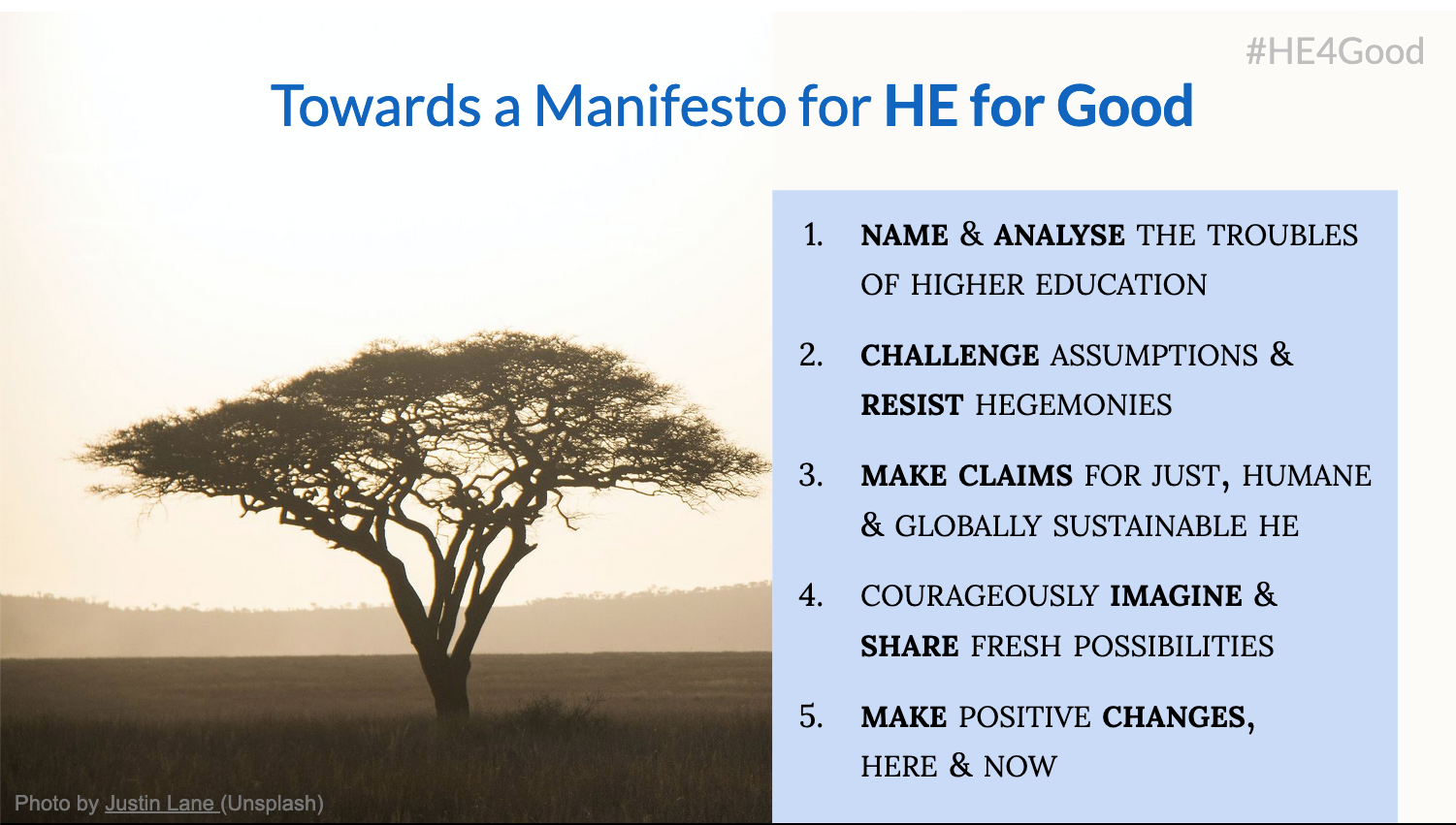
As with so many OER Conferences, hope and joy were prominent themes that were woven into the fabric of the event. Catherine Cronin gave us an update on the eagerly anticipated book Higher Education for Good: Teaching and Learning Futures, which she has been editing with Laura Czerniewicz. 
Prajakta Girme spoke about “Warm Spaces”; open multicultural space, or “pockets of community” for vulnerable communities and non-students within the university environment. Frances Bell and Lou Mycroft asked how we can use feminist posthuman storytelling to promote activism in FemEdTech and open education, challenging us to develop “productive approaches to exploring uncertain educational futures critically, retaining the pragmatic hope offered by Posthuman Feminism.”  Frances had brought one of the Femedtech quilts (it was lovely to see my Harris Tweed square at home in the Highlands) and she invited us to write speculative futures for the quilt assemblage.  You can read my micro-speculative future on femedtech.net here: Reconnecting with Joy.
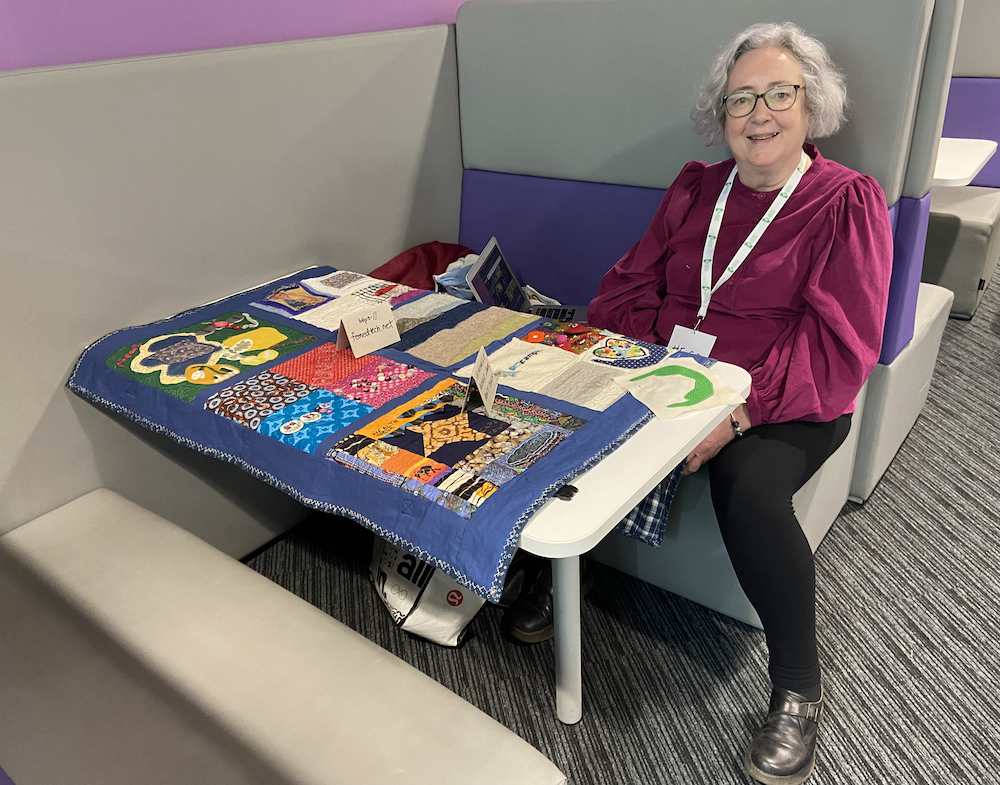
Frances Bell and the Femedtech quilt, CC BY, Lorna M. Campbell

I also had a really lovely conversation with Bryan Mathers of Visual Thinkery about our shared experience of reconnecting with our Gàidhlig / Gaeilge language and culture. His Patchwork Province zines had me laughing and nodding along in rueful recognition. 

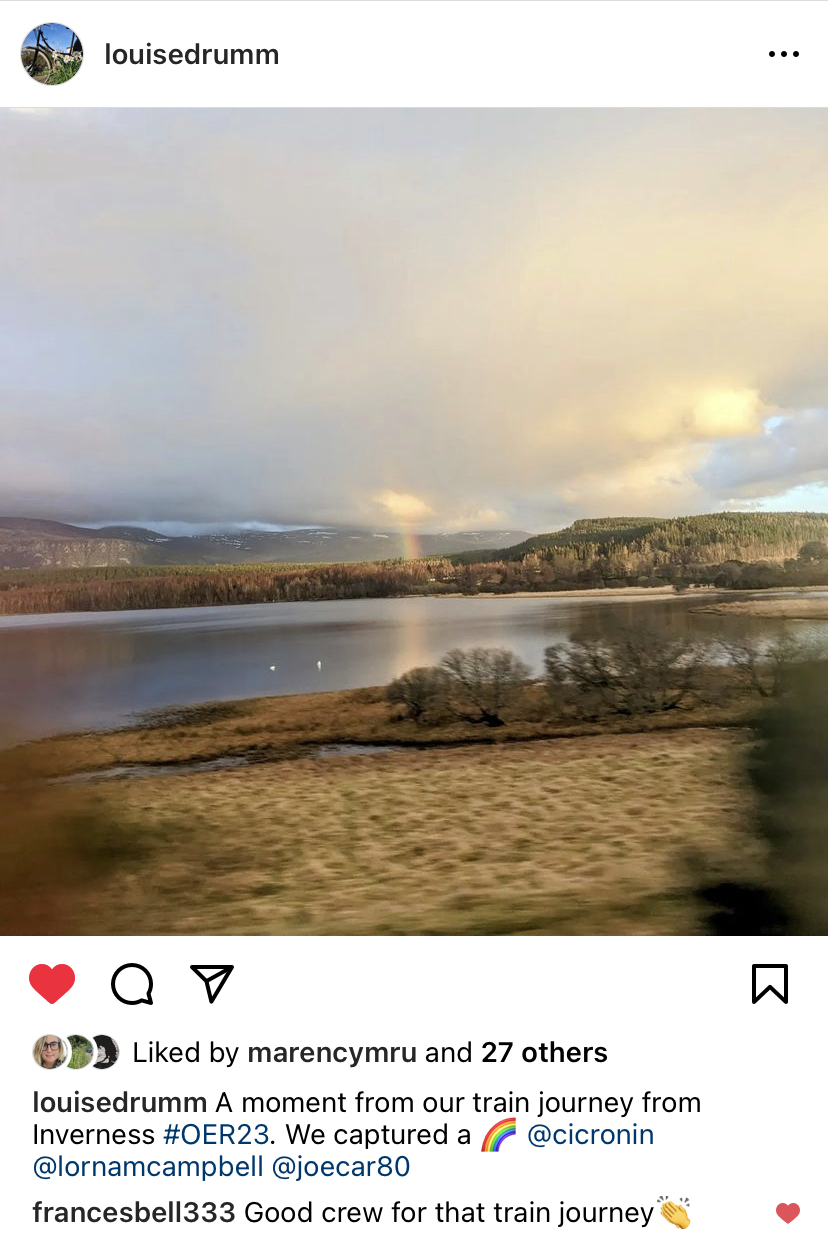
I always leave the OER Conferences inspired and hope-full and this year it was lovely to end the conference by sharing a quiet, reflective train journey with Catherine, Joe and Louise Drumm, who captured this beautiful image as we traveled home through the Highlands.


Reflections and speculations from #oer23⤴

from

I was lucky enough to be in Inverness last week for the #OER23 conference. The OER conferences do have quite unique atmosphere. They are relatively small, and there is always a really strong sense of community. This year was no different, in fact it I think that community sense was even stronger. So before I get into the meat of this post I just want to thank the co-chairs, conference committee, ALT and everyone at UHI for pulling everything together so well.

I’m still processing quite a lot of what I heard over the 2 days of the conference, so this post is really just focusing on one element that has been swirling around my brain. The conference marked 10 years of the Open Scotland Declaration. This was a community driven initiative to try and get the Scottish Government to formally adopt the UNESCO open education . . you can read more here. But the basic premise boils down to publicly funded educational resources should be publicly available. Not rocket science, totally achievable, but so far it has been almost impossible to get the Scottish Government to engage.

Lorna Campbell and Joe Wilson gave an excellent narrative of their stalwart efforts to engage with the Scottish Government over the past decade. There were many discussions and ideas about what should be done next. Based on some thoughts from the first key note from Rikke Toft Nørgård which looked at hybrid futures, I thought I’d take a bit of a speculative futures approach to Open Scotland. I also have to thank my Bill Johnston for a few ideas during a 3 hour car drive home. Spoiler alert, I haven’t done this before so it might be pants! But here goes . . .

The year is 2043. Scotland is celebrating 10 years of independence. The year has been badged as “Scotland, open for the world”. Celebrations officially started on April 6 – a nod to the 1320 Declaration of Arbroath, the original document asserting Scotland’s right as an independent country. International events during the year include the opening of new UNESCO centre for open knowledge and policy development. COP 47 is returning to Glasgow to showcase how Scotland has exceeded the targets set in 2022, and has worked with 73% of all the signatories to every COP agreement since 2033 to develop sustainable and equitable energy solutions.

Scotland officially rejoined the EU in 2039, but between times has struck a number of international partnership agreements including a new Nordic alliance on knowledge exchange and sustainable energy, tourism and creative cultural developments. In a recent international survey on the best places to live, Scotland (for the 5th year running) came in at number 1. This was due mainly to the health and happiness of the population, not on property values. Scotland’s unique approach to education was seen to be at the centre of a remarkable evolution of a relatively small (by size of population), and newly independent nation. The UEP ( universal education partnership) is now recognised as being central to Scotland’s economic, cultural and health renaissance.

So what is the UEP and how did it come into being? Well, after the political turmoil of 2023 and 2024, the then SNP decided to that the only way to set out a vision for an independent Scotland would be for the people to decide its priorities. A (much maligned at the time from opposition parties) large scale public consultation of peoples assemblies began. The aim was to engage with at least 85% of the population through a series online and f2f events. During the first round of these assemblies there was a focus on a small number of key themes (sustainable energy, fiscal policy, education, creative industries, and health).

After a bit of a slow start, most interest began to centre on education. It’s not entirely clear how it happened, but the Open Scotland Declaration, in particular the notion of “publicly funded resources should be publicly available” started to gain traction. There are rumours of small bunch of open educational practitioners who ran an informal yet highly strategic public engagement plan ensuring that the Open Scotland Declaration was highlighted in every assembly meeting. In each of the over arching themes, the discussions quickly centred on education. It became clear that the success of any “future Scotland” depended on changing the education system. An independent Scotland would need a radical approach to education.

In late 2027 An anonymous poster began to appear in various places across the country, and online calling for a new universal education partnership (UEP) approach to education. Building on the concept of a universal basic income, this (at the time radical approach) called for every citizen to be given free access to education throughout their life time, at a time, place and pace that suited their needs.

Initial costings proved this would actually cost (slightly) less than the current tertiary education funding. #UEP gained more and more traction, and a plan developed. Instead of funding loans to post 16 education students and the current funding for universities and colleges, it was proposed that each citizen could access a fund that would cover 25% more than the basic living wage for the time that they were involved in educational activity. Quite quickly (again seemingly radical ) ideas about restructuring tertiary education and research began to emerge.

It turned out that turning “research subjects” into “research partners” has a dramatic impact on research. The fact that research participants were recognised for their part in research and could access their UEP fund has allowed Scotland to truly develop a nation of informed and engaged citizen scientists.

The earliest signs of success came from health research. As research participants didn’t have to rely on benefits, numerous studies (many of them ethnographic studies) have shown remarkable insights into treating some chronic health issues. The Glasgow Effect has almost been reversed. Similar effects are being seen across all sectors. At the same time, international research exchange programmes have flourished. Many large pharmaceutical. energy and financial companies have opened new centres in Scotland due to access to a highly skilled, and continually learning workforce. The changes to corporation tax including windfall contributions to the #UEP also seem to be positively accepted and widely cited in annual reporting.

Universities and colleges are now open spaces with new forms of partnerships around developing distributed and integrated curriculum. Tracking participation despite being seen by detractors as being a major challenge, was actually very simple. It turned out that every school child in Scotland already had a unique reference number that could be used. It was relatively simple to build out from this existing system. Closed exams are a thing of the past, Nearly every citizen in Scotland has contributed to the nationally supported knowledge base. Universities and colleges are now evaluated by public panels (decided through open ballots – using a process developed from the existing jury citation process). Community impact is a key factor of success. This approach has been adopted formally and informally by a number of other countries.

Research on the evolution of the UEP is continually developing and shared openly, including economic modelling. Though it appears that most citizens do access their UEP fund not everyone uses it all, many take up the option to gift their contributions back to the fund. Clearer longitudinal trends are just starting to emerge. For example, there appears to be a rise in access to funds in the over 50s. It appears that being able to more easily change career is actually allowing people to work longer. This combined with the overall increase in health and increased tax contributions and reduced NHS costs is providing a robust state funding model. Similarly there appears to be a new type of “research gap year” where 18 -25 year olds are participating in research projects before embarking on formal educational studies or taking up full time employment.

And All of this came about because it became apparent that open education wasn’t just about licences , selling “stuff” and services, or an abstract concept, it was about empowering people and making not just Scotland, but the world, open to education and all the opportunities that follow that.

Open Scotland logo

#OER23: Open Education and Open Source⤴

from @ education

Although I'm barely back into the UK, I've decide that the resting and relaxing thing to do is to pack up again and head further northwards to the OER23 conference. For many of us this is the touchstone conference, offering not just an opportunity to … Continue reading #OER23: Open Education and Open Source

Open Scotland @10⤴

from

OER23 Conference logoThis blog post was originally posted on the Open Scotland blog. 

To mark 10 years of the Open Scotland initiative we will be holding two events as part of the OER23 Conference to bring together members of the education community in Scotland to reflect on how the open education landscape in Scotland has evolved over the last decade against the backdrop of global crisis and uncertainty (Campbell and Wilson 2021). Hosted by ALT and the University of the Highlands and Islands, the OER Conference is taking place in Scotland for the first time since 2016. One of the main themes of the conference is “Open Education in Scotland – celebrating 10 years of the Scottish Open Education Declaration.”

Thigibh a-steach! Come and join us at the OER23 Conference in Inverness to contribute to shaping the future of open education in Scotland.

Open Scotland Pre-Conference Workshop

When: Tuesday 4th April, 15.30 – 17.00
Where: UHI Inverness and online
Who: Open to all.

This pre-conference workshop, facilitated by Joe Wilson and Lorna M. Campbell, will reflect on the Open Scotland initiative and discuss ways forward for the open education community. We’ll briefly address the history and impact of Open Scotland and explore the role of Open Scotland and the Scottish Open Education Declaration going forward.

We’ll ask whether the aims of Open Scotland are still relevant, whether the Scottish Open Education Declaration has a role to play in the future, and how it can be reframed to reflect current challenges and priorities.

How can we encourage more teachers, learners and education institutions across the sector to engage with open education?

How do we ensure that the Scottish education community tunes in to global open practice and makes most of the possibilities of open educational resources , open research , open textbooks and other opportunities?

Can we effectively lobby the Scottish Government to adopt policies that support open education and OER at the national level?

How can we in Scotland, the UK, and internationally, align with the principles of the UNESCO Recommendation on OER (UNESCO 2019)?

We invite key leaders, influencers, educators, open practitioners and advocates across the Scottish education community to join us. This workshop is free and open to all. Remote participation will be available for those who are unable to join us in Inverness. 

Registration
If you are not an OER23 delegate, please register here in order to participate: Open Scotland Pre Conference Session for External Delegates

OER23 Conference Closing Plenary: OpenScotland @10

When: Thursday 6th April, 16.20 – 17.00
Where: UHI Inverness and online
Who: OER23 Conference delegates

The closing plenary panel of the OER23 Conference will bring together open education advocates from Scotland and The Netherlands to reflect on the open education landscape in Scotland and internationally. We’ll discuss engagement with open education across Scotland, focusing on the benefits and affordances of open education and OER and how it can help to address local and global education challenges and priorities, while reflecting on the relevance of the original aim of Open Scotland: To raise awareness of open education, encourage the sharing of open educational resources, and explore the potential of open policy and practice to benefit all sectors of Scottish education.

Panel participants: Lorna M. Campbell, Open Scotland and University of Edinburgh; Scott Connor, UHI;  Maren Deepwell, ALT; Stuart Nicol, University of Edinburgh; Robert Schuwer, consultant and former UNESCO Chair on Open Educational Resources; Joe Wilson, Open Scotland and City of Glasgow College.

Background

Open Scotland is a voluntary cross-sector initiative, established in 2013, to raise awareness of open education, encourage the sharing of open educational resources, and explore the potential of open policy and practice to benefit all sectors of Scottish education. In the decade since its launch, Open Scotland has been supported by Cetis, the Scottish Qualifications Authority, the Association for Learning Technology, Reclaim Hosting, the University of Edinburgh and Creative Commons. Openness remains a key strategic principle for many of these organisations.

In order to achieve its aims, Open Scotland hosted the Open Scotland Summit (2013) and Open Education, Open Scotland (2014) at the University of Edinburgh, which brought together senior managers, policy makers and key thinkers to explore the development of open education policy and practice in Scotland. Members of Open Scotland contributed regularly to national conferences, and participated in international events including Open Education Global in Ljubljana, OERde14 in Berlin, Morocco Open Education Day, the Open Education Policy Network, UNESCO European Regional Consultation in Malta, and the 2017 UNESCO OER World Congress.

In 2014, inspired by the UNESCO Paris OER Declaration (UNESCO 2012), Open Scotland launched the Scottish Open Education Declaration (Open Scotland 2014), an open draft document that all members of the community were invited to contribute to. The Declaration called on the Scottish Government, the Scottish Funding Council and all sectors of Scottish education to endorse the principles of the UNESCO OER Declaration and ensure that educational materials produced with public funding are freely and openly available to all. With support from ALT Scotland and Creative Commons, the Declaration was brought to the attention of three consecutive Cabinet Secretaries of Education, however the Scottish Government declined to engage with these principles. Despite this lack of response, the Scottish Open Education Declaration has been influential elsewhere. It inspired the OER Morocco Declaration (Berrada and Almakari 2017), informed the OpenMed Project, and has raised awareness of open education within institutions, triggering discussions about open education at policy level.

Visit the Open Scotland blog to find out more about the initiative. 

References

Berrada, K. and Almakari, A. (2017) Déclaration du Maroc sur les Ressources Educatives Libres / OER Morocco Declaration. Available at: https://openmedproject.eu/wp-content/uploads/OER-Morocco-Declaration.pdf (Accessed: 9 January 2023).

Campbell, L.M. and Wilson, J. (2021) Open Educational Resources: An equitable future for education in Scotland. Available at: https://openscot.net/further-education/open-educational-resources-an-equitable-future-for-education-in-scotland/ (Accessed: 9 January 2023).

Open Scotland. (2014) Scottish Open Education Declaration. Available at: https://declaration.openscot.net/ (Accessed: 9 January 2023).

UNESCO. (2012) The Paris OER Declaration. Available at: https://en.unesco.org/oer/paris-declaration (Accessed: 9 January 2023).

UNESCO. (2019) Recommendation on Open Educational Resources. Available at: https://www.unesco.org/en/legal-affairs/recommendation-open-educational-resources-oer (Accessed: 9 January 2023).

Better late than never! 2022 end of year round up.⤴

from

Is February too late (or early??) to write an end of year round up post? People often complain about January dragging but I swear it passed in the blink of an eye this year, and somehow we’re already half way through February. This is way, way, after the fact, but there are a few things I did at the end of last year that I don’t want to get lost in the churn. 

Although I didn’t manage to write an end of year review for this blog, I did write one for Open.Ed, the University of Edinburgh’s OER Service, which you can read it here if you’re interested: OER Service 2022 Roundup. 

EDEN NAP Webinar

In early December I was invited to take part in an EDEN NAP webinar on Institutional Approaches to Supporting Open Educational Resources, which explored the different ways that Universities are building open education capacity and acting as enablers of innovative open practice. I spoke about our experience of embedding strategic support for open education and OER at the University of Edinburgh. The other speakers were Professor Daniel Burgos, Universidad Internacional de La Rioja (UNIR), Dr Carina Ginty, Atlantic Technological University, and Fiona Schmidbauer, DHBW Karlsruhe. There was an impressive turnout of over 160 participants from all over Europe.  The webinar was recorded and I’ll link to it here once it’s online. 

ENCORE+ Webinar

I also took part in another webinar on OER and credentialing, run by the European Network for Catalysing Open Resources for Education (ENCORE+) Project. ENCORE+ is an ERASMUS+ Knowledge Alliance project, funded by the European Commission, which supports the uptake and innovation of open educational resources for education and business.  Earlier in the year I was interviewed by Dai Griffiths as part of a series of interviews exploring innovative approaches to credentialing learning in the European OER ecosystem, the opportunities that they offer, and the barriers to their application.  During the interview we discussed strategic support for OER at the University of Edinburgh, the role (or not) of OER repositories, and benefits for students creating open education resources and open knowledge as part of their accredited courses.  The webinar brought together several of the interviewees to discuss some of the themes that had emerged in the interviews in more depth.  You can read my interview here: ENCORE+ Interview.

Femedtech

At the beginning of December I took over from Maren Deepwell as administrator of the femedtech Twitter account.  Maren has managed the account and our guest curators for the last year and I’m hugely grateful for the simple and efficient process she handed over to me.  Clearly we need to question the ongoing viability of Twitter as a platform for femedtech given the (lack of) ethics of its current proprietor and the degradation of the platform itself. Femedtech has always been a loose collective with multiple channels and I know that some of our curators this year will be exploring how we can use those other channels, including femedtech.net, and potentially Mastodon, going forwards.  In the meantime, we’re going to continue curating the femedtech account and hashtag on Twitter, so if you’d like to put your name down for a curation slot you can volunteer here: Get involved with femedtech. 

I also did my own curation slot during December, the first time I’d curated for a couple of years. (You can read my reflection on my last curation slot here: Reflections on @Femedtech Curation.) I had planned to open a discussion about the ethics of remaining on twitter, and the logistics of moving to another platform such as Mastodon, but I got sidetracked by the ongoing debate about the ethics of AI art algorithms, their use of art works scraped from the commons, and the harmful stereotypes that appear to be inherent in the datasets and algorithm themselves. 

Critical Ignoring

I think the real highlight of my curation slot was coming across this paper by Anastasia Kozyreva, Sam Wineburg, Stephan Lewandowsky, and Ralph Hertwig on Critical Ignoring as a Core Competence for Digital Citizens.  

Low-quality and misleading information online can hijack people’s attention, often by evoking curiosity, outrage, or anger. Resisting certain types of information and actors online requires people to adopt new mental habits that help them avoid being tempted by attention-grabbing and potentially harmful content. We argue that digital information literacy must include the competence of critical ignoring—choosing what to ignore and where to invest one’s limited attentional capacities.

Critical ignoring is not a concept I’ve come across before but it’s something I’ve been consciously practising for the last couple of years.  If you spend any amount of time online it’s really hard not to get sucked into spirals of negativity, outrage and despair, especially when social media algorithms actively promote “controversial” content and push it into our feeds. Some people I know have sworn off social media altogether or take regular breaks to decompress.  I make frequent use of block and mute functions, and I also try to make a conscious decision as to whether it’s worth expending valuable emotional energy engaging with posts that will only anger or upset me.  I’ve also made more of an effort to separate my “work” and “non-work” time online.  It’s not always easy to know where the boundary lies but on days that I’m “not working” I log out of my main twitter account and ignore any e-mail sent to my work address.  This does mean that I sometimes miss personal messages sent through these channels, but I’m trying not to feel too guilty about that.  Sometimes it works, sometimes it doesn’t.  The irony in all this is that I haven’t actually read beyond the first page of the Critical Ignoring paper…

UCU Industrial Action

I can’t finish this post without mentioning the latest round of UCU industrial action, which will see university staff striking for 18 days throughout February and March in protest at pay erosion and inequality, precarity, unsustainable workloads and pension theft. The first quarter of the year is always a really busy time for me because several open education events, including Open Education Week and preparation for the OER Conference fall in this period, so I find it really stressful not being able to work.  It’s going to be a long couple of months and the financial impact is going to be painful, but the alternative, just buckling down and doing our best in a system that is increasingly inequitable and exploitative is no longer sustainable. 

Photograph of statue of Donald Dewar surrounded by banners during Right to Strike rally.  Buchanan Street, Glasgow.

Right to Strike rally, Glasgow, February, 2023. CC BY, Lorna M. Campbell

ChatGPT and Grimm Realism⤴

from @ education

So, after my last wee rant about AI, it continues. ChatGPT has eaten our collective minds. We continue to talk about the need to change assessment practices in response to AI , or enthuse about the ways in which it might help us with some … Continue reading ChatGPT and Grimm Realism

Some ill-formed thoughts about AI, robot colleagues, resistance, refusal.⤴

from @ education

Unless I toss all my devices in the bin and take up cat-sitting as a profession, I cannot avoid the internet stooshie about AI in education, in this case hand-wringing about ChatGPT and plagiarism. Can we seriously not think of more interesting conversations to have … Continue reading Some ill-formed thoughts about AI, robot colleagues, resistance, refusal.

Listened: OEG Voices 040: Charlie Farley and Lorna Campbell⤴

from @ wwwd – John's World Wide Wall Display

Listened OEG Voices 040: Charlie Farley and Lorna Campbell on Two Award Winning Projects from University of Edinburgh – OEG Voices by an author from podcast.oeglobal.org
There is something going on with Open Education in Edinburgh. In episode 40 we get to hear first hand from Charlie Farley and Lorna Campbell about two exemplary efforts from the University of Edinburgh that were both recognized with OE Awards for Excellence in 2021. But that is just half of the awar...

Listened: OEG Voices 040: Charlie Farley and Lorna Campbell on Two Award Winning Projects from University of Edinburgh – OEG Voices a podcast produced by Open Education Global.

I huffduffed 1 this mainly to hear the voices of Alan & Lorna.

A few years ago I really hoped that the OER idea would catch on with primary & secondary teachers. Ian and I discussed this many times while working on Glow. We went to a few OER and Wikimedia events but we never got the traction to make it work.

Sharing resources for primary & secondary schools seems a very mixed bag of Facebook (I am lead to believe), the web, TES, twitter and Google Drive. The understanding of OER and creative commons amongst my colleagues is not evenly distributed yet. This is not a criticism, my knowledges of many areas I should know about is quite shaky.

I really enjoyed the listen, the work Edinburgh is doing is inspiring on all sorts of levels. I learned this included my own:

In this episode’s conversation, OER Adviser Charlie Farley shares a fabulous outreach program started in GeoSciences that has expanded to other disciplines, where students get applied open education experience working with local schools, museums, and community groups, to design and publish OERs that are shared openly through TES Resources and Open.Ed.

This has taken me to University of Edinburgh Open.Ed – Teaching Resources – Primary Science which looks as if it is full of a lot of useful resources for me and my school colleagues.

The ones I’ve downloaded so far are well badged with Open Education Resource and Creative Commons licenses. They also look like great resources.

I am fairly embarrassed not to have known about this, but quite excited I do now. I’d recommend a listen for inspiration & following the links for useful resources.

  1. Huffduffer is a wonderful service that allows you to gather audio from across the web into your own personal RSS feed. You can then subscribe to that in the app you listen to podcasts on. It also will rip youtube videos to audio and add them via huffduff-video ↩

OEG Voices Podcast⤴

from

This post originally appeared on the Open.Ed blog.

Back at the beginning of the summer, my colleague Charlie and I had the very great pleasure of joining Alan Levine for an OEG Voices podcast to talk about the University of Edinburgh’s award winning open policies and GeoScience Outreach OERs.

OEG Voices picture of Lorna Campbell, Charlie Farley, Alan Levine and Paul Stacey.Charlie talked about the GeoScience Outreach course where students co-create teaching and learning materials that are then adapted by Open Content Creation interns and shared on TES Resources as a curated collection of OERs aligned to the Scottish Curriculum for Excellence.  These award winning open resource have already been downloaded over 100,000 times by teachers all over the world.  You can read more about the success of the GeoScience Outreach course in this blog post on Teaching Matters by Kay Douglas, Andy Cross, Colin Graham, Erica Zaja, Bonnie Auyeung, and Frederik Madsen – Geoscience Outreach: What we do, how we assess, and client/student reflections.

I discused the university’s commitment to developing and sharing open policies for learning and teaching, and role of Learning Technology Policy officer Neil McCormick, who leads the development of many of these policies.  Open.Ed has shared a suite of five open policies and guidelines, including our Lecture and Virtual Classroom Recording policies, our OER Policy, and our Digital Citizenship Guide, developed by Dr Vicki Madden.

You can listen to the podcast here – OEG Voices 040: Charlie Farley and Lorna Campbell on Two Award Winning Projects from University of Edinburgh

ALTC 2022 – Reconnecting⤴

from

Earlier this month the annual ALT Conference returned as an in-person event for the first time since the pandemic.  Around 400 participants joined the hybrid conference at the University of Manchester, for both an in-person and online programme.  For many delegates it was their first in-person conference since the Before Times and I think it’s fair to say that everyone appreciated the opportunity to reconnect with friends and colleagues from across the sector. 

I had the pleasure of being one of the co-chairs of the conference, as to mark its in-person return, the event was was chaired collaboratively by the Trustees of ALT.  My term on the ALT Board came to an end at the AGM, so I’m proud to say that opening ALTC 2022 with a short reflection, alongside Natalie Lafferty and Puiyin Wong, was one of my last actions as an ALT Trustee. 

Natalie emphasised the need for learning technologists to become a collective voice that shapes the narrative and the future of learning and teaching.  Asking how we can consolidate the relationships we’ve developed with academics during the pandemic, Natalie urged us to be confident in our own role working at the intersection of academic and professional services.

Puiyin reflected on her own journey as a learning technologist over the last few years.  As a result of the pandemic, colleagues finally know who learning technologists are and what we do. We’re not just the people who fix Moodle, we understand pedagogy, we understand learning, we understand how to use technology in education, and how to make  learning engaging, accessible and fun.  Puiyin also urged us to welcome more TEL researchers into the community to share our knowledge and expertise.     

I touched on the ebook crisis and the increase in institutions establishing open textbook presses in response.  I hope that our libraries and open presses will draw on the OER expertise that already exists in the learning technology community to build on our knowledge of openness in education. I also emphasised the necessity of ethically informed approaches to how we implement and interact with learning technology and the importance of pedagogies of care, which are increasingly necessary during these uncertain times.  

Although openness wasn’t one of the specific themes of the conference, it remains one of ALT’s core values, and openness underpinned many of the sessions.  The Global OER Graduate Network presented an overview of their community values and research activities, and I also really appreciated Fereshte Goshtasbpour and Beck Pitt sharing their experience of re-purposing an existing open course for reuse in a different global context. Reuse and repurposing of existing OERs is something that we’re really interested in at Edinburgh, so it was useful to hear this case study. 

Ethics and care were two themes that also ran throughout the conference. Rob Farrow’s keynote presented a short overview of ethics in Western philosophy and highlighted the need for ethical frameworks for technology, such as the ALT Ethical Framework, and the space they offer for reflective collaborative thinking  Rob also picked up on the theme of ethics of care, which was explored by Chris Rowell in his talk on critical digital pedagogy.  Chris outlined six principles for critical digital pedagogy, all of which really spoke to me:

  1. Knowledge should be co-created between teachers and students.
  2. Digital education should challenge oppression.
  3. Digital education is a human process.
  4. Education and technology is inherently political.
  5. Knowledge should relate to and develop from the lived experience of teachers and students.
  6. Digital education is built on trust and belonging and should cultivate hope and optimism.

One beautiful manifestation of all these principles is the Femedtech Quilt of Care and Justice in Open Education, a craft activism project led by Frances Bell in collaboration with members of the FemEdTech network in 2019/2020.  You can read the story of the quilt on femedtech.net and also engage with the digital quilt at quilt.femedtech.net  The quilt was originally intended to be displayed at the OER20 conference, but as a result of the pandemic this is the first opportunity we have had to showcase the quilt in all its material glory

I spent most of the second day of the conference quilt sitting along with Frances Bell, Catherine Cronin and Sheila MacNeill. It was a really moving experience seeing people interacting with the quilt.  It was especially lovely to see people finding and reconnecting with squares they had created, pointing out this or that square – “That’s my daughter’s dress!” “That’s my mother’s earing!”  So many women, mothers, daughters, grandmothers, so many personal connections are sewn into the quilt. There was also an opportunity for people to contribute to the quilt by sewing on a button or a few stitches of embroidery and it was wonderful seeing people taking a quiet moment out of the busy conference schedule and becoming absorbed in the shared task of making. 

Sheila has already written a lovely reflection on the quilt here: Transcending the digital and physical at #altc22 – the #femedtechquilt. I particularly love this observation:

In quite a magical way, the presence of the quilt provided a way to bind many of us together by providing a safe, open, space to have long overdue catch ups, to share experiences and allow time for reflection and just “being”.

At the end of the day, those of us who had contributed to the quilt came together to suspend it over the balcony outside the main auditorium so it could be viewed by delegates.  It was an emotional (and slightly nerve wracking!) experience holding all that shared hope and creativity in our hands. 

We’re still living in desperately uncertain and insecure times, and our new normal is a world away from our old normal, however reconnecting with the learning technology community at ALTC 2022 gives me hope that if we can work together, to share our experiences and share the load, we can support and care for both our community and our learners.