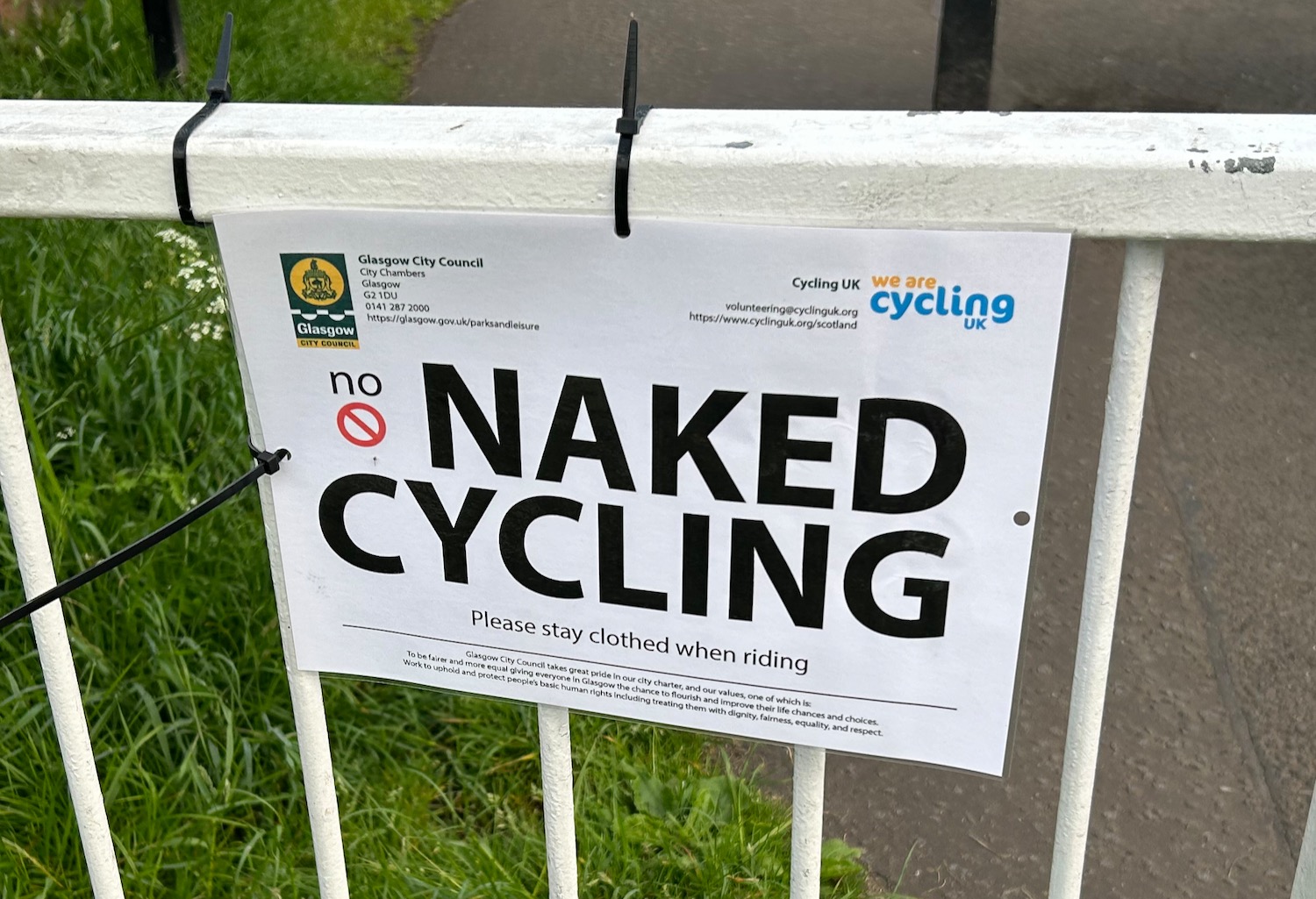
I’m home after quite a hectic work week in London now have a bit of time to share some reflections on the OER25 conference which I had the pleasure of co-chairing with Louise Drumm.
Over 100 people from all over the world joined us in London for the 2 days of the conference to address the conference theme of speaking truth to power: open education and AI in an age of populism. I wasn’t able to make it to the event until almost the end of day 1 (in perfect time for the drinks reception!), but when I did get there, there was a palpable sense that something special had happened during the day.
It was so lovely to catch up with old friends and colleague and of course to make new connections. One of the strengths of the OER conferences is their size. Not to big, not too small, but in that sweet spot of having enough people to create the perennial conference challenge of deciding what presentation you need to go to in each session as you want to go to them all.
It’s also the right size that it is easy to get to speak to people after sessions, after keynotes and so be a bit more inclusive that some other larger conferences. The amount of engaged conversations at the end of day one, once again showed that the OER magic was still very much in place. Louise and I were so touched when at the end of the conference 2 “first timers” gave us a thank you card. To me that just summed up the positivity that the conference fostered.
I was sad to miss Helen Beetham’s keynote, but once again could tell that she had set just the right tone ( I know Helen will be sharing slides over on her substack site soon) around approaches to resisting and rewilding in the age of AI. Joe Wilson got day 2 off to a cracking start with his call to arms around challenging, using and subverting technologies, and freeing our inner punk spirit.
I wouldn’t call the OER delegates a bunch of renegades (well, maybe I would in a positive way in the pub!) but there were so many stories around going rogue across the 2 days. This both heartened and saddened me. I took a lot of positives from the conversations I had and the presentations I saw. The work that delegates shared once again showed the power and the need for care, compassion and open sharing in education (and in turn across society). There was also as sense of relief across the room, that people had (re)connected with “their people”, and were taking and creating hope, ideas and energy in a safe and open place. However, many of the conversations also saddened me and reminded me of just how uncertain and f***ed up our world is right now.
I’m not sure how far we were speaking truth to power, given the size of the conference, and the lack of interest in open education across places of power. However, I do think that the the conference did give a well needed and deserved shot of energy to delegates who are trying to ensure we are providing equitable, accessible, critically informed learning experiences for learners wherever we are working in the world. As we know from history, our collective actions can and do make a difference.
I know that I have always been energised by OER conferences, and they have always given me so much to reflect on and share in my work and here in this blog. I’m also aware that over the past year (probably more) I have found writing/saying anything very difficult. Mostly it’s because I quite frankly don’t know what to say most of the time. But the shifts in ownership, use and abuse in and across social media have also brought an almost self imposed silence. On my way to the conference I was reading Art on my mind by bell hooks. In the introduction she writes,
“we risk having our ideas appropriated or go unacknowledged by those who enjoy more power, greater authority of voice, within the existing structure. This can lead us to choose silence. Audre Lorde spent a lifetime warning us of the danger in such a choice, reminding us that our silence will not save us”
Oh, how that struck me. “our silence will not save us“. As with all great writing, it seems to resonate even more now than when originally written. It seems so applicable to the context of not just discussions around open education but across all of education and society. We need to make sure we find (open) ways to ensure we are not silenced by over riding narratives around the transformational power of AI in education we need to keep sharing our research, our critically informed perspectives and most of all we need to keep finding ways to stay connected, and not be silenced. Our voices, our truth can save us.
Forgive me, dear reader, it has been too long since my I last published anything here. I seem to have fallen out of the habit of writing and more importantly publishing here regularly.
At the start of the year, I was hopefully about finding my voice here again, about being more reflective , sparked by what LLM models spit out about me. It’s April now, and I just haven’t managed to do it. I have a quite a few unfinished posts in draft form. All with some potential, some relevance to something relevant at that particular moment, but the moments have all gone.
Writing is hard. It should be hard, it should be a struggle, it should feel you with that mixture of pleasure and pride when you hit that publish button or see something in a print edition. Sure we all need help to learn the craft of writing, but we do need to remember it is a craft not something that can turned into an activity that just needs to be passable.
I don’t need help with the actually writing. Well that is probably debatable, but this is my blog and the thing I’ve always appreciated about blogging is that I’m in charge, it’s not a peer reviewed journal, it’s my voice, typos and all, and I have always found that liberating. I don’t want or need any GenAI tool to help (yes looking at you Co-pilot, I am not going to “turn you on” )suggest, misappropriate what I am trying to say.
There is no easy answer to what I am experiencing. It’s a mix of malaise, not quite sure what I want to say, and in all honesty not sure who I am saying anything too. Maybe I just have rose tinted glasses about the “good old days”, when blogging was still new, when Twitter was actually a supportive network, when you felt you could reach “your people” . . . The takeover of social networks by advertising, by algorithms has fragmented “my people”. We have dispersed to other spaces . . . there are still strong and valued connections, but it’s not the same . . . or have just given up and got the “cba” (cant be a*sed) syndrome? What system should I be on?
Finding out that some of my publications have been scraped for use in LLM training data sets without publishers seeking consent was not unexpected but to see it in black and white so to speak. Well that was, how can I put it? I felt violated. As one of my friends said when he checked the site, “it’s a bit like seeing your Stasi file.”
But there is, I feel, something more insidious happening just now: the wider political narratives around AI adoption; the myths of increased productivity, the debasing of human interactions into simplified automated lowest common denominator processes; the AI revolution will save the economy (it might kill the planet in the process, but hey that’s ok because one day will have the ultimate algorithm that will solve everything . . . will that be 42?
In terms of education, I keep hearing /reading about systems that will “save time, increase personalisation, allow teachers to “do the things that matter” (because obvs they’re not doing that just now!). So plug in, create your curriculum, your lesson plans, your activities, assessments. Let’s live all work towards the myth of personalisation which in reality will actually be mass homogenisation. But, hey your AI assistant will know your name, and have made lots of assumptions about you based on all that demographic and consumer, health and social media data it has on you, your family, friends and neighbours. Let’s all just help build the pedagogies of oppression that “the system” will use against us.
I feel that the systems are silencing me just now. I’m worried about what to say, where to say it. What systems aren’t totally f*cked up by right wing politics, neoliberal tech bro ownership . . . Is that what “they” want – new cultures of silence, where we are all displaced and can’t collectively and effectively resist their narratives?
A couple of things have really hit home over the past week to give me hope and make me find a little bit of my voice again. The first was reading There are Rivers in the Sky by Elif Shafak. It’s a wonderful book, and at its heart, is the struggle around history, who controls it, who classifies it, who owns it, who is displaced/forgotten (mainly women), how we (human kind) so easily destroy the environments we rely on to survive. So many resonances with the debates around AI and knowledge/information. Not so much the white saviour but the tech bro saviour syndrome – but of course most of the “big” tech bros are white. The current LLMs don’t “know” everything, not everything is datafiable (not sure if that is a word), what about stories, oral traditions, not in the database so they don’t count, or are at best a digital footnote.
Also this Ted talk from Carol Cadwaller, This is what a digital coup looks like – watch, listen and like me start to think more about how we can fight back.
After quite a hectic end to last year, I’ve being enjoying a slower start to 2025, taking some time to be with family, reading, pottering around and catching up on “stuff”. The world is still batshit crazy, and today’s inauguration is going to dial up the crazy another couple of notches past 11.
I still don’t quite understand how one man who lies so blatantly can be re-elected to arguably the most powerful office in the world, but even just dipping in and our of news coverage here, I can see and hear how much more organised those around him are this time. This morning I heard one of his legal team talk about how the new administration are going to “bring back science, real science”. I didn’t realise that it had gone away. Guess I am just too woke to notice . . .
So whilst trying to avoid news from across the pond, I have been catching up on tv, podcasts, readings etc. Last week on a long train journey I managed to get a decent enough wifi signal to watch tv without it dropping out every 2 minutes. Dear reader, I have to confess I succumbed to “The Traitors“, and I am now “all in”.
Binge watching the first 3 episodes though did really highlight the power of group think (this is quite a good article in the Guardian about that very subject), and how lying is a key factor for the programmes success. Oh the treachery, the deceit! We love it from our comfy, edited viewpoint. I can’t help but have a niggle about that. Despite the fact the “Linda, the vicar” had a word with him upstairs before she went on the show, and got the ok, I feel the resonance of Trump and his ilk, devaluing truth, offering alternative facts, or now in 2025 “real science”. Lying is good, there are no consequences for lying, it’s a means to an end, the strong can influence the week, smart people are “a threat or a danger. I was quite shocked how everyone turned on the doctor in the group – he was too nice, too clever . . .
The power of group think as the Guardian article highlights is nothing new – and hey The Traitors is only tv and I am aware I am being hypocritical by watching it. Still there is something that resonates with wider trends about how we can, and are all be manipulated by powerful business and the men (sadly yes it does seem to be mainly (white) heading up all the big tech companies). Hello the AI “turbocharge” to, well everything.
It seems there really is a pot of gold for anything labelled AI, but nothing but cuts to services to us little ol’ people. Tho’ I have to say that using AI to help with our pothole problems is something I do have sympathy for (you may have heard a mini rant from me about this dear reader). If we have to use AI then let it be for something like that, not for writing or god forbid art. On that subject Katharina Grosse has a great explanation why AI can’t replace painting on this recent episode of The Great Women Artists.
There just seems to be acceptance that we have to get on with AI, let it into everything, because . . . well actually I don’t really know why. Again, probably just being a bit woke, but if the UK government could get even quarter of the investment they are talking about into the NHS, well people might get well, might get healthier, we might be able to do something about the obesity crisis. And where is the debate about the cost to our climate that these new data centres will bring? Washed away in floods, or hidden in fires and droughts. . . .
I was so grateful to listen to the discussion between Helen Beetham and Dan MacQuillan last week. If are curious as to why we don’t need AI, just have a listen. I’ve also been grateful to the weekly newsletters from Audrey Waters, who is back on the edtech/AI case. This month she has written so eloquently about reading, writing, the amnesia around tech failures, and today about AI literacy.
Group think (well highly funded tech group think) seems to be winning out again. I hope that voices like Helen’s, Audrey’s, Dan’s and so many more will help all of us resist, engage, have empathy. And for those of us in education ensure that our students can develop agency, criticality and humility. All the things that Elif Shafak so eloquently describes here.
Who knows what will happen today, but I am grateful for the time all these writers take to share and provide a counter narrative to the hype. Later this week maybe the faithful will find the traitors, but until then if you have some time please, follow some of the links I have shared.
Forgive me dear reader, it has been far too long since I last wrote anything here. As we approach the end of the year, I thought I’d wipe the digital dust gathering here and share one last post for the year.
I have really got out of the habit of using this blog this year. Any kind of writing does need to become a habit I think. One that you make time for, becomes part of your routine. Maybe it was just the insane year in terms of UK and world politics, wars, famine and the whole why are the rich people so intent in f*cking up the world?, that made me weary and lose my voice here and lose that all important habit of writing.
I’m not sure if this year with the disintegration of useful digital networks (hello X) and the struggle to find “my people” (thank you Mastadon and latterly Bluesky) has made me not write as much here. That struggle was real in 2023 too, so maybe it wasn’t that.
I know I have been more active on Linkedin. It seemed saner, more focused, less hateful, more supportive – well supportive in terms of “likes” which I know are a shallow proxy for engagement, but at times I am that shallow I seemed to reach more people with a post there than a post here (even when I did add the link the post here there).
I’ve just done one of those GenAI yearly summaries of my linked in activity. This is what is churned out -with a helpful little visual summary. I was happy to share my linkedin posts/data as maybe I don’t value them that much . . .:
Here’s my 2024 LinkedIn Rewind, by Coauthor.studio:
Back from Ireland after our N-TUTORR programme evaluation, I’m struck by a simple truth: digital learning isn’t just about platforms, it’s about people and their stories of transformation.
This year was a masterclass in understanding how learning really happens. Working with Helen Beetham, we used the Most Significant Change methodology to uncover incredible narratives from stakeholders across different levels. Our workshops weren’t just data collection—they were moments of genuine connection and insight. (“The methodological approach we used… gets stakeholders to share their most significant story of change,” https://www.linkedin.com/feed/update/urn:li:activity:7249399538577281024/)
Alongside this, the Beyond Blended resources we developed with the Jisc team represent another milestone. We weren’t just creating another guide—we were designing flexible resources that could adapt to different educational contexts. (“The resources have been designed to be flexible and to integrate with other approaches in use,” https://www.linkedin.com/feed/update/urn:li:activity:7191361453960916992/)
Presenting our work at #altc24 was a highlight, sharing how we’re rethinking curriculum and learning design in an era of rapid technological change. (https://www.linkedin.com/feed/update/urn:li:activity:7236975718197342208/)
Looking ahead to 2025, I’m excited to expand the Beyond Blended resources and continue exploring the ethical integration of AI in education. Always remembering: technology serves learning, not the other way around.
The most profound lesson? In digital learning, our greatest technology is human understanding.
Get your 2024 LinkedIn Rewind! Go to coauthor.studio
Hmm – not sure I would have written that! I don’t think I was “struck by a simple truth“. But interesting to see what the algorithm has taken and inferred from the posts that got the most reactions. I think I need to take a bit more care about what I post on LinkedIn, maybe be less “upbeat” and more critically reflective. Which is what I used to be here. So maybe this little exercise will get me back into the habit of writing here. . . .
Wishing you a peaceful 2025. See you on the other side!
Last week I was lucky enough to attend and present at the annual ALT-C conference. I was only there for a day but, as always, it was such a tonic to catch up with lots of colleagues from across the sector. Thanks to everyone who came to our session on the Jisc Beyond Blended Resources.
The ALT-C conferences always do seem like the start of a new term (that’ll be the timing I hear you say), and have always provided that, imho, really important opportunity to catch up with people.
As ever, ALT did an amazing job of streaming sessions for those who couldn’t make it in person. Sadly, due to the current financial situation most universities are in just now, there seems to be more of those. Cutting staff and staff development are always the easy targets for cut backs . . .
However, one positive that I did take away was another re-connection. This time with social media. Like so many others, I left Twitter as it transitioned into X. There was a void for sure, sort of filled by Mastadon, not so much Threads (still can’t figure out the why of it!), and a lot more LinkedIn. The latter more for its focus and improved app experience – tho finding anything again is still a bit of “a mare”.
I have adjusted to less instant social media contact, but had joined Bluesky, oh quite a while ago. TBH I had kind of forgotten about it. But the week before ALT-C I did get a raft of new (legit and interesting) followers. Turns out I was part of a list circulating of people to follow. At the conference it really did seem to fill that Twitter void.
It kind of reminded me of when Twitter started. I couldn’t really see the point of it. I mean why would you want to tell everyone what you were doing? Why would anyone be interested? Wasn’t that a bit creepy ? But then I went to a conference and experienced a (small)conference back channel for the the fist time and realised how useful it could be. I saw the conversational aspect to it all, and was hooked. Lucky me to have been there when at the start – before all the adverts, influencers, haters . . . And being able to share my work on Twitter really did help with my professional development and expansion of my PLN.
It feels a bit more like those early days in Bluesky just now. A place for connecting and sharing without adverts, or (at this point) too much hate speak. So I will be there a bit more often now, you can find me there @sheilmcn.bsky.social.
This image was created with the Word press AI generator
The Jisc Beyond Blended web resource which I have been working on with Helen Beetham, Sarah Knight, Elizabeth Newall and Lou McGill, is quite a substantial resource. As well as our 2 research reports, supporting podcasts, there are now a plethora of downloadable resources to support staff and students as we all adapt our practices around the design and delivery of learning activities in our post pandemic context.
The web resource was launched at the end of April, and we have had some really positive feedback. However, we are all aware that there is a lot of “stuff” in the resource. So whilst Lou did a brilliant job in bringing it all together into a logical, accessible structure on the Jisc website, it is quite daunting to explore. So, in this post I’m going to suggest a few pathways and scenarios to navigate through the resources.
Before that, tho’ I do want to emphasise that the guide is just that – a guide. It’s not a framework or a complete methodology. It is a set of research based findings and resources which explore the changing context of curriculum and learning design in terms of wider sector drivers, changing student expectations, and institutional transformations. It’s something we see as being able to be integrated into existing practice.
There is no one audience for the resources – we have designed the resources for use with a range of stakeholders, including strategic leaders, a range of educators including (but not limited to) teaching teams, individual academics, learning technologists, academic/ educational developers/, learning/instructional designers, librarians IT support staff, estates staff and students. The flexibility is a strength, but I do realise that flexibility can be daunting – especially if you are time poor and just need to find something useful as quickly as possible.
Of course, some resources are more relevant to some than others. But all are intended to support and extend discussions from ad hoc “help me do something different as soon as possible” – maybe something like this.
– to more strategic discussions around how to develop and use the university estate (physical and digital) from a pedagogical perspective – maybe something like this.
But moving away from the cartoons! If I was a learning technologist I might be focusing on the more practical resources, but also getting a handle of the “bigger picture”around the role of blended learning today , and be reassured that these resources have been developed in response to research in the UK HE sector, and have been developed with a lot of expert community feedback. So I might want to book mark the web resource and the reports (I may even have a hard copy of the latest report which I can read/have on my desk/take to meetings). It’s always useful to have some current UK based evidence to hand when supporting learning design and the use of digital technologies.
To help me in my day to day work, I would probably start with the Beyond Blended Guide. I’d download that 2 page PDF and add it to my “useful resources” digital box of tricks. I’d also print out a copy and pin it on an office wall somewhere. It could be a good conversation starter or interjection point. I’d also be starting to map my own practice to the six pillars, thinking about what areas I provide support for and how they relate to my practice and the support I provide. It might also help me articulate what blended learning means in my context.
In terms of practical “stuff” I can use, I would be downloading a number of the stand alone resources. In particular the Comparing live & asynchronous time and Comparing in-place & online sessions resources. These overview tables could have multiple uses. Firstly to consolidate my own understandings of what happen in different sessions and places. I might also use these a basis for conversations with team members and share with colleagues I am supporting to brainstorm ideas.
I’d also be doing the same with the Session Types in the 4 modes of participation resource. Again this table could be used to consolidate my own understanding, to share with colleagues I am supporting and I’d also be thinking of ways to repurpose the resource with some institutional specific examples.
Similarly if I was an academic/educational developer I’d be looking at these same resources, but I might be thinking about using them as part of formal CPD courses such as PG Caps. I could use the comparing live and asynchronous time and comparing in-place and online sessions resources as a basis for group activities around sharing practice and thinking about different approaches to teaching. I could do the same with the session types – but here maybe make more direct links to pedagogical theories, and overall development of critical perspectives on modes of teaching and learning.
If was in a more strategic role, I might want to be spending time with the research reports, and use them as references for strategic discussions around say development new learning and teaching/student experience strategies. I’d been looking at the six pillars and mapping where support for each was provided, where more collaboration was needed and any gaps in provisions. I’d also be engaging with the strategic lenses (based on the six pillars). These lenses offer aset of related prompts or questions for each of the six beyond blended pillars. The questions have been designed to stimulate and extend discussions around key strategic development areas identified as part of our research and community engagement. They are
learning space design
learning platform and implementation
teaching time and workload
EDI
data collection and analytics
We’ve also created a curriculum/senior mangers lens and each lens has a blank template for you to add your own contextual questions. The lenses are provided as both PDF and PPT files. A blank template is also included so you can design a complete lens to suit your project or organisation.
For example if I was involved in a new working group reviewing the university’s learning space provision, I’d been sharing the beyond blended 2 page guide as well as the learning space design strategic lens with colleagues and suggesting a workshop to explore the questions from the perspectives all all stake holders. I might also use the lenses as part of curriculum review processes . There are more suggestions in the guide with a couple of really nice examples of practice too.
I might also be thinking about using the Beyond Blended posters to work with student partners to find out exactly how, where, when and what our students are doing in different spaces. The posters illustrate modes of student participation across different spaces, places and times and you can download them directly here and here. We’ve included a number suggestions for use in the guide including at induction, student co-creation, with professional services.
So there you have it – a few scenarios of how some of the resources could be used. But I know that there are many more, and if you have any more real world examples of use, we’d love to hear them. Jisc is collating examples of practice, and you share your practice here – or just leave a comment in this post.
I’ve been thinking and reflecting on my own writing habits recently. As you might remember, dear reader, I used to be quite a regular blogger, but over the past year (maybe 2) my output has really tailed off. Partly this is due to the work I have been doing, but also it’s due to a lack of an imperative to write here. When you are working as a consultant, it’s not always possible or appropriate to share everything you are doing on a regular basis. This contrasts with when I started blogging, when I was working firmly within “the university/the academy” and sharing of practice through blogging was not just an habit, but almost an imperative to my professional “being”.
I used to joke that my blog was my professional memory. A place for me to record what I had seen, done, was thinking about. There was a freedom in sharing practice outside the confines of an academic publication. I have a different kind of freedom from the academy now – but it comes with a different set of parameters. At times I really do feel the need to write something. I have to get whatever ‘it’ is out and into text. Over the past year I have noticed that physical need to write here has receded.
I think that is partly due to the work I have been doing, “other stuff” going on, and tbh a bit of laziness on my part. You know that feeling of “I’ll do it tomorrow” but tomorrow is always another, day, week away . . . I also think it’s partly down to not being sure what to write about – particularly in relation to Gen AI. I’ve been reading a lot, forming my own understanding of how LLMs work, trying to work out what the implications of it are for education. I still can’t quite articulate my views as clearly as others – and I’m still quite early on in my personal journey using some of the tools.
As part of my learning journey around Gen AI, I’ve been so grateful for the work of Helen Beetham with her (far from) imperfect offerings. I’ve also been listening to the Generative Dialogues: Generative AI in Higher Education podcast series Helen and Mark Carrigan have created. I’ve been particularly taken with the episodes where Mark and Helen share their experience, drivers and approaches to writing and the use of Gen AI in the writing process.
I was really taken with Mark’s explanation of the differences he has found with different AI tools – comparing ChatGPT to a list generator, where as Claude he finds more critical, and I guess more useful. He has spent time inputting lots of his work and developing prompts to get useful responses. He shared how he finds using these tools can help him be more productive and also more reflective. Again, he has spent a lot of time getting to this point, is fully cognisant of the negative implications Gen AI. But it was really interesting to hear how he is experimenting with using the tools.
In contrast, Helen talked more about the role of language, its structural and cultural implications. She shared how in creative writing classes she helped her students to develop their “academic voice” through various techniques including parody, irony and imitation. This is all part of developing students’ own voice. This again really resonated with me, and made me reflect on how writing on this blog had allowed me to develop my voice. One that wasn’t constrained by “academese”, that was a bit underwhelming in places, had a few mistakes, lots of typos but also seemed to resonate with other people and their experiences.
Blogging allowed me to connect with people in different ways. More importantly the process of writing, helped me to articulate my understanding, experiences, thoughts on the factors that were influencing my practice and my outlook/philosophy. It also allowed me to make mistakes, to learn, to (hopefully) improve in a safe space that I controlled.(Thank you Reclaim Hosting).
The craft of writing takes time, and time is the one thing that there just never seems to be enough of. We all need to be more “efficient”, save time, create more “stuff”, QA will come through the tech . . . Ergo using GenAI tools must be useful – something that we all need. Of course, it’s not that simple. There are positive aspects around tools can increase accessibility, that help scaffold and support – there’s always a balance to be struck.
Every digital tool I use is always “encouraging” me to try out their AI options. In terms of LLMs, I do see some useful aspects – particularly for structuring writing. For students (and for anyone) having some additional support around structure can be useful. In my own experiments, I have found that ChatGPT (more recently Claude) can help with certain writing tasks, including structure and the what I now see as inevitable lists. The time I have found ChatGPT most useful was when I used it to help write a data protection policy. That was a task, and and area that I don’t have much expertise or tbh much will to find out out more about, so getting a quick response from the prompts I gave it was really helpful and did save me a lot of time and huffing and puffing!
Helen and Mark’s discussions take in far more than my very simplistic overview. I am really appreciative of the way their conversations weave in the wider sociological, cultural and political aspects of not just GenAI but technology in general in relation to their own contexts within and outwith HE.
Mark’s reflections on the importance of context in terms of ed tech really resonated. So often with technology, not enough consideration is given to context. Ed tech tends to be directed at the general, the homogenous, and driven from a neo-liberal, capitalist context. Ensuring we all have the agency to understand our context, be able to experiment, critique use ed (or any) tech appropriately is so important. We can’t just buy and system and expect that financial transaction to have a meaningful, transformative impact on anything unless we support and adapt it for our context(s).
So, I was listening to Mark and Helen the other day as I travelled to an art and the environment conference. I was thinking about writing, my lack of writing and enjoying the rich discourse before I had to switch my head to a completely different context. But of course, everything is connected and as I was listening the the speakers at the conference there seemed to be quite a lot of connected themes – well for me anyway.
One of the issues around the use of GenAI in education I see is a recognition, a fear, I can’t quite put my finger on it, but maybe it’s a sense, a sense of loss. The loss of the craft, the art and the human endeavour around creative and original writing. Writing is hard, and it maybe it should be (apart from writing data protection policies obvs!).
The first speaker at talked quite a bit about loss in terms of environmental loss. This was beautifully illustrated through a picture of a highland moor – a vast, empty landscape. It scale of the emptiness has a certain beauty, but as was pointed out this isn’t a natural landscape. It’s one that has been created by humans through cutting down the trees, displacing people, introducing and supporting sheep and deer who trample and suppress the indigenous plant. Images like the one she shared are really what most of us ( myself included) think are natural, but they are actually quite unnatural – but they are what we see, what we experience. So, how can we miss what we have never seen? A couple of terms that were used in this environmental context, was “shifting baseline syndrome” and “environmental, generational amnesia“. You can’t mourn what you don’t see or experience. How can you replace/rebuild what your have never experienced?
I think there is an analogy here with education and some of the concerns around GenAI and education. If what you see, experience, is “AI enhanced”, all the output is based on very limited, global north, biased algorithmic development and data, how can anything other than homogeny exist? Are some of us mourning the loss of human creativity, and experiencing a sense of grief around our educational loss. I think I am.
There is a lot of friction between personal practice, creating relevant educational experiences for our students, sectoral responses to ed-tech, pressures from over hyped narratives from ed-tech and “the markets” around the inevitable march of AI and its promises of efficiency. (But let’s not mention the environmental cost of all these efficiency savings). One of the other speakers talked about friction in terms of land use and environmental impacts. How it often seemed that we were ” beginning again in the middle of things” (based on the work of Anna Tsing).
That phrase, “beginning in the middle of things” just seemed to sum up my working life with edtech. You just kind of get the measure of one thing, and something else comes along. Anyway in environmental terms Tsing also talks about “zones of awkward engagement” to describe the levels of friction between global/local/human interactions. Again, this really resonated. I feel I am very much in a zone of awkward engagement with GenAI. I can’t ignore it, its impact on my working and “real” life, but I am aware of the wider implications of it – not least the environmental and human exploitation it has brought.
The speaker then went on to describe art and artists as having the potential to be “subtle disrupters” to organisational and wider public attitudes towards climate change. I’m glad we have so many subtle and not so subtle disrupters like Mark and Helen (and so many others) who are helping people like me navigate my own zone of awkward engagement with GenAI.
NB I did think about running this text through ChatGPT and/or Claude, but you know what – this is my space and I neither want or need to do that. I also tried creating an image using Openart.AI – too slow, and not that great so here is a photo of something I saw this morning that made me smile!
Was the plane landing in the snow early last Wednesday morning, after some signs of warmer, spring air finally arriving, a sign that this year’s OER conference was going to be dealing with a mass of contradictions? Or it that just part and parcel of our everyday life now?
Anyway the sun did come out, and as ever the atmosphere at OER24 was warm, welcoming, open, critically informed. Thanks to Tom Farrelly and Gearóid Ó Súilleabháin for chairing another successful conference and to all the committee, ALT staff, and MTU staff and student helpers for all their contributions.
This year I have not been writing here as much as previously but the OER conferences always provide me with inspiration to write something here. This year I’m not going on a flight of speculative fiction like last year, rather I’m going to try and set out my stall for some small acts of critical resistance. So, are you ready? Then let’s begin.
GenAI loomed heavy over nearly every session I went to. It was also a key theme of the presentation I gave with Keith Smyth and Bill Johnston. We were fortunate that our presentation came after the amazing keynote from Catherine Cronin and Laura Czerniewicz. It’s no surprise that two leading open scholars would provide such a rich contextualisation of their own open practice but of the situation we all find ourselves in just now. You can read the essay that accompanies the keynote here and watch the recording here.
It does feel like everyday we are at not just a crossroad, but a precipice of climate change, political polarisation, war, famine, and general f***ed-upness. – or as Laura and Catherine more politely called it, the polycrisis . But despite all that, big tech companies are still feeding us the narrative that things can change for the better through AI, that once again technology will save us and keep the shareholders and “the markets” ticking along nicely and keep the rich rich and the rest of us in our place. We just have accept GenAI in education and do our best to re-frame what we do, how we “know”, it’s not going back in the box now. Or do we?
Catherine and Laura’s keynote was in many ways a call to arms asking us all what can we do, individually and collectively to meet the many challenges facing open education.
The way GenAI tools distort the 5 R’s of OER (retain, reuse, revise, remix, redistribute ) is quite a challenge to open education. Do we need OERs when we can just prompt AI to create something new, without having to worry about pesky copyright and citation? Now I’m not going to get into the copyright debate here (I don’t have the time or the knowledge) but Jisc has just published its “An introduction to copyright law and practice in education, and the concerns arising in the context of GenerativeAI” which is a good starting point.
From a personal point of view, one of the reasons I try to use and share OERs is not just about altruism (tho’ that is part of it), from a more practical and selfish perspective, if I release something with an open license I get attribution; if I share it through an open repository I can access that resource anytime, anywhere. If find and use an openly licensed resource I can see who has created it, I acknowledge them. I don’t just extract and move on.
In our talk we looked at a number of issues around critical pedagogy and AI, and how critical pedagogy could help us to address some of the challenges of AI and open education. How can we create alternative, meaningful narratives to challenge the Big Tech narrative? Some great work is already being done by many scholars ( shout out to Helen Beetham here and her imperfect offerings), but we need more porosity or leaky stories. Many of my friends don’t know about the environmental and human costs of AI, in fact some of them actually think “the cloud” is actually in the clouds, not on the ground using up masses of water and electricity.
In education it does seem that choice around using AI systems is increasingly disappearing. Whilst there is much great work going on around how to use these systems more critically (here and here are examples), maybe we should be thinking a bit less using the systems (and help to train the algorithms with every prompt we enter) and more about critically engaging with the terms and conditions of use (again a point highlighted by Laura in the keynote). So whilst many institutions are developing policies around use of AI, and publications such as the EU Ethical Guidelines on the use of AI and data in Education with sets of questions, the questions are really aimed at quite high institutional levels. I’m not sure if I could use them meaningfully. They are aimed more at awareness raising, many of them starting with “are teachers and students aware of . . .”. Which is fine as a starting point, but what level of “awareness” is really needed? What level of awareness do I need, do students need?
If (as someone mentioned to me at the conference) that they were “made aware” of MS Copilot being introduced the day before it went live, do they have time to even consider the implications for them, their work, their intellectual labour? Are the algorithms is it using transparent and explained in plain English? How are its “efficiencies” defined, and measured in the context of admin processes, learning and teaching etc? When you leave an institution, do you have a the right to withdraw your data from the copilot data set? Who/what is monitoring the outputs that the system is returning for accuracy? Is this just another version of a big system extracting our knowledge, and charging us to repackage it and sell it back to us?
I don’t know, maybe there are answers to these questions. But if there aren’t, surely this is where open educational practice comes into its own by providing the space to have discussion based on these types of questions. A form of Freire’s culture circles perhaps? And then share outputs (perhaps some standard questions that individuals could ask their institutions or use themselves to help navigation through Ts&Cs of any AI powered system) as OERs. These spaces, questions, outputs, could help us develop some small acts of critical resistance that just might help us collective create some new, open narratives and give us some hope for the future.
What would Paulo think?
If you are interested in taking this further or have any other ideas, then please do let me know in the comments or by email and we can try and start to do something.
One final point about #OER24. It gave lots of us a chance to say thank you to Martin Weller for his work in open education. As you may know, Martin is leaving the OU and stepping down from the GO-GEN network in June so this was his last appearance at #OER in that capacity. I’m sure he will be back! But I just wanted to thank Martin for his open scholarship and practice. Through his blogging, not just writing but commenting on others blogs, he has opened so many doors for people like me to to engage with open education. Martin also took a bit of a chance and invited me to give a keynote (my first) at the OER15 conference. I’ll always be grateful for that opportunity. I wish him all the best for the next phase, and I have a sneaky suspicion open-ness will still be part of that.
I am old enough to be young when the first Star Wars was released. I still remember the excitment of seeing the glitchy hologram images of Princess Leia, then the thrill of seeing her whole message. Wow, in a galaxy far away they knew how to communicate.
And now, as no doubt many of you will have seen in this Guardian article earlier this week, the dream of 3-D has is becoming reality in a university not so far away from me. The holobox technology developed by LA based start up Proto has been making inroads with its holographic box technology for the last couple of years. From the quick search I’ve done, it does look quite impressive and the box idea is a great way to create shadows to increase the 3-D effect. Of course this technology is going to revolutionise “everything”. It’s another future education moment, providing the future of online education, allowing “teachers to connect with unlimited students around the world.”
I think I may have heard this line before, but at least they’re not saying yet this will mean the death of the university. This future is not going to let the lecture die, the future is one to many, mass distribution. We’ll work out the cost, the access to tech/networks later . . .and not bother with that in our promos.
But wait, not only that, the “expert beaming” this box offers also increases engagement. Apparently “the engagement and interaction our holographic display achieves is unprecedented“
I couldn’t find any stats to back up how this unprecedented engagement is measured, and I will caveat that with the fact that I didn’t look that hard! But I did pick up that the system uses tech that can distinguish viewers based on age and sex, which as they point out is really handy for personalised advertising, bringing you the “stuff” that’s appropriate to your demographic. So that’s alright then, because there’s no problem with bias in algorithms used in facial recognition. Just pop that into the education offering with a bit of eye tracking and bingo – engagement stats.
The technology can also bring people back from the dead. The Guardian article includes this:
“David Nussbaum, who founded Proto four years ago after working on dead-celebrity holograms, said his company could soon bring some of the 20th century’s greatest thinkers back from the dead.
He said: “Proto has the technology to project an image of Stephen Hawking, or anybody, and make it look like he’s really there. We can hook it up to books, lectures, social media – anything he was attached to, any question, any interaction with him. An AI Stephen Hawking would look like him, sound like him and interact like it was him.“
But who controls the interaction? Who is responsible for the curation, the fact checking? How do we teach using this technology allowing students to make sense of the mass of information and make critical judgements? This point was raised in the article too and I was pleased to see this quote included:
“Gary Burnett, a professor of digital creativity at Loughborough University, said: “Different immersive technologies and AI are the new forms of literacy. Students need to understand what it means to use those, to be in those worlds, to experience them, to interact … and these are all things they’re going to need for their future careers.”
But the headline was all about the ‘thrill’ that students were experiencing with the box. I do wonder about that ‘thrill’ – and how long it will last. Just now it might be more thrilling to have a guest lecturer appear 3-d like on a box on the wall than a 2-D version on a big screen. But how long will that thrill last? What meaningful engagement will result from the lecture?
Now, I don’t want to knock this technology completely. I can see the potential for 3-d holographic images in education, we’ve been working with developing technology around simulations and improved real time communication for decades now. I can also see the potential for us all to have our own Princess Leia hologram moment. But the hologram technology itself is not our only hope. Like any technology we need to work with educators and students to understand how to use this technology most effectively for learning and to increase our understanding of what effective engagement in education is, and what data really matters to our understanding of that.
In theory it’s great that “experts” can appear (almost) like they are are in the room, anywhere in the world, but who has access to a room that has that technology? What language is being used? Do students know what data the system is accessing from/about them? We need to be mindful of equity, accessibility and the cost of this type of technology. And until the headline lines messages and actual evidence of companies like Proto include more about this I will always have a bad feeling about anything claiming to be the future of education.
Hello reader, it’s been a while I know. Last year my blogging output reduced substantially and once habits (and blogging was once a better habit for me) start to slip it is harder to get back into the groove. In the many half written posts in my head or in a draft somewhere, I have tried to articulate what has happened. Hopefully this post will get finished and I will hit the “publish” button and you can read it.
Probably the simplest explanation is that I have found it increasingly hard to write. Partly this is due to my work, being freelance there are large chunks of time where I am working but there’s not really anything that I feel is at at stage for sharing. This does sharply contrast with when I had a full time lecturing position. It felt a bit easier, and more appropriate to share challenges small and large. I could, and wanted to openly question my practice a bit more then. Over the past few years as I have been working independently I have been developing my sharing habit for my art practice where I am far more regular at sharing a different kind of reflection.
But also, and I think probably more relevant to this continuation of this blog and my blogging practice, is that it was just so hard to write last year. In so many ways the world just seemed to ratch up the crazy, mis-guided, right wing, destructive, self obsessed levels just that bit more.
Like so many others, I finally left Twitter. The changes brought about by the new “management” made it too toxic to be there anymore. Although I had probably passed my “peak tweet” period, removing myself from the platform was quite sad. Again there are several draft posts about that loss, the benefits that I got from that space, the importance of developing and maintaining PDN connections, wondering how new academics/educators can build and benefit from community connections now. Like everyone else I’m on mastadon, threads, bluesky. But honestly, it does feel like such a lot of work to try and keep a presence across all of them. I count myself lucky in that I have a strong professional network and I can still have some connections with like minded people.
Over the holidays the original Ghostbusters movie was on TV and that line about “not crossing the streams” did resonate. There was such a lot of (positive) power when you could cross social media streams easily, now it seems more fragmented and connections diluted. Maybe that’s a reflection of my more fragment life now too . . .
Then of course there’s been the whole GenAI thang. I’m still at the stage where I need to read and research what other far more critical and attuned have to say about that. Big shout out to Helen Beetham for her ongoing (far from ) imperfect offerings series.
So in 2024, I do hope that I can find my blogging mojo again. I know I have lots of “stuff” that I will (and already am) working on that are really quite exciting, relevant and hopefully worthy of sharing here.

 I seemed to reach more people with a post there than a post here (even when I did add the link the post here there).