What do children’s books, imaginary Old English influencers, video games, and knitting instructions all have in common? These are projects that my linguistics students have submitted instead of traditional essays. In this blog post I reflect on the difference between the interdisciplinary learning that students undergo in the process of producing these submissions, on the one hand, and interdisciplinary teaching, which was not something I offered explicitly. Rather, we followed the principles of alternative assessment - which prioritises feedback over traditional grading - prevalent in interdisciplinary teaching. I’ll try to make sense of all this by formulating what I call “Principle 626”, or the “Stitch Principle”: that institutions encourage interdisciplinarity only when it’s siloed off and cannot challenge any structures. To outline a way forward, I’ll first say a bit about my teaching and my students’ learning, then highlight some connections from the 2026 Interdisciplinary Learning and Teaching Conference, and conclude by suggesting that while not all teaching can be interdisciplinary, the best assessment will be.
When interdisciplinarity comes from student coursework
I work in cognitive science and linguistics at the University of Edinburgh. The research I’m involved in is often interdisciplinary, although my teaching is usually situated within one discipline or sub-discipline. I also work in the scholarship of teaching and learning, with an emphasis on principles and methods of “alternative assessment”, a move away from grading and ranking and towards growth and collaboration. One way I’ve put alternative assessment into practice is by allowing open-ended projects or unessays: assessment whose format and content are developed by the student, usually through dialogue with the instructor. While an individual course or module might be grounded in one discipline, that’s not to stop students from learning about the world through additional lenses.

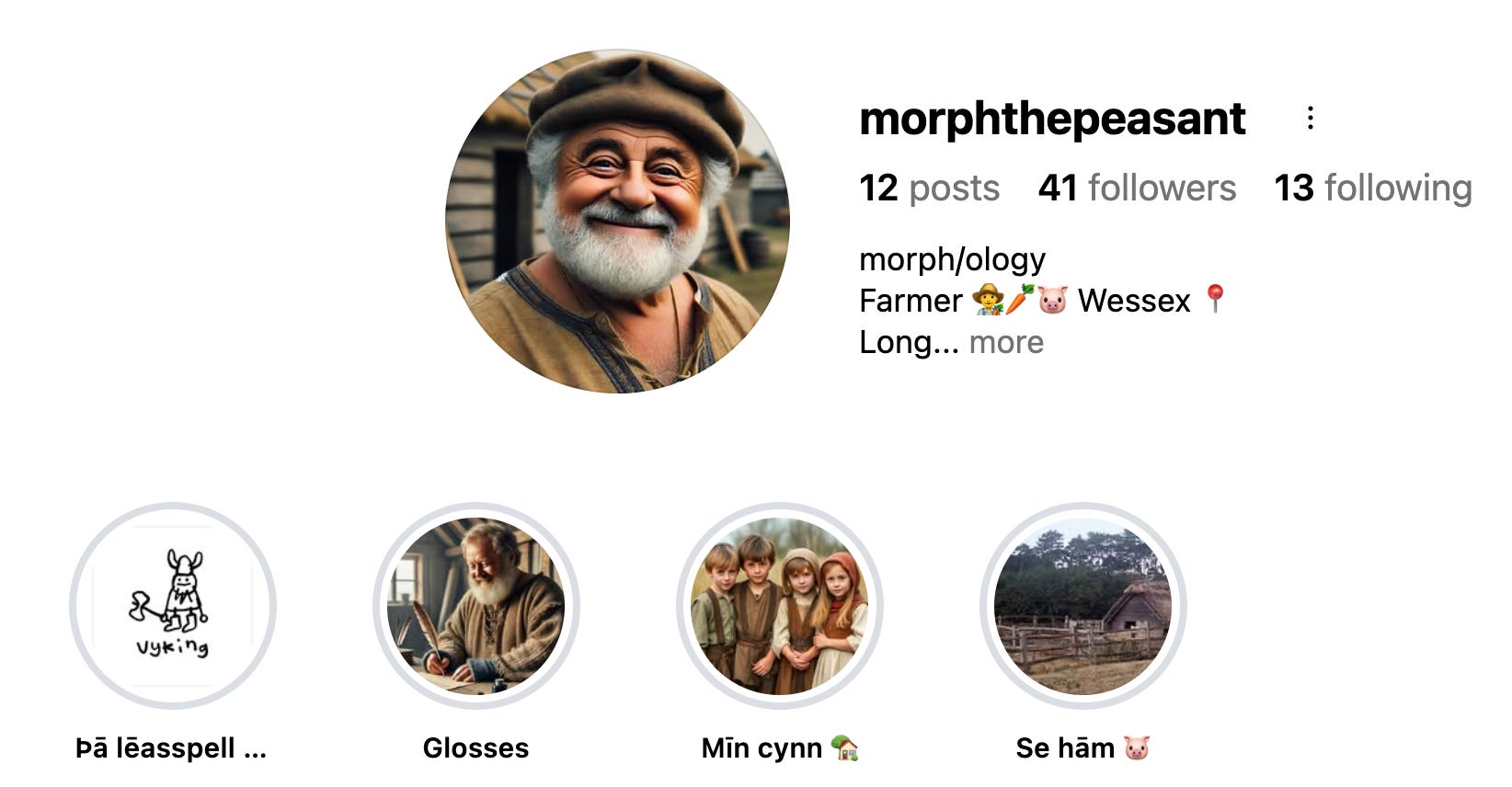
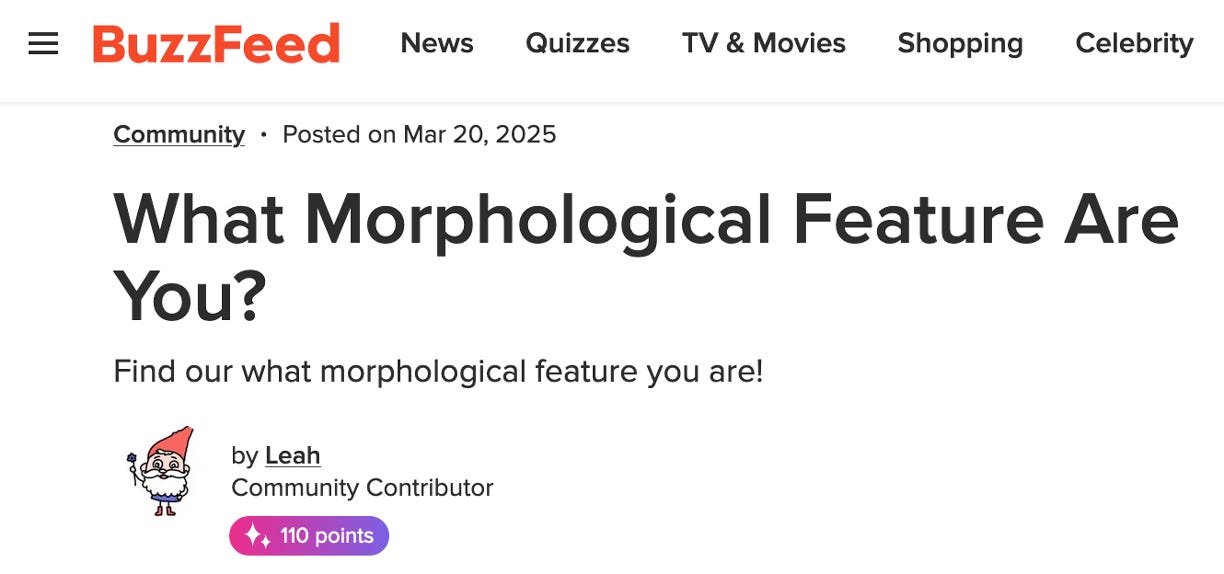
Since 2021, my students have submitted final projects in a range of formats, including comics, podcasts, mockumentaries, video essays, knitting essays, Instagram linguistics influencers, soliloquies, art projects, TikTok videos, children’s books, video games, designs for psycholinguistic experiments, BuzzFeed-style quizzes, meme “listicles” and op-eds (I’ve not yet seen interpretative dance, music pieces or board games, but I imagine this is only a matter of time). The content has also been varied: from in-depth explorations of the material discussed in class, via additional subjects that we didn’t have time to cover in the course, to high-level overviews for a general audience. Students enjoyed this assessment format very much, including the process of developing and scaffolding it. Importantly for our current discussion, some of these assignments produced novel provocations that spoke to multiple disciplines. In other words, students took intellectual and creative risks in their work.

But one does not simply tell a student to take intellectual risks. Students must trust that the instructor really is interested in the students’ own hot takes, rather than in them giving the “right answers”. And they must rest assured that their grade won’t suffer as a result. This is where the core insight of the alternative assessment movement is relevant, and while it’s based on decades of empirical research and theoretical nuance, I’ll summarise it as follows: Grades. Ruin. Everything.

Yes, marks and grades buy you some compliance, some control, and some short-lived external motivation. And yes, there will always be variance between individuals. But by and large, grades shift the mindset from learning - which is collaborative, interdisciplinary and joyous at its most natural - to trying to get the best grade (which can lead to many of the things we dislike about our job, including unnecessarily adversarial relationships between staff and students). A substantial literature dissects these issues and related ones, like the inherently inequitable practice of ranking people against each other.
I won’t try to unpack these issues here, or give you a blueprint for implementing alternative assessment and unessays (although I will mention one specific method below, namely self-assessment). Instead, I want to look back at some highlights from the 2026 conference and see how alternative assessment fuelled some of my favourite talks. I’ll then discuss what we can learn from that in terms of how our institutions work.
Selected highlights from the 2026 conference
The conference kicked off with Helena Good’s delightful keynote. She mentioned how meetings around education are often ones where colleagues react with “Yes, but”, when ideally we want everyone to be saying “Yes, and”. This reminded me of the pushback many alternative graders get when we suggest more authentic assessment methods. Another interesting point had to do with the World Economic Forum’s “Future of Jobs” report and its top 10 skills for future jobs, which led to a discussion of how these skills are themselves interdisciplinary in nature. This summary looked to me a lot like the Times’ Top 100 Graduate Employers report, which noted that “Very few, if any, of the country’s top employers recruit graduates based on their academic record [...] move away from academic achievement to demonstrating the broad range of skills”.

One of the perks of attending a conference slightly out of your area - like this one was for me - is getting to learn about concepts and frameworks you aren’t familiar with. Christopher Shoop-Worrall’s presentation was very helpful in framing “student vs learner”, with an explicit nod to equitable assessment. Another parallel arose in Courtnay McLeod’s talk, where she highlighted that 100% of graduates in Bauer Academy’s master’s programme in senior leadership received a Distinction. For an alternative grader like me, this seemed natural: if students come to learn and we do our job guiding them, then they should do very well. A grade distribution that is heavily skewed towards Firsts seems like a much more desirable outcome than any “normal” distribution.
These issues really came together in two other presentations. The first was Peter Hochenauer’s account of commitment-based assessment in his master’s course. Hochenauer made a number of great points, including that creative energy doesn’t emerge automatically but can be facilitated through appropriate choice of assessment, which ultimately means more transparency and more agency for the students. I agree completely, having run courses that rely on self-assessment for a number of years now (also called ungrading or collaborative assessment). The second presentation was the final panel by Jenny Scoles and students Sara Albakri, Sora Choo and Polly Dipper, whose interdisciplinary course was similarly ungraded, and likewise helped give students agency.
Noticing these cases in the same conference led me to wonder whether there was anything distinctly interdisciplinary about the design of these courses. In the spirit of interdisciplinarity, I think the answer is a combination of “yes” and “no”, as I explore in the final part of this post.
Why interdisciplinarity?
The question I pose for our concluding discussion is why we find alternative assessment in interdisciplinary teaching. We can identify an answer by looking at individuals and at institutions. Instructors who work and teach in interdisciplinary frameworks might be more open to being reflective about their own teaching, or to trying new things. There could be many reasons for this; for reasons of space, I want to follow the thread to structural issues instead.
When thinking about our higher education institutions, I propose that alternative assessment is easier to swallow when it’s cordoned off in the part of the curriculum designated as “creative”. Especially in the UK, universities have been argued to work primarily within a corporate mindset, rather than as institutes of knowledge, collaboration, learning and growth. This attitude leads to low resourcing of pedagogy, and accordingly poor understanding of it at the managerial level: why promote self-assessment, for example? Sounds dangerous. At the same time, if a programme is labelled as “interdisciplinary”, that label can send a signal to students, parents, colleagues, managers and regulators: the students want to do something loopy so we let them, because this is the part of the university that allows experimentation and creativity; don’t worry, we promise it won’t happen anywhere else! I half-jokingly call this the Stitch Effect, or Principle 626, after the misunderstood super-powerful alien Stitch (”Experiment 626”) from the film Lilo and Stitch: institutions tolerate interdisciplinary teaching and interdisciplinary learning, which inherently includes alternative assessment, only when it’s tightly sealed in a box and won’t escape.

Interdisciplinary learning is all about taking intellectual risks. Scholars of education have come up with many useful ways to think about these issues: constructivism, bricolage, critical pedagogy, self-determination theory, alternative assessment, and so on. I would say that all true learning is interdisciplinary learning in some way, which means that those of us with expertise in assessment and those of us in interdisciplinary teaching have the same goals when challenging the structures we work in. Interdisciplinary studies are a natural fellow traveller for decades of work on education, and in particular for the growing movement of alternative assessment. Let’s help Stitch out of his cage.
—
Thanks to my students for their collaboration and inspiration, and to Carine Abraham and Peter Hochenauer for comments on a previous draft.